Transitional Woodland Silt Loam
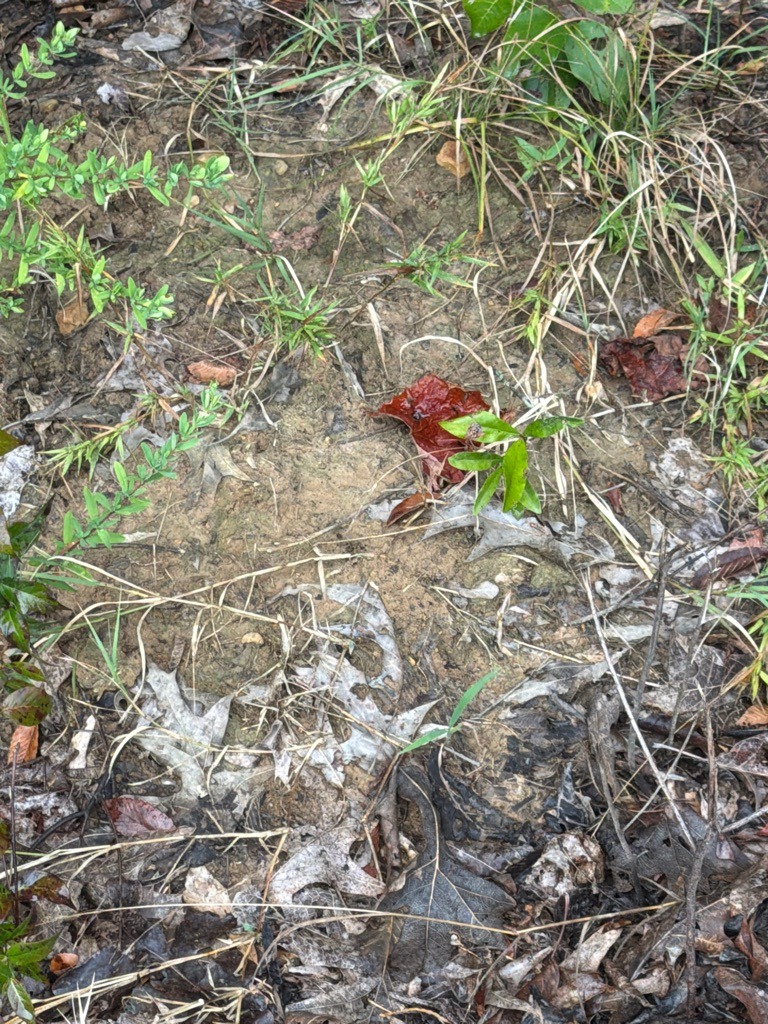
Silt Loam · Temperate deciduous forest floor, potentially alluvial or loess-derived parent material common throughout the Eastern and Midwestern United States.
AI Disclaimer
This soil report was produced by AI from a single photo. Treat it as a starting point, not laboratory truth.
pH, drainage, fertility, and composition are visual estimates — send a sample to an accredited lab before any decision that would be painful to get wrong.
Crop and amendment tips are general guidance — local climate, microclimate, and gardening history always win over an AI's best guess.
pH
Slightly acidic to neutral (6.2–6.8), typical of temperate deciduous woodland floors with leaf litter decomposition. Confirmation requires a soil test kit or probe.
Drainage
Moderately Well Drained. The fine silt texture slows downward percolation slightly compared to sandy soils, but the lack of severe pooling suggests adequate internal drainage.
Organic Matter
Moderate (2–4%), driven by the surface layer of decomposing leaves, twigs, and grasses visible in the image, supporting steady microbial activity.
Erosion Risk
Moderate water erosion risk, especially on slopes, because unprotected silt loam particles are highly erodible and prone to crusting and surface runoff.
Overall Read
A productive, workable temperate silt loam with moderate fertility and good moisture retention, though requiring vigilant management against surface crusting and erosion through regular organic mulching.
Texture
Smooth and powdery when dry, slightly plastic when wet, forming a weak, short ribbon that breaks easily, indicating a high silt fraction with moderate clay and low sand content.
Color Analysis
Muted olive-brown to grayish-brown with yellowish undertones (approx. 2.5Y 4/4), suggesting moderate drainage, weathered mineral content, and a modest accumulation of organic matter mixed with iron-bearing silicates.
Estimated Composition
Roughly 20% sand, 65% silt, 10% clay, and 5% organic matter based on the smooth surface crust and litter layer. Confidence is moderate due to visual estimation constraints.
Water Retention
Moderate to high plant-available water holding capacity due to the fine silt and organic matter surface mulch, though the surface can form a crust that limits infiltration during heavy downpours.
Aeration
Moderate. Adequate under normal moisture conditions, but can drop temporarily following heavy rain events if surface crusting restricts gas exchange.
Compaction Level
Moderately firm at the surface, showing signs of a slight crust layer where raindrop impact has broken down surface aggregates.
Structure & Aggregation
Weak subangular blocky to massive surface crusting. Aggregate stability is vulnerable to heavy rainfall impact due to the high silt content breaking down easily when exposed.
Fertility Indicators
Moderate fertility. Indicated by a mix of active weed growth, decomposing leaf litter, and a balanced brownish hue, though lacking the deep black humus of true prairie soils.
Climate Suitability
Humid temperate climates with distinct seasonal changes, requiring mulch protection to prevent surface sealing and moisture loss.
Crops Worth Trying
Deciduous trees, native grasses, small grains, corn, soybeans, squash, and root crops that benefit from a stone-free, workable silt profile.
Plants To Avoid
Extremely drought-sensitive plants without irrigation or plants requiring rapid, coarse-sand drainage like certain cacti and succulents.
Home Garden Use
In-ground vegetable gardens, perennial flower borders, woodland gardens, and native pollinator patches, provided the surface crust is managed.
Agricultural Use
Well-suited for row crop agriculture and pastures, frequently managed with conservation tillage or cover cropping to protect the fragile silt surface.
Landscaping Use
Ornamental foundation plantings, turf establishment, and woodland edge landscaping, using mulch to prevent crusting and erosion.
Common Problems
Surface crusting after rain, reduced water infiltration, susceptibility to compaction, and potential wind or water erosion when left bare.
Amendments Needed
Aged compost or leaf mold applied to the surface to improve aggregate stability, reduce crusting, and boost organic matter. Avoid heavy raw sand additions.
Try These At Home Tests
Perform a jar settling test to verify sand/silt/clay percentages, and conduct a ribbon test between your thumb and forefinger to check plasticity.
Professional Lab Recommendation
Send a sample to a local extension office for a standard nutrient panel, pH test, and organic matter percentage to fine-tune fertilization strategies.
Fun Facts
Silt particles are intermediate in size between sand and clay, giving silt loams a flour-like feel when dry and making them remarkably fertile foundation soils for historic agricultural civilizations.