Wealden Clay and Silt Residuum
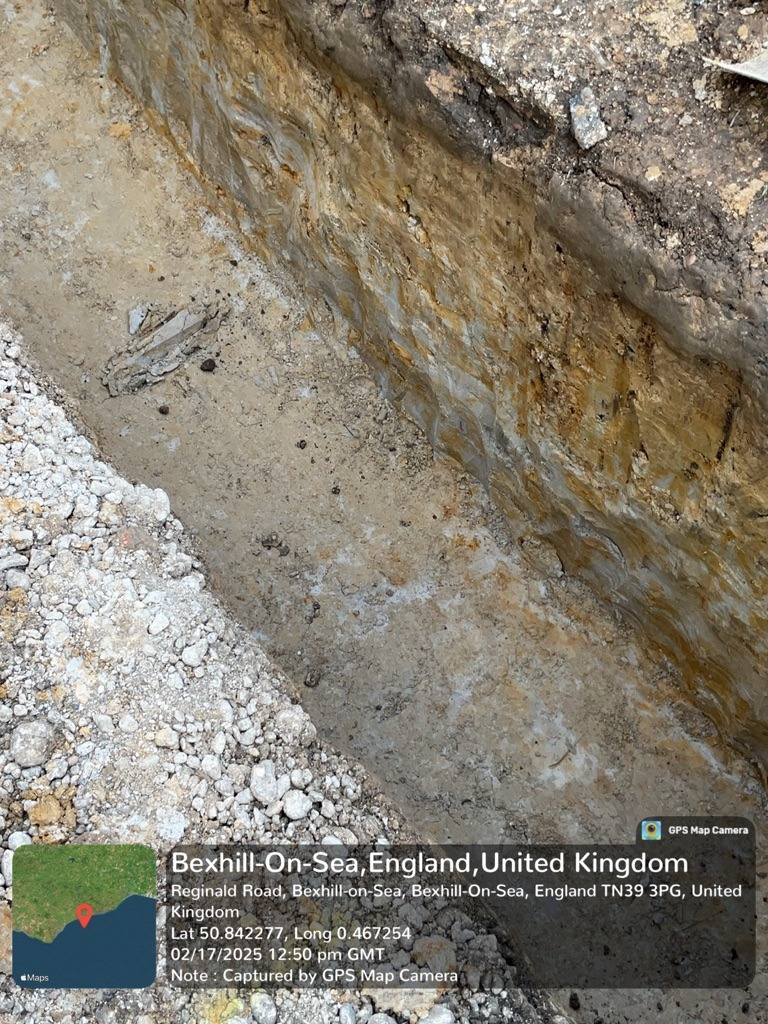
Silty Clay to Clay · Derived from the Wadhurst Clay or Weald Clay Formations of East Sussex, UK. This is typical of the High Weald geodiversity, formed from Cretaceous-aged lacustrine and lagoonal deposits.
AI Disclaimer
This soil report was produced by AI from a single photo. Treat it as a starting point, not laboratory truth.
pH, drainage, fertility, and composition are visual estimates — send a sample to an accredited lab before any decision that would be painful to get wrong.
Crop and amendment tips are general guidance — local climate, microclimate, and gardening history always win over an AI's best guess.
pH
Slightly Acidic to Neutral (6.0–7.2). Based on the regional geology of the Wealden Group, these soils are often non-calcareous but can be slightly buffered; a litmus or probe test is essential due to variable leaching.
Drainage
Poorly Drained. The massive structure and visible gleying (graying) indicate seasonal saturation and slow hydraulic conductivity. Water moves very slowly through this dense profile.
Organic Matter
Low overall. While the top 10-15cm may have 2-3%, the subsoil shown in the trench walls appears significantly depleted of organic carbon, lacking crumb structure or biotic remnants.
Erosion Risk
Moderate to High. While the clay is cohesive, the silty fraction makes it prone to sheet erosion and surface crusting when exposed to heavy UK rainfall without cover.
Overall Read
This is a challenging, heavy silty-clay soil typical of the Sussex coast. It is physically strong but hydrologically difficult. It requires significant management (drainage and organic inputs) to become a high-yielding garden or agricultural site, but it is excellent for holding water and supporting native woodland species.
Texture
Fine-textured, smooth, plastic, and extremely sticky when wet. The profile suggests a strong ribbon test capability (likely exceeding 5cm), indicating high clay and silt fractions with very low sand content.
Color Analysis
The profile exhibits a complex matrix of light yellowish-brown (10YR 6/4) and brownish-yellow (10YR 6/6) with distinct pale gray (gleyed) areas deeper in the trench. These orange mottles signify fluctuating water tables and localized oxidation-reduction cycles (redoxymorphic features).
Estimated Composition
45% Silt, 40% Clay, 10% Sand, 5% Course Fragments. The organic matter is concentrated heavily in the thin top layer (A horizon) and appears negligible in the subsoil.
Water Retention
High. The high clay/silt content allows for significant water storage, but much of it may be held at high tension (wilting point) or lead to waterlogging, limiting plant availability during wet spells.
Aeration
Poor. The dense matrix and absence of large pores suggest limited oxygen diffusion, especially when saturated, which can lead to anaerobic stress for most non-wetland plant species.
Compaction Level
High. The vertical faces of the trench show a dense, smears-easily consistency (slickensides possible), suggesting high natural density exacerbated by the weight of the profile and possible construction equipment.
Structure & Aggregation
Massive to Blocky. The subsoil shows a lack of granular aggregation, tending toward large, angular blocky units that fracture only under heavy pressure. This limits macro-porosity and root exploration.
Fertility Indicators
Moderate. While potentially rich in minerals like potassium and magnesium from the clay fraction, the physical limitations (poor drainage, lack of organic matter) restrict overall bio-availability.
Climate Suitability
Temperate/Maritime. Suited to the cool, wet climate of Southern England; however, managing water excess is the primary challenge for this soil in this region.
Crops Worth Trying
Pasture grasses (Lolium perenne), fruit trees on vigorous rootstocks (apples, pears), Hawthorn, Blackthorn, and field beans which can tolerate heavier textures.
Plants To Avoid
Lavender, Mediterranean herbs (thyme, rosemary), blueberries, and root vegetables like carrots which will likely rot or become deformed in the heavy, wet clay.
Home Garden Use
Best for raised beds to bypass the heavy clay. In-ground use is suitable for moisture-loving perennials, heavy-duty lawns, or native hedgerow planting.
Agricultural Use
Historically used for grazing and timber (Wealden Oak). Commercial row cropping requires extensive tile drainage and careful timing of machinery to avoid destroying soil structure.
Landscaping Use
Ideal for creating natural ponds or rain gardens. Not suitable for retaining wall backfill without imported drainage gravel, as the clay exerts high hydrostatic pressure.
Common Problems
Waterlogging in winter, shrinking and deep cracking in summer, surface poaching by livestock/traffic, and low soil temperatures in spring due to high water content.
Amendments Needed
Incorporation of sharp sand and massive amounts of organic matter (compost/leaf mold) to improve tilth. Gypsum may help flocculate the clay if the soil chemistry allows.
Try These At Home Tests
Perform a 'Jar Test' to see the layer proportions; conduct a 'Squeeze Test'—if it holds shape after being poked, it’s high clay/silt. Check for earthworms; their absence indicates poor aeration.
Professional Lab Recommendation
Submit a sample to a lab like NRM or Lancrop. Request a 'Standard Soil Analysis' including P, K, Mg, pH, and Organic Matter. Cost is typically £30-£50 and critical for determining nutrient tie-up.
Fun Facts
The Wealden clays were the foundation of the historic British iron industry, as the clay often contains ironstone nodules used in blast furnaces during the Roman and Tudor periods.