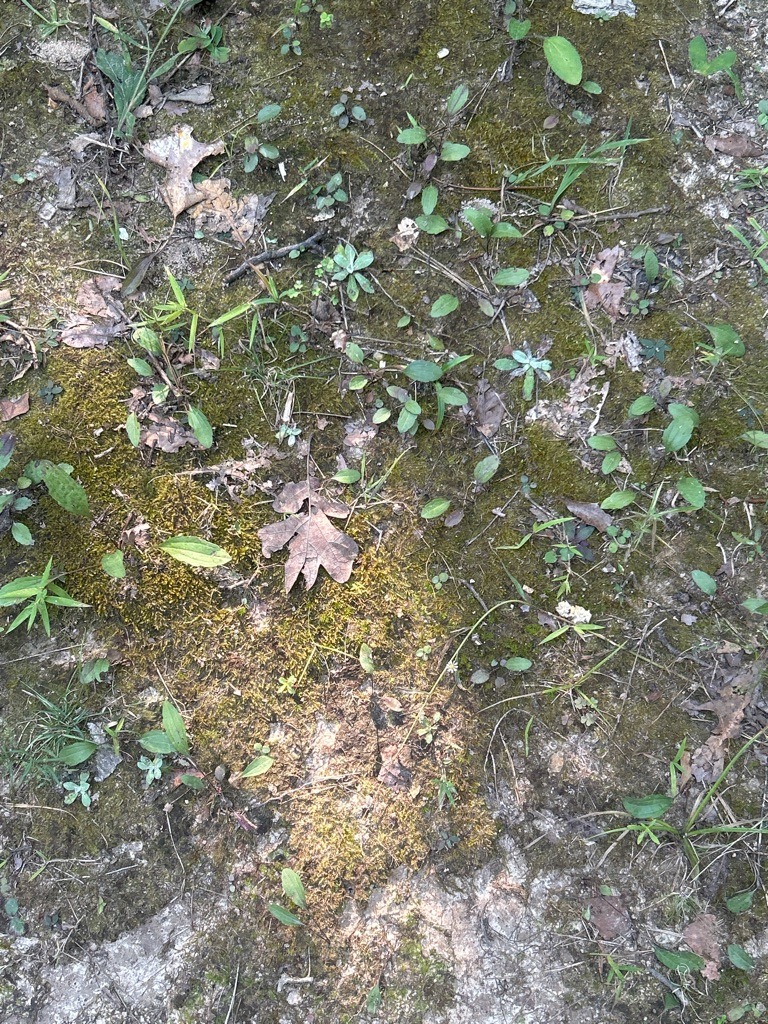
Wooded Forest Silt Loam with Moss Cover
Silt Loam · Temperate forest floor developed on loess or alluvial silt deposits in eastern North America or similar temperate zones.
AI Disclaimer
This soil report was produced by AI from a single photo. Treat it as a starting point, not laboratory truth.
pH, drainage, fertility, and composition are visual estimates — send a sample to an accredited lab before any decision that would be painful to get wrong.
Crop and amendment tips are general guidance — local climate, microclimate, and gardening history always win over an AI's best guess.
pH
Moderately to strongly acidic (5.2–6.0), typical of deciduous and mixed forest floors with accumulating leaf litter and moss activity.
Drainage
Moderately Well Drained; the high silt content can hold surface moisture and lead to temporary saturation or capping after heavy rain, but underlying slopes or profiles generally shed excess water.
Organic Matter
Moderate (2–4%) concentrated mainly in the superficial duff and decaying leaf layer.
Erosion Risk
Moderate to high risk of sheet and rill erosion on slopes if surface leaf litter and moss cover are removed, due to the easily dislodged silt particles.
Overall Read
A typical temperate forest floor silt loam with good moisture retention but a vulnerability to surface crusting; best managed by maintaining organic mulch layers and avoiding heavy compaction.
Texture
Smooth and silky to the touch with low plasticity; forms a short, fragile ribbon that easily breaks, indicating a high silt fraction with minor clay and sand.
Color Analysis
Muted grayish-brown to olive-brown with patches of vibrant green from biological moss crusts, suggesting moderate organic surface accumulation over a heavily weathered mineral sublayer.
Estimated Composition
Approximately 20% sand, 65% silt, 10% clay, and 5% organic matter in the top surface layer.
Water Retention
Moderate to high water-holding capacity due to the fine silt particles, though surface layers can form a crust and dry out into a firm surface under direct sun.
Aeration
Moderate to low in saturated surface crusts, but adequate in deeper uncompacted profiles supporting shallow forest root systems.
Compaction Level
Moderately firm; surface sealing and moss colonization point to minimal recent tillage or disturbance, resulting in a tightly packed silt matrix.
Structure & Aggregation
Weak granular to massive surface structure, susceptible to crusting under direct raindrop impact when unprotected by vegetation or leaf litter.
Fertility Indicators
Moderate overall fertility; driven primarily by the decaying organic litter on the surface rather than intrinsic rich mineral reserves.
Climate Suitability
Humid temperate and continental climates with distinct seasons and adequate annual rainfall.
Crops Worth Trying
Shade-loving woodland plants, shallow-rooted ornamentals, ferns, mosses, and native perennial groundcovers.
Plants To Avoid
Deep taproot crops requiring loose, sandy drainage, or plants highly sensitive to acidic soil conditions and surface crusting.
Home Garden Use
Ideal for woodland gardens, shady perennial borders, native plant restoration, and naturalistic landscape beds.
Agricultural Use
Limited without amendment; requires careful management to prevent compaction and erosion if used for annual row cropping or pasture.
Landscaping Use
Excellent for shaded backyards, under-canopy tree plantings, and natural ground cover setups where moss and leaf litter are desired aesthetics.
Common Problems
Surface crusting after heavy rains, poor seedling emergence, seasonal waterlogging, and susceptibility to compaction.
Amendments Needed
Incorporate well-rotted compost and organic matter to improve aggregation, break up surface crusting, and buffer soil pH.
Try These At Home Tests
Perform a jar settling test to verify the high silt percentage, and run a ribbon test to check for low clay plasticity.
Professional Lab Recommendation
Send a sample to a local extension service for a standard fertility and pH test if planning intensive food crop cultivation.
Fun Facts
Silt particles are intermediate in size between sand and clay, giving soils a characteristic flour-like feel when dry and a smooth silkiness when wet.