Heavy Gray-Brown Clay Subsoil
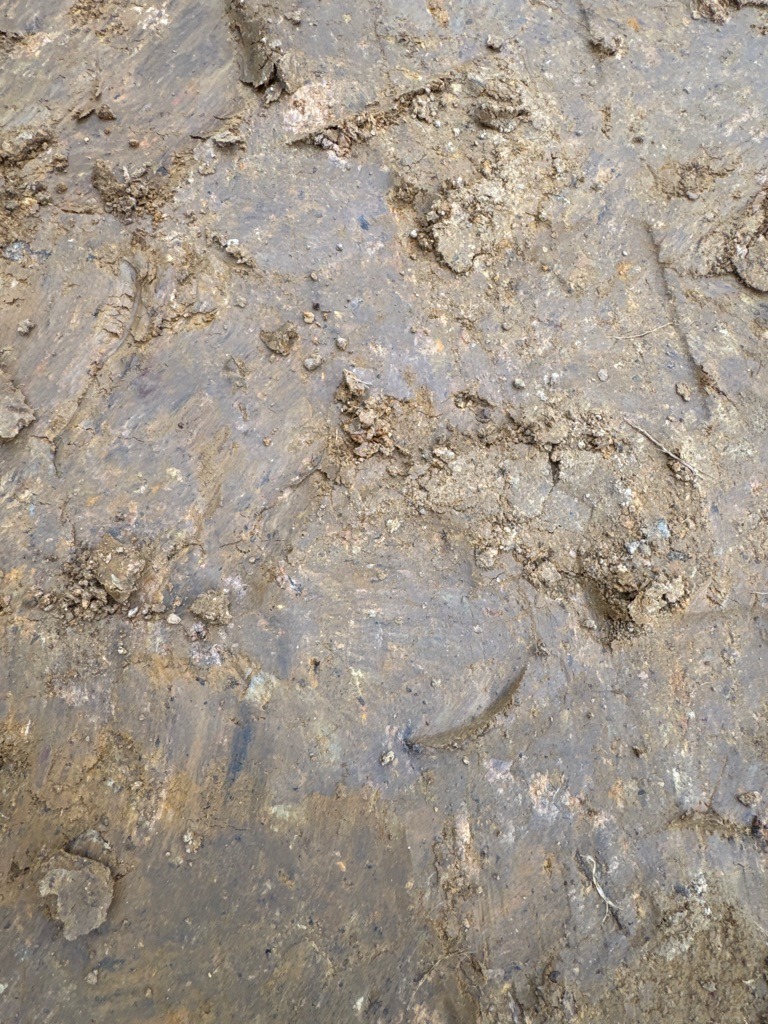
Clay · Glacial till plain subsoil, lacustrine deposit, or heavily weathered valley bottom sediment.
AI Disclaimer
This soil report was produced by AI from a single photo. Treat it as a starting point, not laboratory truth.
pH, drainage, fertility, and composition are visual estimates — send a sample to an accredited lab before any decision that would be painful to get wrong.
Crop and amendment tips are general guidance — local climate, microclimate, and gardening history always win over an AI's best guess.
pH
Likely slightly acidic to neutral (6.2–7.0), but visual inspection cannot confirm this. A soil test strip or electronic pH meter should be used for certainty.
Drainage
Poorly Drained. The smooth, smeared surface appearance and lack of macro-pores mean water infiltrates slowly and tends to pond or puddle on the surface after heavy rains.
Organic Matter
Low (1–2%). The dense, compact appearance and lack of rich dark coloration or visible surface humus suggest minimal biological decomposition in this layer.
Erosion Risk
High risk of water erosion on slopes due to low initial infiltration rates causing high surface runoff. Tillage when wet creates severe clodding and crusting.
Overall Read
This is a heavy, poorly drained clay soil with high water retention and high compaction. While challenging due to its sticky nature when wet and hard structure when dry, it has a high capacity to hold nutrients. With consistent additions of organic matter, careful tillage timing, and avoidance of heavy machinery when wet, it can be transformed into a productive growing medium.
Texture
Smooth, highly plastic, sticky when wet, and capable of forming a long, flexible ribbon over 2 inches without breaking. This indicates a high concentration of fine clay particles.
Color Analysis
Dull grayish-brown with mottled yellowish-brown highlights (Munsell approximation 10YR 5/2 to 10YR 5/4). The grayish tones indicate periodic water saturation and limited oxygen (gleying), while the brownish mottling points to iron oxidation and reduction cycles.
Estimated Composition
Roughly 20% sand, 25% silt, 52% clay, and 3% organic matter. Visual confidence is moderately high for a heavy clay matrix.
Water Retention
Extremely high water holding capacity. It retains moisture for long periods, but much of that water is held tightly by capillary forces and may not be easily accessible to plant roots.
Aeration
Low aeration. The tight packing of clay particles restricts oxygen diffusion, especially when wet, creating a risk of hypoxic conditions for plant roots.
Compaction Level
Severely compacted. The surface shows a smeared, hardpan-like character with restricted macroporosity and high bulk density.
Structure & Aggregation
Massive to coarse blocky structure with very low aggregate stability when wet. Smearing is visible where pressure has flattened the natural peds.
Fertility Indicators
Moderate inherent mineral nutrient reserve due to high cation exchange capacity of the clay, but low biological fertility and poor nutrient availability due to compaction and low organic matter. Overall fertility rating: Low to Moderate.
Climate Suitability
Thrives best in temperate regions with moderate, well-distributed rainfall, though management must focus heavily on drainage and avoiding compaction during wet spells.
Crops Worth Trying
Deep-rooting or heavy-feeding pasture grasses, fescue, alfalfa (if drainage is managed), winter wheat, and certain brassicas like cabbage that tolerate heavy soils.
Plants To Avoid
Root crops like carrots and parsnips (which deform in heavy clay), delicate taprooted perennials, and drought-loving plants that rot in poorly drained soils.
Home Garden Use
Poorly suited for direct in-ground planting without extensive amendment. Best used for raised beds built on top of the native soil or after heavy incorporation of organic matter.
Agricultural Use
Often used for permanent pasture, hay production, or extensive row cropping with careful timing of heavy machinery to prevent severe compaction.
Landscaping Use
Challenging for general turf and ornamental planting. Requires subsoiling or mechanical aeration and amendment before establishing lawns or trees to prevent root suffocation.
Common Problems
Surface crusting, severe cracking when dry, waterlogging when wet, difficult tilling window, restricted root penetration, and poor seedling emergence.
Amendments Needed
Heavy applications of finished compost and aged organic matter to improve structure, coarse sand or gypsum (if sodium levels are high) to flocculate clay particles, and mulching to prevent crusting.
Try These At Home Tests
Perform a ribbon test by rolling moist soil between your thumb and forefinger to check length. Perform a jar test by shaking soil in water and letting particles settle over 24 hours to measure sand, silt, and clay percentages.
Professional Lab Recommendation
Send a sample to a local agricultural extension service for a comprehensive nutrient analysis, texture verification, cation exchange capacity (CEC), and organic matter percentage to guide targeted amendments.
Fun Facts
Clay particles are microscopic plate-like structures with a high negative electrical charge, which allows them to hold onto vital plant nutrients like calcium, magnesium, and potassium much better than sandy soils.