Compacted Clay-Loam Subsoil
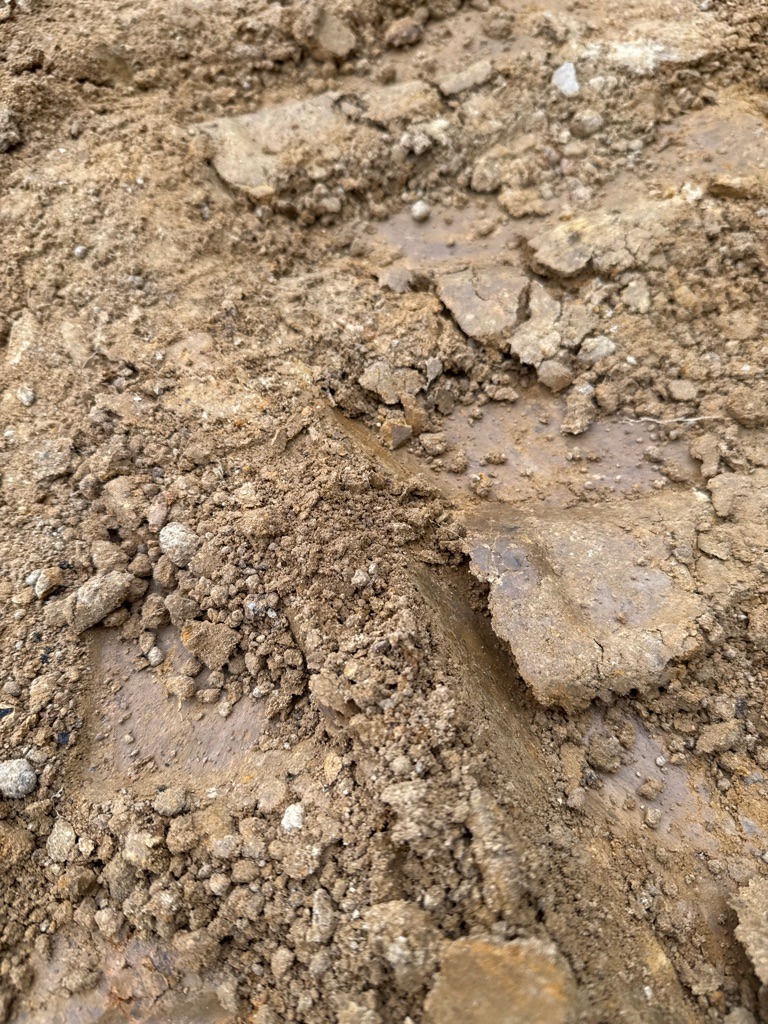
Clay Loam · Glacial till subsoil or construction-disturbed subsoil profile, commonly found in temperate agricultural or developed zones where topsoil has been stripped.
AI Disclaimer
This soil report was produced by AI from a single photo. Treat it as a starting point, not laboratory truth.
pH, drainage, fertility, and composition are visual estimates — send a sample to an accredited lab before any decision that would be painful to get wrong.
Crop and amendment tips are general guidance — local climate, microclimate, and gardening history always win over an AI's best guess.
pH
Likely slightly alkaline to neutral (6.8–7.8), common in subsoils with mineral accumulation. Cannot be confirmed visually; a lab test or soil strip is recommended.
Drainage
Poorly Drained. The dense, compacted peds and smooth surfaces indicate slow water infiltration and high water retention, making it prone to waterlogging after heavy rain.
Organic Matter
Low (1-2%). The pale color, lack of visible root fibers, and dense clods point to a deficit in humus and biological activity.
Erosion Risk
Moderate to high water erosion risk on slopes due to low initial infiltration rates causing high surface runoff. Low wind erosion risk when moist, but prone to dust generation when pulverized dry.
Overall Read
A challenging, heavily compacted subsoil with low organic matter and poor drainage. While high in natural mineral reserves, it requires aggressive physical and biological remediation—specifically organic matter incorporation and compaction-busting cover crops—before it can support productive gardening or landscaping.
Texture
Fine-textured, smooth, plastic, and sticky when wet. Forms a strong, long ribbon during a ribbon test, indicating a high proportion of fine clay particles mixed with silt and sand.
Color Analysis
Dull yellowish-brown to olive-gray (Munsell approximately 2.5Y 5/4), indicating moderate weathering, poorly aerated conditions at depth, and lower organic matter content with oxidized iron flecks.
Estimated Composition
Approximately 35% sand, 25% silt, 35% clay, and less than 2% organic matter. This visual estimate carries moderate to high confidence based on the massive structure and crusting patterns.
Water Retention
High water-holding capacity, but much of the water is held tightly by clay particles and may be less available to plants. Prone to surface sealing and cracking as it dries out.
Aeration
Low aeration. The tight packing of clay particles and restricted pore space severely limit oxygen diffusion to roots and beneficial microbes, increasing risks of root suffocation.
Compaction Level
Severely compacted. The smooth, sheared surfaces and massive blocks are classic indicators of heavy equipment traffic or subsoil compaction.
Structure & Aggregation
Subangular blocky to massive structure with poor aggregate stability. Tends to form hard, dense clods when disturbed or tilled wet, restricting root penetration and gas exchange.
Fertility Indicators
Low fertility overall. Pale coloration, lack of visible earthworm activity or organic residues, and crusting suggest low nutrient availability and mineral locking.
Climate Suitability
Thrives best in moderate temperate climates with balanced rainfall, but management is heavily dependent on moisture control to prevent extreme hardening or mudding.
Crops Worth Trying
Established turfgrasses, robust cover crops like daikon radish or cereal rye to break compaction, and deep-rooted native perennials once amended.
Plants To Avoid
Fine root vegetables like carrots or parsnips which will deform in heavy clay, and drought-sensitive annuals needing fast-draining soils.
Home Garden Use
Requires significant remediation before use; best suited for raised beds placed on top, or heavy amendment for perennial borders.
Agricultural Use
Requires subsoiling or ripping to break compaction layers, followed by continuous cover cropping and organic matter additions to transition to no-till or row cropping.
Landscaping Use
Challenging for direct turf establishment or planting pits without mechanical aeration and amendment. Good for structural backfill only if properly compacted according to engineering specs, but poor for plant health.
Common Problems
Surface crusting, severe compaction, poor drainage, waterlogging, restricted root growth, and extreme hardness when dry.
Amendments Needed
Heavy applications of finished compost, aged manure, and gypsum (if sodic) to flocculate clay particles. Cover crops with deep taproots are essential for biological tillage.
Try These At Home Tests
Perform a ribbon test to check plasticity, a jar test for exact particle settling percentages, and a percolation test to measure slow drainage rates.
Professional Lab Recommendation
Send samples to a local agricultural extension for a comprehensive fertility, CEC, organic matter, and textural analysis, especially if planning large-scale planting.
Fun Facts
Clay soils have massive surface areas at a microscopic level, allowing a single teaspoon of clay to have a surface area the size of a football field, which explains their immense capacity to hold nutrients and water.