Alluvial Sandy Clay Loam
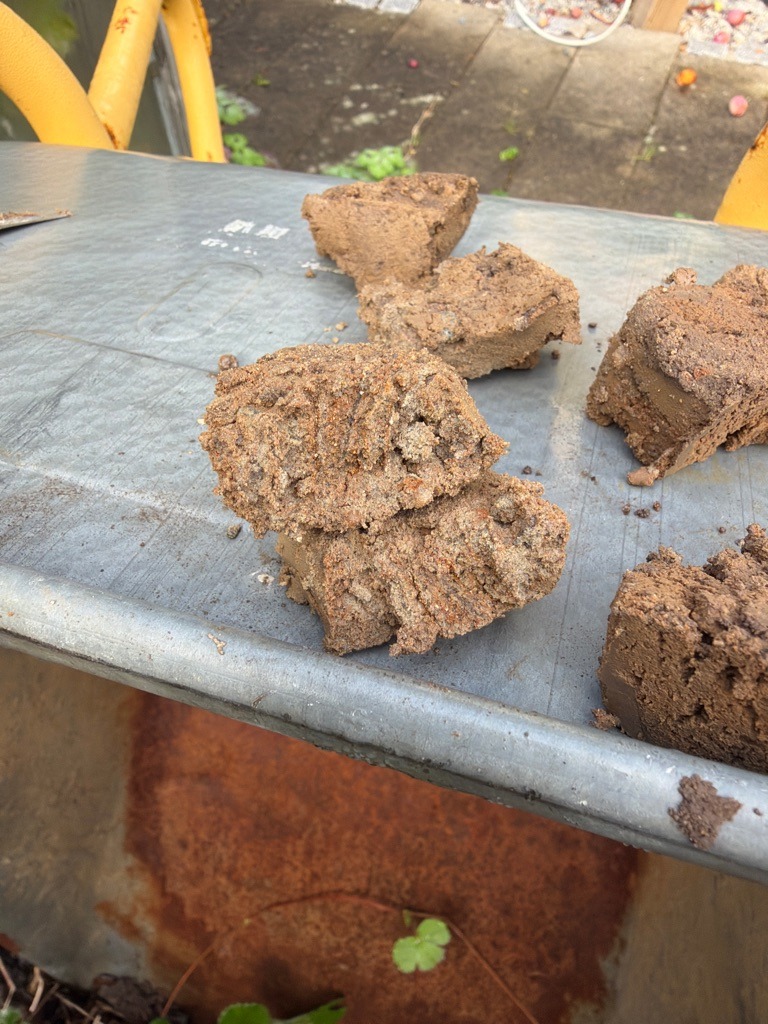
Sandy Clay Loam · Alluvial floodplain deposit or weathered sedimentary residuum, characterized by mixed sand fractions and mobilized clay particles.
AI Disclaimer
This soil report was produced by AI from a single photo. Treat it as a starting point, not laboratory truth.
pH, drainage, fertility, and composition are visual estimates — send a sample to an accredited lab before any decision that would be painful to get wrong.
Crop and amendment tips are general guidance — local climate, microclimate, and gardening history always win over an AI's best guess.
pH
Slightly acidic to neutral range (6.2 to 7.0), common in many regional mineral soils. pH cannot be confirmed visually, and a lab test strip or digital meter should be used for certainty.
Drainage
Moderately well drained. While the sand content promotes infiltration, the high clay content in the dense peds slows internal drainage, potentially causing temporary perched water tables during heavy rains.
Organic Matter
Low (1-2%). The lighter brown coloration and lack of dark humus or visible decaying residue indicate limited organic accumulation, suggesting a need for regular compost additions.
Erosion Risk
Moderate water and tillage erosion risk. The sloping texture and moderate clay content mean that bare surfaces can form crusts, leading to increased runoff on slopes during heavy downpours.
Overall Read
A reliable, workable mineral soil with good structural potential. While currently low in organic matter and prone to firming up, it can be easily transformed into a highly productive growing medium with regular organic amendments and careful moisture management.
Texture
Coarse and gritty on outer surfaces with a dense, firm underlying matrix. It likely forms a weak to moderate ribbon in a ribbon test, indicating a substantial sand fraction bound together by a cohesive clay and silt matrix.
Color Analysis
Medium yellowish-brown to grayish-brown (Munsell approx. 10YR 5/4 to 10YR 4/3), with minor reddish-brown iron-oxide staining. This suggests moderate weathering, decent drainage history, and low-to-moderate organic matter content.
Estimated Composition
Roughly 55% sand, 15% silt, and 30% clay, with under 2% organic matter. This visual estimate carries a moderate-to-high confidence level based on the distinct gritty particles embedded in dense cohesive chunks.
Water Retention
Moderate water-retention capacity. The sand fraction allows for quick initial drainage, but the clay and silt fractions store adequate plant-available water between irrigation or rainfall events.
Aeration
Moderate. Gas exchange is adequate when the soil is loose or moist, but can quickly become restricted if the surface forms a crust or if the soil is worked when too wet.
Compaction Level
Moderately firm to compacted. The soil blocks retain sharp edges and dense interior consistency from being handled or dug out, indicating susceptibility to compaction under heavy foot or equipment traffic.
Structure & Aggregation
Subangular blocky to massive when compressed. The chunks show moderate aggregate stability but are prone to hardening or crusting when exposed and dried out.
Fertility Indicators
Low-to-moderate fertility. The mineral backbone is present, but the lack of dark organic staining and absence of visible biological activity point to a need for nutrient management.
Climate Suitability
Thrives in temperate and subtropical climates with moderate, distributed rainfall. Management should focus on mulching to prevent crusting in arid settings or heavy rains.
Crops Worth Trying
Root vegetables with loose-soil management, tomatoes, peppers, squash, and hardy perennial grasses that tolerate medium-textured mineral soils.
Plants To Avoid
Extremely moisture-sensitive native plants or delicate Ericaceous species (like blueberries) that require strongly acidic, high-organic peat environments.
Home Garden Use
Well-suited for raised beds amended with compost, in-ground vegetable gardens with regular tillage/mulching, and perennial borders once loosened.
Agricultural Use
Suitable for diverse row crops and pastures under a regular tillage and cover-cropping regime to maintain structure and prevent crusting.
Landscaping Use
Good for turf establishment, general ornamental plantings, and tree pits, provided the planting hole is scarified to prevent glazing.
Common Problems
Surface crusting after rain, hardening upon drying, moderate compaction, and gradual depletion of organic matter under continuous cropping.
Amendments Needed
Heavy incorporation of finished compost or aged manure to improve aggregation, boost organic matter, and buffer compaction. Cover cropping is highly recommended.
Try These At Home Tests
Perform a jar test to separate sand, silt, and clay sedimentation layers over 24 hours. Conduct a ribbon test to verify the clay percentage and a squeeze test to check moisture limits.
Professional Lab Recommendation
Send a sample to a local extension service for a standard fertility, cation exchange capacity (CEC), and organic matter test to dial in precise fertilizer and lime requirements.
Fun Facts
Soils with this balance of sand and clay have been utilized for millennia in foundational earth-building and agriculture because they provide a stable structural framework when managed correctly.