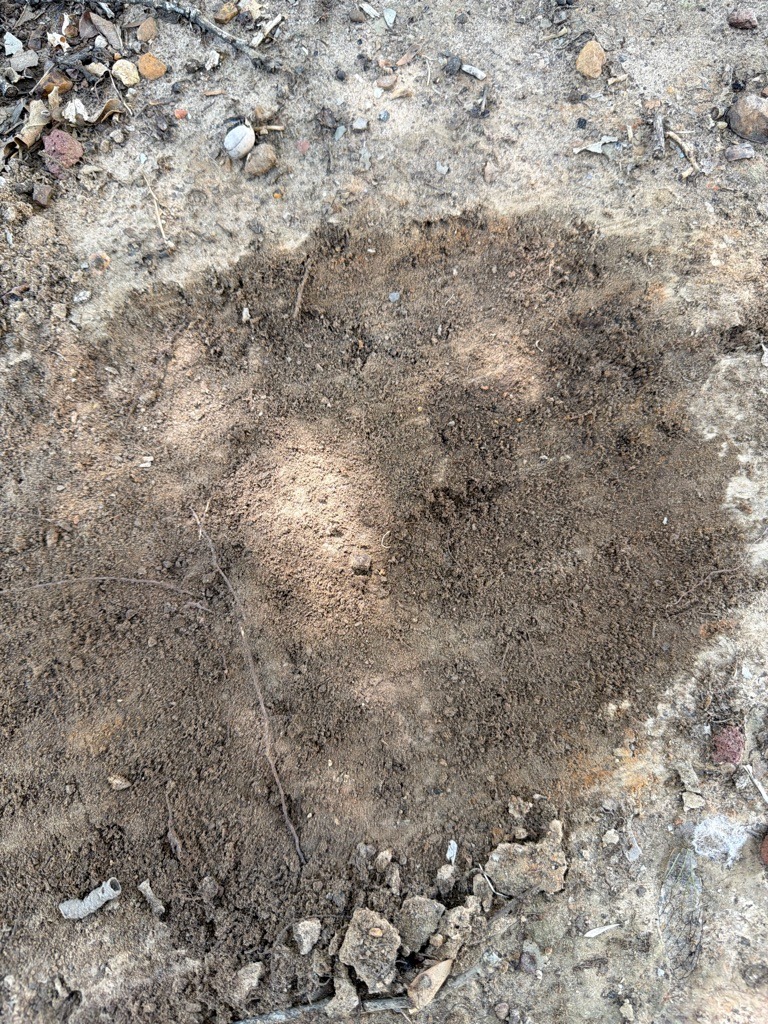
Dry Sub-Urban Sandy Loam with Surface Crust
Sandy Loam · Weathered coastal plain or alluvial terrace deposit common in residential front yards across temperate regions.
AI Disclaimer
This soil report was produced by AI from a single photo. Treat it as a starting point, not laboratory truth.
pH, drainage, fertility, and composition are visual estimates — send a sample to an accredited lab before any decision that would be painful to get wrong.
Crop and amendment tips are general guidance — local climate, microclimate, and gardening history always win over an AI's best guess.
pH
Slightly acidic to neutral (6.0 to 7.0), typical of weathered surface soils in residential yards, though confirmation via a soil test kit is required.
Drainage
Excessively to well-drained. The coarse texture and lack of fine pore constriction allow water to infiltrate and percolate rapidly downward.
Organic Matter
Low (1 to 2 percent), as evidenced by the pale surface coloration, lack of deep humus, and sparse surface residue.
Erosion Risk
Moderate to high for wind and water erosion, particularly on exposed slopes or bare patches lacking vegetative cover.
Overall Read
A manageable, well-aerated sandy loam front yard soil with low organic reserves that will respond exceptionally well to regular compost additions and mulching.
Texture
Coarse and gritty with a slight surface crust; exhibits very weak or absent ribbon formation, suggesting high sand content and low clay fractions.
Color Analysis
Light brownish-gray to pale yellowish-brown (Munsell 10YR 5/3 to 10YR 6/4), indicating low organic matter content, exposed weathered mineral grains, and minor iron oxide staining.
Estimated Composition
Sand: 65 percent, Silt: 25 percent, Clay: 8 percent, Organic Matter: 2 percent. Visual confidence level is moderate.
Water Retention
Low to moderate. The soil tends to dry out quickly under direct sun and wind exposure, requiring regular irrigation during dry spells.
Aeration
High. The coarse particle matrix allows for rapid gas exchange and excellent oxygen diffusion to plant roots.
Compaction Level
Moderately firm at the surface due to crusting, though the underlying profile remains loose and sandy.
Structure & Aggregation
Weak granular to single-grain structure with a thin, brittle surface crust caused by raindrop impact and subsequent drying.
Fertility Indicators
Low fertility overall. Few biological activity signs such as worm casts are visible, and the pale color reflects minimal humus reserves.
Climate Suitability
Thrives best in temperate to warm climates with predictable rainfall or supplemental irrigation systems.
Crops Worth Trying
Drought-tolerant turf grasses, root crops like carrots and radishes, potatoes, peppers, and various herbs.
Plants To Avoid
Water-loving bog plants, heavy moisture-demand perennials, and crops requiring permanently saturated heavy clay conditions.
Home Garden Use
In-ground beds amended with compost, herb gardens, and dry-tolerant native perennial borders.
Agricultural Use
Suitable for extensive pasture or specialized specialty crops provided heavy irrigation and fertilization programs are implemented.
Landscaping Use
Drought-tolerant xeriscaping, ornamental grass beds, and foundation plantings with adequate mulch cover.
Common Problems
Surface crusting that inhibits seedling emergence, rapid nutrient leaching, and quick moisture depletion.
Amendments Needed
Heavy applications of aged compost, well-rotted manure, and organic mulches to build organic matter and improve water retention.
Try These At Home Tests
Perform a mason jar settling test for particle fractions, a ribbon test for plasticity, and a simple infiltration test using a bottomless cylinder.
Professional Lab Recommendation
Send a sample to a local cooperative extension for a complete nutrient panel, cation exchange capacity, and organic matter test.
Fun Facts
Sandy loam soils warm up much faster in the spring than heavy clays, giving gardeners a head start on early season planting.
Your Notes
Front yard