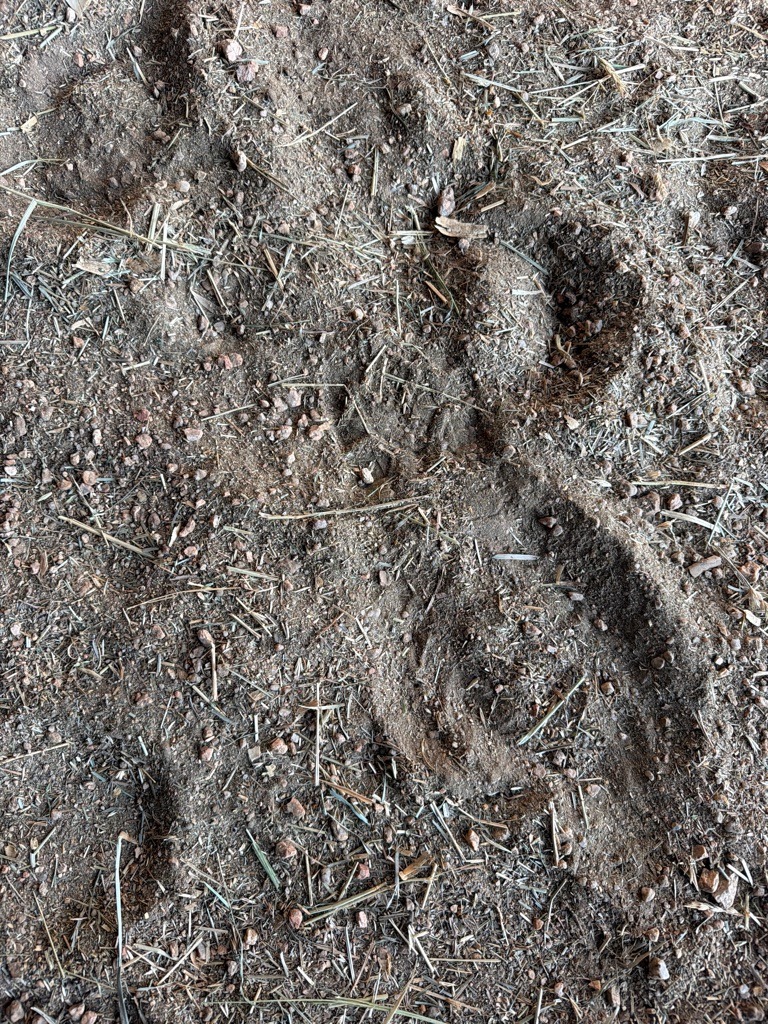
Barn Walkway Fragmented Sandy Loam
Sandy Loam ( heavily amended with organic litter/bedding) · Imported or native sandy fill material modified by agricultural use inside a barn or stable setting.
AI Disclaimer
This soil report was produced by AI from a single photo. Treat it as a starting point, not laboratory truth.
pH, drainage, fertility, and composition are visual estimates — send a sample to an accredited lab before any decision that would be painful to get wrong.
Crop and amendment tips are general guidance — local climate, microclimate, and gardening history always win over an AI's best guess.
pH
Slightly alkaline to neutral (7.0-7.8) given common livestock barn environments and alkaline dust/urine exposure, though a soil strip test is recommended for confirmation.
Drainage
Excessively drained due to the high coarse sand and gravel fraction, combined with high permeability and heavy foot traffic loosening the surface layers.
Organic Matter
Moderate to rich in surface litter (4-6% total carbon equivalent) due to accumulated straw, hay, and animal waste fragments, though true soil humus is lower.
Erosion Risk
High risk of wind erosion (dust) and mechanical displacement due to heavy foot traffic, lack of structural binding, and dry conditions.
Overall Read
This is a disturbed, high-traffic agricultural substrate rather than a natural garden soil. While rich in organic debris like straw, its high sand content, compaction, and animal waste exposure make it poor for direct planting without major remediation, composting, and restructuring.
Texture
Coarse, gritty with loose powdery fine earth mixed with scattered fragments of straw and organic debris. Fails to form a cohesive ribbon, crumbling easily due to low clay content and high sand/grit fraction.
Color Analysis
Light to medium brown with reddish-gray undertones (approx. 7.5YR 5/4), indicating weathered iron oxides and a dry mineral baseline mixed with carbonaceous organic residues.
Estimated Composition
70% Sand, 15% Silt, 5% Clay, and 10% surface organic matter (straw and debris mix). Confidence level is moderate based on visual indicators.
Water Retention
Low water-retention capacity; dries out very quickly when exposed to air and sun, requiring frequent watering if used for plant growth.
Aeration
High air permeability on the loose surface layer due to coarse texture and straw inclusions, though deeper packed layers experience limited gas exchange.
Compaction Level
Moderately compacted in hoof prints and walking paths, but loose and dusty on the immediate surface due to continuous mechanical disturbance.
Structure & Aggregation
Single-grain to massive disturbed structure, heavily trampled and pulverized by foot traffic with little to no stable natural aggregation.
Fertility Indicators
Moderate to high in raw nitrogen and potassium due to animal waste inputs (manure and urine), but unbalanced and high in salts; overall fertility is erratic.
Climate Suitability
Universal indoor or protected setting, though outside native parent material typically suits temperate continental or semi-arid agricultural regions.
Crops Worth Trying
Root crops, drought-tolerant grasses, or cover crops once removed from the barn environment and thoroughly amended with true compost.
Plants To Avoid
Moisture-loving bog plants, delicate seedlings sensitive to high salt or ammonia, and heavy feeders requiring rich, water-retentive clay loam.
Home Garden Use
Not suited directly for gardening unless heavily composted; better used as a base layer for pathway fills or cleared out for composting.
Agricultural Use
Unsuitable for direct crop production in its current state; serves primarily as stable bedding, flooring, or heavily trafficked animal walkways.
Landscaping Use
Good as a stable sub-base for dry pathways, packing material, or mixed with high-clay compost to construct durable walkways.
Common Problems
Excessive dust generation, rapid drying, high salt/ammonia concentrations from animal waste, lack of stable structure, and poor nutrient retention.
Amendments Needed
A heavy addition of finished, well-rotted compost (3-4 inches tilled in), balanced organic matter, and moisture-retentive elements to buffer salts and build structure.
Try These At Home Tests
Perform a standard glass jar sedimentation test to confirm sand and silt ratios, and a simple pH strip test to check for alkaline ammonia/salt buildup.
Professional Lab Recommendation
Recommended if converting the barn footprint into a garden space; request a complete nutrient panel, soluble salts (EC), and organic matter analysis.
Fun Facts
Barn walkway soils often develop a unique micro-ecosystem enriched by specialized thermophilic microbes that break down lignified straw and animal manure.
Your Notes
Barn walkway