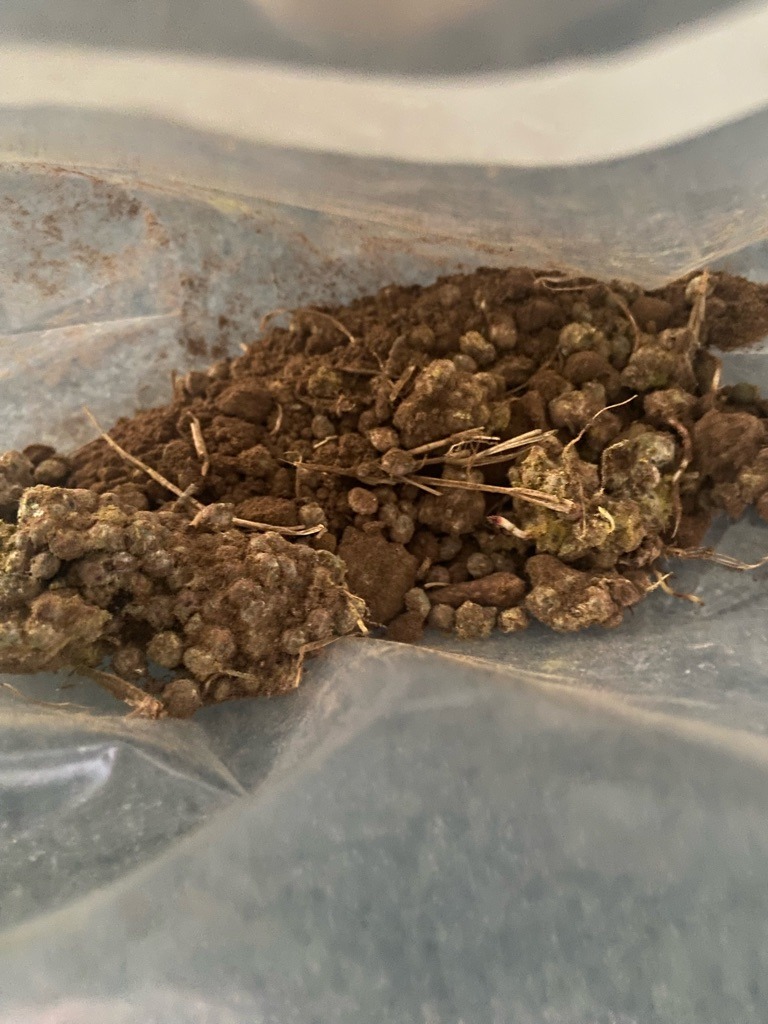
Organic-Rich Alluvial Loam
Loam · Alluvial floodplain deposit or well-managed garden soil enriched with compost additions.
AI Disclaimer
This soil report was produced by AI from a single photo. Treat it as a starting point, not laboratory truth.
pH, drainage, fertility, and composition are visual estimates — send a sample to an accredited lab before any decision that would be painful to get wrong.
Crop and amendment tips are general guidance — local climate, microclimate, and gardening history always win over an AI's best guess.
pH
Slightly acidic to neutral (6.2–7.0) based on dark organic coloring and healthy aggregation, though testing with a probe or strip is recommended.
Drainage
Well drained, characterized by balanced pore spaces that allow excess water to escape while maintaining adequate moisture.
Organic Matter
Rich (4–8%), evidenced by the dark color, visible fibrous residue, and distinct crumbly aggregates providing habitat for microbes.
Erosion Risk
Low to moderate on flat surfaces, though susceptible to wind or water transport if left bare and exposed on slopes.
Overall Read
This is an exceptionally fertile, well-structured soil that requires minimal intervention to support vigorous plant growth, making it a dream for gardeners and growers alike.
Texture
Crumbly and friable, showing strong granular aggregation with a balanced mix of sand, silt, and clay particles that would form a short, weak ribbon.
Color Analysis
Rich dark brown (approximate Munsell 7.5 YR 3/3), indicating a healthy amount of decomposed organic matter and well-oxidized iron minerals without chronic waterlogging.
Estimated Composition
40% sand, 40% silt, 15% clay, and 5% organic matter (visual confidence moderate-high based on crumb structure and dark tone).
Water Retention
Moderate to high plant-available water holding capacity due to strong granular structure and healthy organic matter content.
Aeration
High oxygen availability to roots and microbes facilitated by a porous network of micro- and macro-aggregates.
Compaction Level
Loose and friable with distinct crumbs and aggregates, showing minimal signs of packing or crusting.
Structure & Aggregation
Granular structure with high aggregate stability, promoting excellent root penetration, gas exchange, and natural erosion resistance.
Fertility Indicators
High overall fertility indicated by dark humus coloring, visible plant residues, and well-formed structural peds supporting active biology.
Climate Suitability
Temperate and Mediterranean climates where moderate moisture and seasonal warmth allow organic matter to cycle efficiently.
Crops Worth Trying
Tomatoes, peppers, leafy greens, root vegetables, squash, corn, and most common garden herbs and perennial flowers.
Plants To Avoid
Extremely drought-tolerant desert succulents that rot in moisture-retaining soils or acid-loving plants requiring very low pH unless amended.
Home Garden Use
Ideal for in-ground vegetable beds, raised beds, perennial borders, and ornamental gardens.
Agricultural Use
Highly suitable for diversified market gardening, small-scale farming, no-till systems, and general crop production.
Landscaping Use
Excellent for turf establishment, shrub planting pits, ornamental flower beds, and general landscape grading.
Common Problems
Minor surface crusting if heavily beaten by hard rain, and potential weed seed germination due to high fertility.
Amendments Needed
Minimal amendments needed; routine top-dressing of finished compost annually will maintain and enhance its high quality.
Try These At Home Tests
Perform a standard jar test to verify sand/silt/clay ratios, and do a squeeze test to check that it forms a ball that crumbles easily under light pressure.
Professional Lab Recommendation
Send a sample to a local extension lab every 2 to 3 years for a basic nutrient panel (NPK), micronutrients, CEC, and organic matter percentage to fine-tune fertilization.
Fun Facts
Healthy loamy soils like this contain billions of microbes in a single teaspoon, forming a complex underground food web that directly nourishes plants.