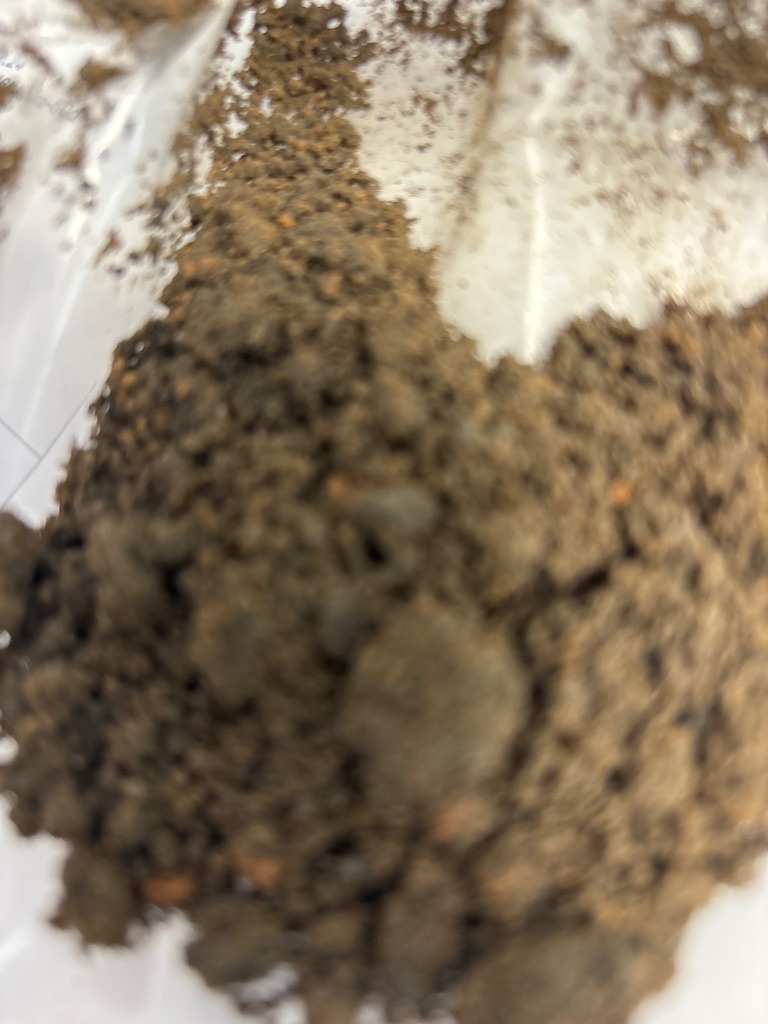
Dark Organic-Rich Loam
Loam · Temperate agricultural or deciduous forest topsoil, likely weathered from mixed glacial till or alluvial deposits.
AI Disclaimer
This soil report was produced by AI from a single photo. Treat it as a starting point, not laboratory truth.
pH, drainage, fertility, and composition are visual estimates — send a sample to an accredited lab before any decision that would be painful to get wrong.
Crop and amendment tips are general guidance — local climate, microclimate, and gardening history always win over an AI's best guess.
pH
Slightly acidic 6.0 to 6.8 based on dark organic appearance, but must be confirmed with a soil test kit.
Drainage
Well drained, due to balanced crumb structure and visible porosity allowing excess water to move freely while retaining moisture.
Organic Matter
Moderate 2 to 4 percent based on dark coloration and crumbly structure, supporting active microbial life and nutrient cycling.
Erosion Risk
Moderate risk of water erosion on sloped surfaces, easily mitigated by cover crops or mulching.
Overall Read
An exceptionally versatile, fertile, and balanced soil that provides an ideal foundation for most gardening and agricultural applications with minimal required amendments.
Texture
Friable and crumbly with moderate grit and smooth fines, forming a short ribbon in a ribbon test indicating balanced particle makeup.
Color Analysis
Dark brown to dark yellowish brown, suggesting good organic matter content and well-oxidized iron minerals with adequate drainage history.
Estimated Composition
40 percent sand, 40 percent silt, 15 percent clay, and 5 percent organic matter with moderate visual confidence.
Water Retention
Excellent plant-available water holding capacity, drying out gradually after rain and holding near ideal field capacity.
Aeration
Good oxygen availability to roots and microbes facilitated by stable soil aggregates and high porosity.
Compaction Level
Loose and friable, showing minimal signs of hardpan or severe compaction.
Structure & Aggregation
Granular structure with good aggregate stability, promoting easy root penetration, steady gas exchange, and moderate erosion resistance.
Fertility Indicators
Moderate to high fertility indicated by dark humus coloring and a healthy crumbly texture.
Climate Suitability
Thrives in temperate and humid continental climates with distinct seasonal rainfall.
Crops Worth Trying
Vegetables, tomatoes, peppers, leafy greens, root crops, fruit trees, and various turf grasses.
Plants To Avoid
Extremely drought-tolerant desert succulents or highly specialized bog plants that require extreme conditions.
Home Garden Use
Ideal for in-ground garden beds, raised beds, perennial borders, and lawn establishment.
Agricultural Use
Highly suitable for diversified farming, row crops, small-scale orchards, and sustainable no-till systems.
Landscaping Use
Excellent for ornamental shrub beds, turfgrass installations, and general landscape planting pits.
Common Problems
Minor nutrient leaching during heavy rains and potential surface crusting if left bare under intense sun.
Amendments Needed
Annual additions of finished compost to maintain organic matter and balanced slow-release organic fertilizers.
Try These At Home Tests
Perform a jar settling test for texture, a squeeze test for moisture, and a ribbon test to verify sand, silt, and clay ratios.
Professional Lab Recommendation
Send a sample to a local extension office every two to three years for complete nutrient analysis, organic matter percentage, and pH determination.
Fun Facts
Loam is considered the gold standard for agricultural productivity because it combines the best moisture-retention traits of silt and clay with the drainage and aeration benefits of sand.