Red Piedmont Clay
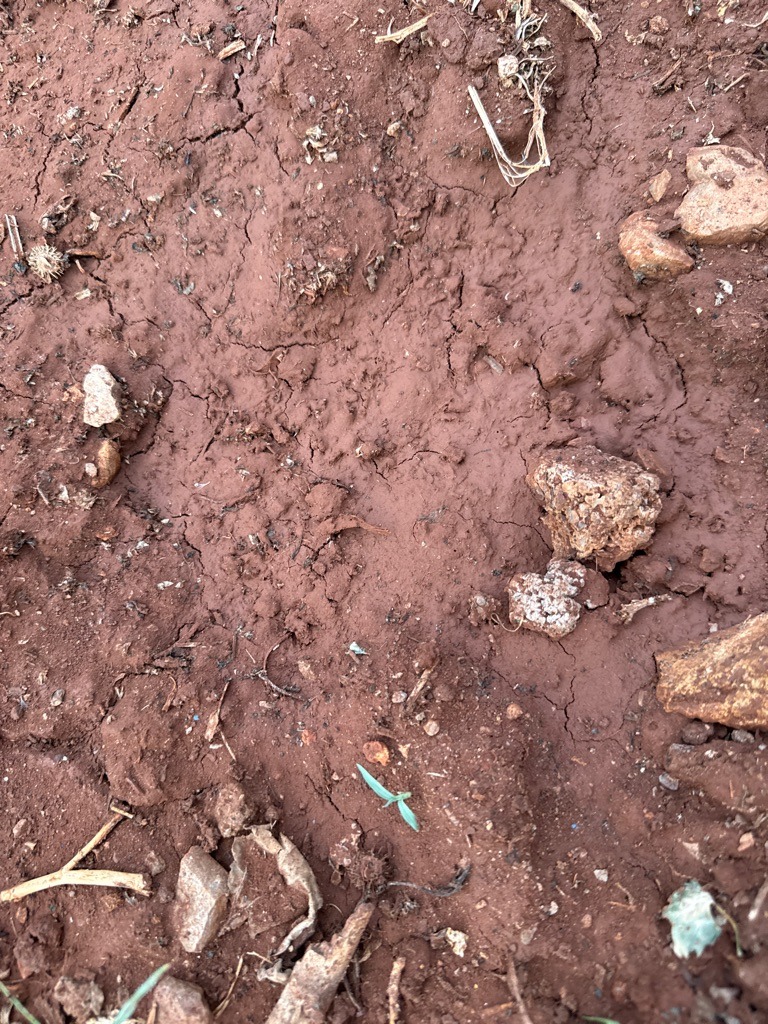
Clay Loam · Weathered residuum of the Piedmont region or ancient alluvial red beds, characterized by prolonged leaching and iron accumulation.
AI Disclaimer
This soil report was produced by AI from a single photo. Treat it as a starting point, not laboratory truth.
pH, drainage, fertility, and composition are visual estimates — send a sample to an accredited lab before any decision that would be painful to get wrong.
Crop and amendment tips are general guidance — local climate, microclimate, and gardening history always win over an AI's best guess.
pH
Strongly to moderately acidic (5.0–6.0) due to intense leaching of basic cations in weathered red clay regions. A laboratory test or electronic meter is required for accuracy.
Drainage
Moderately drained to poorly drained. Fine particle size restricts water movement, and surface crusting significantly impedes rapid infiltration following heavy rain.
Organic Matter
Low (1–2%). The lack of deep surface mulch and the exposed reddish mineral crust indicate limited humus accumulation.
Erosion Risk
High water erosion risk on slopes due to low immediate infiltration rates leading to surface runoff. Tillage and heavy rains can easily wash away fine particles.
Overall Read
A classic, heavy red clay soil offering excellent nutrient-holding capacity and moisture retention, though demanding careful organic management to overcome surface crusting and compaction.
Texture
Fine and smooth with high plasticity; likely forms a long, flexible ribbon when wet, indicating a high concentration of fine clay particles.
Color Analysis
Deep reddish brown (approx. 2.5YR 4/4), indicative of heavily weathered minerals rich in oxidized iron (hematite and goethite) and relatively low active organic matter.
Estimated Composition
35% sand, 20% silt, 35% clay, 10% coarse fragments and low organic matter. Confidence level is moderate based on visual surface cracking and aggregate structure.
Water Retention
High water-holding capacity, but prone to becoming tightly bound (high wilting point). Dries out slowly, yet develops hard surface crusts and deep cracks during prolonged dry spells.
Aeration
Moderate to low when wet due to swelling clay sealing pores, but improves when dry as cracking creates macropores.
Compaction Level
Moderately firm to compacted, especially at the surface where drying has created a hard crust that can restrict tender seedling emergence.
Structure & Aggregation
Subangular blocky to massive at the surface, showing prominent surface cracking upon drying. Aggregate stability is moderate to low, making it susceptible to crusting.
Fertility Indicators
Moderate inherent mineral fertility due to clay's high cation exchange capacity (CEC), but low biological activity and humus levels limit immediate nutrient availability. Overall rating: Moderate.
Climate Suitability
Thrives best in warm temperate and subtropical climates with distinct seasonal rainfall patterns, requiring careful moisture and tillage management.
Crops Worth Trying
Fescue grass, bermudagrass, root vegetables with care, fruit trees like apples and peaches on sloped sites, and robust cover crops like crimson clover or winter rye.
Plants To Avoid
Fine-seeded annuals sensitive to soil crusting, and plants requiring loose, sandy, rapidly draining soils without heavy amendments.
Home Garden Use
In-ground beds with heavy organic amendments, established perennial and shrub borders, native clay-loving ecosystems. Unsuited for container mixes without substantial lightening agents.
Agricultural Use
Well-suited for pastures, hay production, and orchards when managed with no-till practices to preserve structure and prevent severe compaction.
Landscaping Use
Good for establishing drought-tolerant turfgrasses and structural plantings, but requires careful amendment for ornamental flower beds.
Common Problems
Surface crusting, summer cracking, difficult root penetration when dry, slow spring warm-up, and susceptibility to waterlogging during heavy downpours.
Amendments Needed
Aged compost, leaf mold, and organic mulches applied generously to the surface to build structure, mitigate crusting, and boost microbial life.
Try These At Home Tests
Perform a ribbon test by wetting a sample and rolling it between your fingers, or execute a jar settling test to precisely quantify sand, silt, and clay proportions.
Professional Lab Recommendation
Send a sample to a local extension service for a complete fertility, pH, and CEC test before establishing major plantings or orchards.
Fun Facts
The distinctive red color comes from iron oxide coatings on clay particles, acting essentially as natural rust cemented into the mineral matrix over thousands of years.