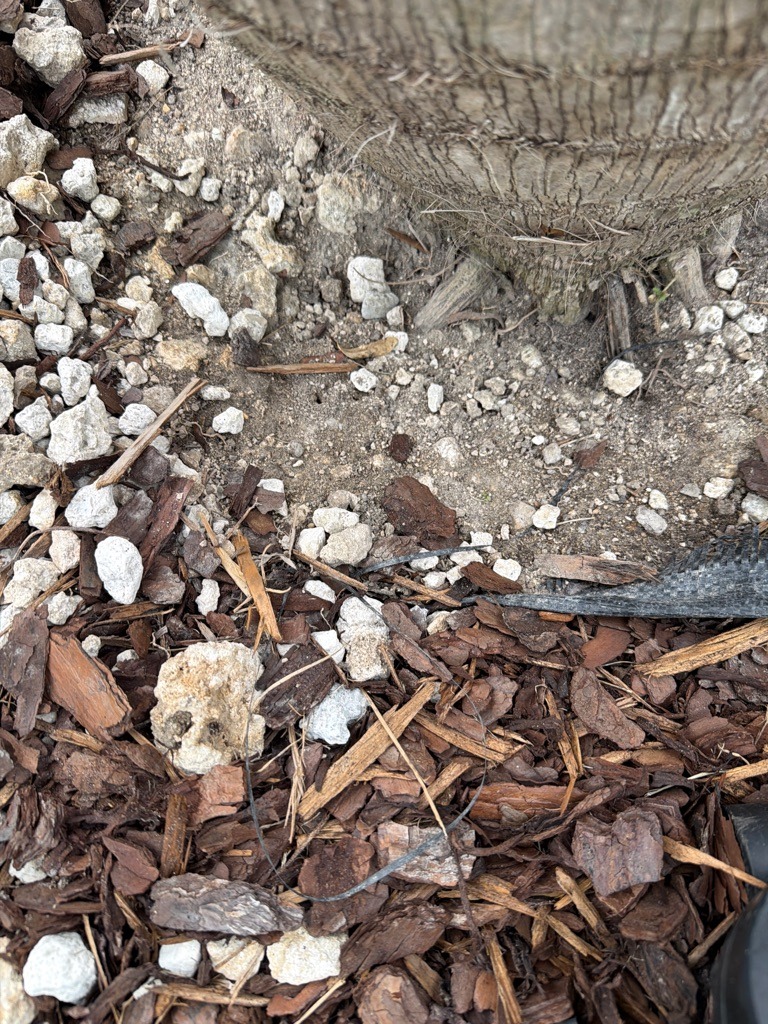
Coarse Subtropical Coral Sand and Limestone Fill
Sandy Loam to Loamy Sand (Calcareous) · Coastal marine terrace, coral key, or limestone-dominated subtropical region (e.g., South Florida or Caribbean).
AI Disclaimer
This soil report was produced by AI from a single photo. Treat it as a starting point, not laboratory truth.
pH, drainage, fertility, and composition are visual estimates — send a sample to an accredited lab before any decision that would be painful to get wrong.
Crop and amendment tips are general guidance — local climate, microclimate, and gardening history always win over an AI's best guess.
pH
Alkaline 7.8–8.5 due to weathered coral limestone bedrock and shell fragments.
Drainage
Excessively Drained due to high coarse sand and porous limestone composition, causing water to leach rapidly.
Organic Matter
Low (1-2%) in the mineral fraction, though supplemented by surface wood mulch.
Erosion Risk
Moderate wind and water erosion risk on sloped areas, mitigated slightly by wood chip mulch cover.
Overall Read
A challenging, highly alkaline, excessively draining sandy soil best suited for drought-tolerant tropical and subtropical plantings rather than traditional vegetable gardening.
Texture
Coarse, gritty, and powdery in spots with sharp limestone fragments; lacks cohesion and will not form a lasting ribbon test.
Color Analysis
Light gray to pale brown (Munsell 10YR 7/2 to 6/3), reflecting high calcium carbonate content, weathered coral, and low organic matter.
Estimated Composition
70% Sand, 15% Silt, 10% Clay, 5% Organic Matter (mostly surface mulch)
Water Retention
Very low plant-available water holding capacity; dries out extremely quickly in direct sun and wind.
Aeration
Excessive aeration; roots have abundant oxygen but suffer from drought stress.
Compaction Level
Loose and friable in the upper loose matrix, but often overlays dense, cemented caliche or limestone hardpan.
Structure & Aggregation
Single-grain structure with virtually no natural aggregation or stability without organic binders.
Fertility Indicators
Low fertility; pale color, lack of humus, and high calcium creating micronutrient tie-ups (iron, manganese, zinc).
Climate Suitability
Subtropical and tropical coastal climates with seasonal wet and dry periods.
Crops Worth Trying
Palms, yuccas, agaves, bougainvillea, oleander, Mediterranean herbs, and salt-tolerant coastal native plants.
Plants To Avoid
Acid-loving plants such as blueberries, azaleas, rhododendrons, and gardenias which will develop severe chlorosis.
Home Garden Use
Xeriscaping, palm and subtropical tree planting pits, and cactus/succulent rock gardens.
Agricultural Use
Unsuitable for general row crops without heavy irrigation and specialized fertigation to counteract nutrient lockup.
Landscaping Use
Ideal for drought-tolerant island beds, foundation plantings with palms, and areas requiring fast subsurface drainage.
Common Problems
Rapid nutrient leaching, iron chlorosis due to high pH, extreme drought stress, and poor moisture retention.
Amendments Needed
Heavy incorporation of compost, peat moss, or organic matter to build water holding capacity, plus chelated iron micronutrient sprays.
Try These At Home Tests
Perform a vinegar test (effervescence indicates high calcium carbonate/alkalinity) and a squeeze test (soil falls apart immediately).
Professional Lab Recommendation
Recommended for full nutrient panel and pH testing, specifically requesting micronutrient availability and soluble salts.
Fun Facts
This type of soil is often heavily modified by imported organic mulches to mimic traditional topsoil in coastal development landscapes.