Arid Badlands Clay Loam
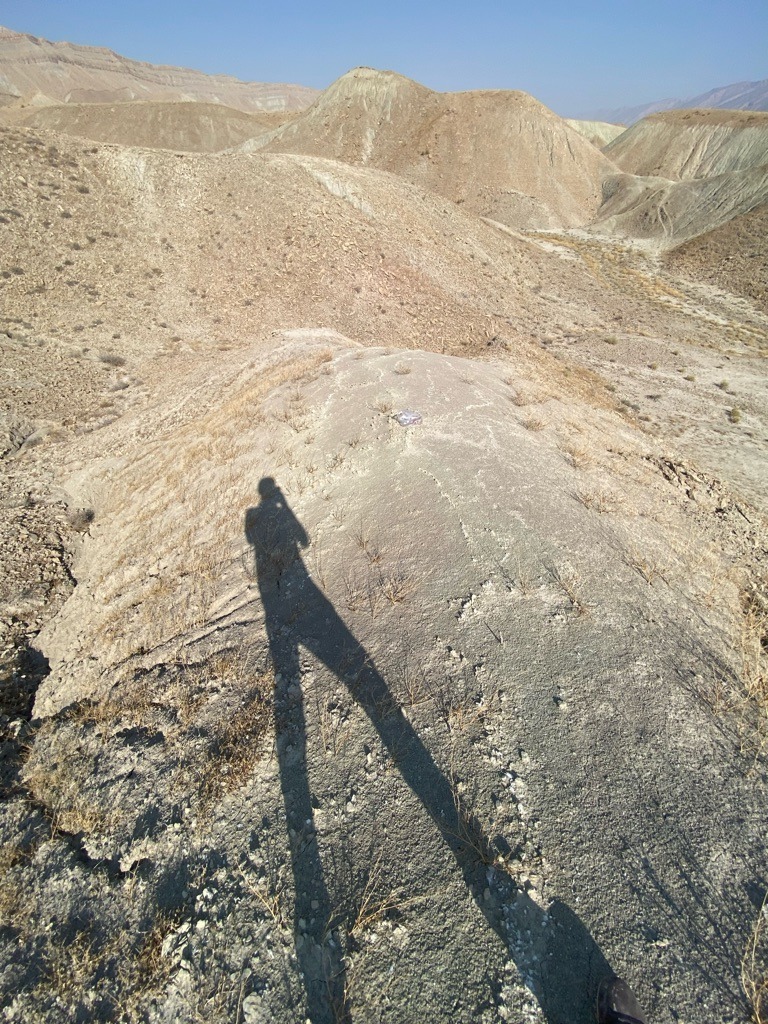
Clay Loam · Arid badlands, desert alluvial fans, or weathered sedimentary shale formations in semi-arid regions.
AI Disclaimer
This soil report was produced by AI from a single photo. Treat it as a starting point, not laboratory truth.
pH, drainage, fertility, and composition are visual estimates — send a sample to an accredited lab before any decision that would be painful to get wrong.
Crop and amendment tips are general guidance — local climate, microclimate, and gardening history always win over an AI's best guess.
pH
Moderately to strongly alkaline 7.8–8.5, based on the pale, calcareous appearance typical of arid and semi-arid badland environments. Confirm with a lab test or pH meter.
Drainage
Poorly Drained to Moderately Drained, due to the high clay and silt content which slow infiltration and create surface sealing.
Organic Matter
Very low (<1%), due to the sparse vegetation and rapid oxidation in a hot, arid climate.
Erosion Risk
Very high water and tillage erosion risk. Sparse vegetation on steep slopes leaves the fine-textured soil vulnerable to flash floods and gully formation.
Overall Read
A challenging, highly mineralized arid soil with low organic matter and high clay content. While tough for traditional gardening, it supports specialized native desert ecosystems and requires careful management of water and organic amendments for productive use.
Texture
Fine, powdery when dry, sticky and plastic when wet; forms a long, cohesive ribbon in a ribbon test, indicating high clay content mixed with silt and fine sand.
Color Analysis
Light grayish-brown to pale olive-tan (Munsell 2.5Y 6/2 to 5Y 6/3), indicating low organic matter, presence of carbonates, and minimal weathering of iron under arid conditions.
Estimated Composition
Sand: 30%, Silt: 40%, Clay: 28%, Organic Matter: 2%
Water Retention
High water-holding capacity, but much of the water is held tightly by clay particles, making it difficult for plants to extract. Dries out into a hard, cracked crust.
Aeration
Low to moderate; restricted when wet due to swelling clays, and limited by surface crusting when dry.
Compaction Level
Moderately firm to compacted naturally, drying into a hard surface layer that restricts root penetration.
Structure & Aggregation
Massive to weak blocky structure with low aggregate stability, prone to crusting and sealing under intense rainfall events.
Fertility Indicators
Low fertility overall; pale color and lack of organic residues indicate low nitrogen and active microbial life, though mineral reserve (potassium, calcium) may be adequate.
Climate Suitability
Arid and semi-arid climates with low annual rainfall and high evaporation rates.
Crops Worth Trying
Drought-tolerant native grasses, saltbush, juniper, and deeply rooted xeriscaping plants capable of handling heavy, alkaline soils.
Plants To Avoid
Acid-loving plants (blueberries, azaleas), delicate root vegetables that struggle with hard crusts, and moisture-sensitive species.
Home Garden Use
Native restoration planting and drought-tolerant xeriscaping, provided extensive amendments are applied for conventional gardening.
Agricultural Use
Extensive rangeland or grazing pasture; row cropping is extremely difficult without heavy irrigation and continuous organic amendments.
Landscaping Use
Naturalistic slope stabilization with native drought-hardy shrubs and grasses; poorly suited for standard turfgrass without major modification.
Common Problems
Surface crusting, cracking upon drying, poor seedling emergence, high alkalinity, and rapid runoff leading to erosion.
Amendments Needed
Heavy applications of compost, aged manure, and organic mulches to improve structure, buffer pH, and increase organic matter.
Try These At Home Tests
Perform a jar settling test for particle fractions, a ribbon test for clay content, and an infiltration test using a ring and water to observe slow percolation rates.
Professional Lab Recommendation
Recommended before intensive agricultural use to test for salinity, sodium adsorption ratio (SAR), pH, and cation exchange capacity (CEC). Cost usually ranges from $30 to $60.
Fun Facts
Badland soils often form from ancient marine shales or lake deposits exposed over millions of years, containing high concentrations of soluble salts and gypsum.