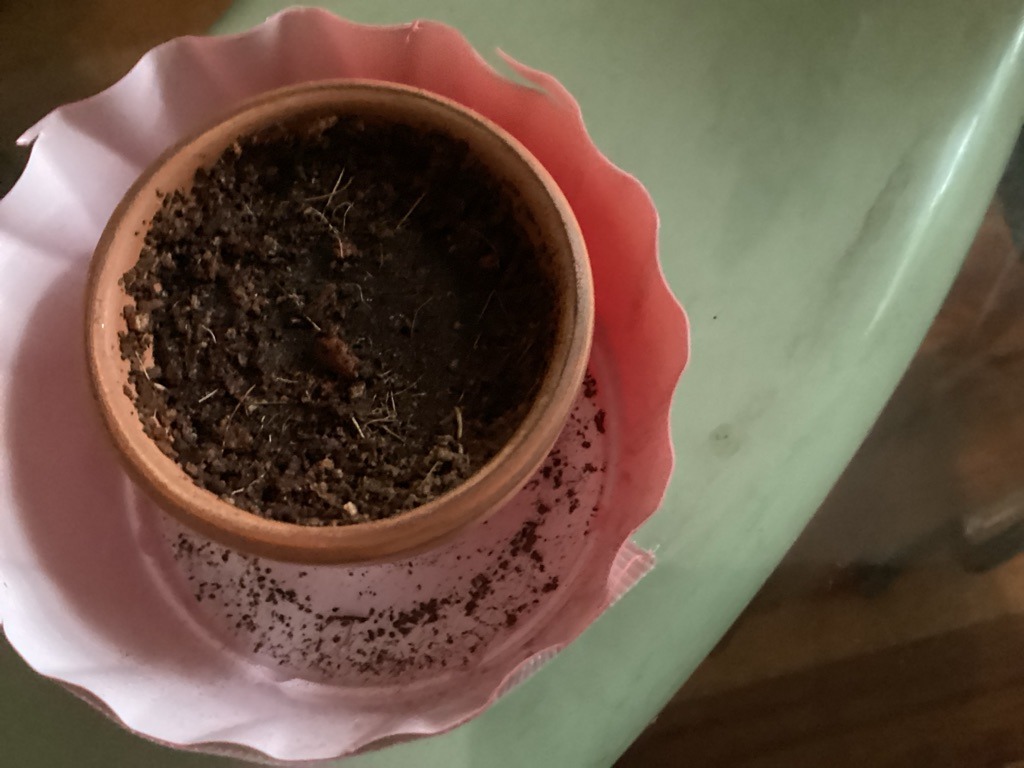
Organic-Rich Peat-Based Potting Mix
Peat-based potting medium with horticultural grit · Manufactured horticultural substrate; likely sourced from bog peatlands (Canada/Northern Europe) or tropical coconut plantations (coir), processed for consumer use.
AI Disclaimer
This soil report was produced by AI from a single photo. Treat it as a starting point, not laboratory truth.
pH, drainage, fertility, and composition are visual estimates — send a sample to an accredited lab before any decision that would be painful to get wrong.
Crop and amendment tips are general guidance — local climate, microclimate, and gardening history always win over an AI's best guess.
pH
Likely slightly acidic (5.5–6.5). Peat-based mixes are naturally acidic unless buffered with dolomitic lime, which is common in commercial blends.
Drainage
Well Drained. The porous, fibrous structure and the use of a terracotta container allow for rapid water movement and evaporation, though it may become hydrophobic if allowed to dry out completely.
Organic Matter
Very rich (>20%). As a potting medium rather than a mineral soil, it is composed almost entirely of organic decomposition products.
Erosion Risk
Low. Given its use in a container, the main risk is wash-out from heavy top-watering or 'dusting' if allowed to dry and exposed to high wind.
Overall Read
High-quality, specialized growing medium. Its greatest strength is its balance of air and water, making it very forgiving for container plants. Its weakness is a lack of inherent long-term mineral fertility.
Texture
Fibrous and crumbly; likely feels light, spongy, and non-sticky when moist, with a short, brittle ribbon-test behavior owing to high organic content.
Color Analysis
Very dark brown to black (Munsell 10YR 2/1). This indicates high organic matter content and recent hydration; the uniform dark color suggests a high concentration of humified materials or peat.
Estimated Composition
70-80% Sphagnum peat moss or coconut coir, 10-15% fine bark or woody debris, 5-10% mineral grit/perlite, and <5% clay.
Water Retention
High Water-Holding Capacity. The organic fibers act like a sponge, holding significant plant-available water while maintaining air spaces.
Aeration
Excellent. The coarse organic fractions and the breathable nature of the terracotta pot ensure high oxygen availability to the root zone.
Compaction Level
Loose and friable. The visible fibrous roots and chunky particles suggest it is currently resistant to compaction, though it may shrink and pull away from the pot walls when dry.
Structure & Aggregation
Granular/Fibrous structure. It lack mineral peds but forms stable, lightweight clusters that provide excellent pore space for oxygen.
Fertility Indicators
Moderate. While high in carbon, its nutrient content depends on added fertilizers (e.g., slow-release pellets). The presence of fine root hairs suggests a healthy biological environment.
Climate Suitability
Indoor or controlled temperate environments. It is designed to mitigate the lack of a natural ground-water table in container gardening.
Crops Worth Trying
Ferns, tropical houseplants, starting seeds, and herbs like mint or basil that prefer consistent moisture and high aeration.
Plants To Avoid
Cacti and succulents (unless amended with 50% extra grit) because it may hold moisture too long for their rot-prone roots.
Home Garden Use
Ideal for seed starting trays, indoor decorative pots, and hanging baskets.
Agricultural Use
Specialized greenhouse production, high-value nursery stock propagation, and vertical farming systems.
Landscaping Use
Incorporation into seasonal annual flower beds to improve moisture retention or as a top-dressing for newly seeded lawn patches.
Common Problems
Hydrophobicity (it repels water when bone dry), nutrient leaching over time, and potential for fungus gnat infestations due to high organic moisture.
Amendments Needed
Liquid kelp or balanced NPK fertilizer for nutrient replenishment; perlite or coarse sand if used for desert-origin plants.
Try These At Home Tests
A 'squeeze test' should yield a few drops of water and the soil should hold its shape briefly before crumbling. A 'float test' in a jar will show most material floating, confirming its organic nature.
Professional Lab Recommendation
Visual analysis is usually sufficient for potting soil, but a saturated media extract (SME) test is recommended if plants show mysterious yellowing to check EC (salinity) and pH.
Fun Facts
Peat moss in this mix can hold up to 20 times its dry weight in water, a property that revolutionized the nursery industry in the mid-20th century.