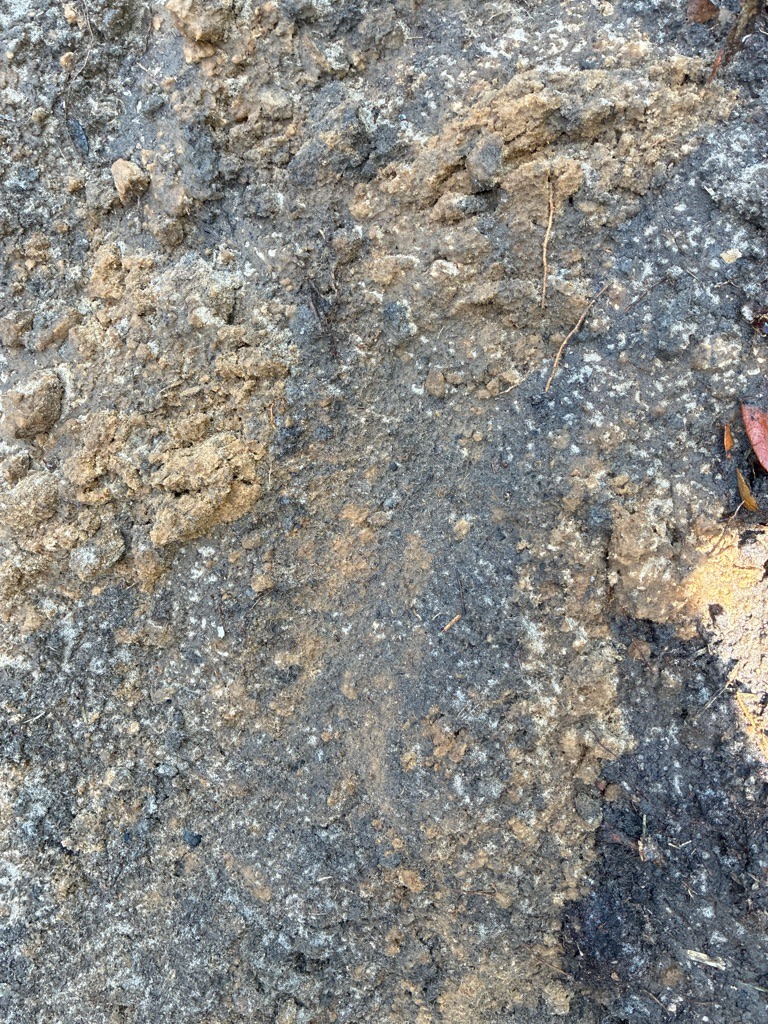
Disturbed Coastal Sandy Loam with Calcific Debris
Sandy Loam to Loamy Sand · Coastal plain deposits or alluvial sediment, likely from regions like the Southeastern United States (Florida/Georgia) or Mediterranean coastal zones.
AI Disclaimer
This soil report was produced by AI from a single photo. Treat it as a starting point, not laboratory truth.
pH, drainage, fertility, and composition are visual estimates — send a sample to an accredited lab before any decision that would be painful to get wrong.
Crop and amendment tips are general guidance — local climate, microclimate, and gardening history always win over an AI's best guess.
pH
Slightly alkaline to Alkaline (7.2–8.0). The presence of white, shell-like or mineral flecks often indicates high calcium carbonate content, common in coastal or limestone-rich areas.
Drainage
Well Drained to Excessively Drained. The high sand content allows for rapid macropore water movement, though the darker patches suggest some localized fine material that slows infiltration slightly.
Organic Matter
Low to Moderate (2–3%). The dark surface coloration indicates some humus, but the structure is too loose to suggest high organic mineralization.
Erosion Risk
High susceptibility to wind and water erosion. Without vegetation, the loose sand particles are easily transported during heavy rain or high winds.
Overall Read
A manageable, workable soil with great drainage but low inherent 'stamina.' It is a 'hungry' soil that will reward the gardener who provides consistent organic matter and careful irrigation.
Texture
Gritty and somewhat abrasive. The visible coarse sand grains suggest a soil that would produce a weak, brittle ribbon less than 1 inch long before breaking.
Color Analysis
A complex mosaic of dark grayish brown (10YR 4/2) and lighter yellowish brown (10YR 6/4). The grayish tones suggest some organic accumulation or moisture retention, while light specks may indicate salt/calcium deposits.
Estimated Composition
75% Sand, 15% Silt, 7% Clay, 3% Organic Matter. High confidence in sand dominance due to visible grain individualization.
Water Retention
Low. This soil will likely dry out rapidly in direct sun. It lacks the clay-humus complexes needed to hold significant plant-available water during dry spells.
Aeration
Excellent. Large pore spaces between sand grains ensure high oxygen diffusion for root respiration and aerobic microbial life.
Compaction Level
Moderately Low. While the surface looks somewhat trodden or damp-compacted, the sandy nature prevents the formation of massive hardpan layers typical of heavy clays.
Structure & Aggregation
Weakly granular to Single-grained. There is very little evidence of stable peds or aggregates; the soil appears mostly crumbly and structurally unstable if disturbed.
Fertility Indicators
Moderate-Low. While the darkness suggests some nutrient presence, the coarse texture implies a low Cation Exchange Capacity (CEC) and frequent leaching of mobile nutrients like Nitrogen.
Climate Suitability
Thrives in Humid Subtropical or Mediterranean climates where frequent rainfall can offset the low water retention of the sandy profile.
Crops Worth Trying
Root vegetables like carrots (easy penetration), asparagus, herbs (lavender, rosemary), and Mediterranean fruit trees like figs or olives.
Plants To Avoid
Acid-loving plants (Blueberries, Azaleas) due to likely high pH, and heavy-feeding leafy greens that require constant moisture and high nitrogen.
Home Garden Use
Excellent for rock gardens and drought-tolerant perennial borders. Requires heavy amendment for intensive vegetable gardening or raised beds.
Agricultural Use
Suitable for orchards or specialized crops like peanuts and watermelons. Likely requires drip irrigation and split-application fertilization to prevent leaching.
Landscaping Use
Ideal for xeriscaping and areas requiring high drainage, such as around pool decks or as a substrate for pavers and native grasses.
Common Problems
Rapid nutrient leaching, periodic drought stress for plants, and potential alkalinity causing iron chlorosis (yellowing leaves) in sensitive species.
Amendments Needed
Incorporate 3-4 inches of compost or aged manure to increase CEC and water holding. Use elemental sulfur if pH reduction is required for specific plants.
Try These At Home Tests
Perform a 'Jar Test': fill a jar 1/3 with soil and 2/3 water, shake, and let settle. The sand will fall out in seconds, confirming the texture profile.
Professional Lab Recommendation
Highly recommended to test for Cation Exchange Capacity (CEC) and pH. This will confirm if the white flecks are calcium-based and guide specific fertilization.
Fun Facts
Sandy soils like this are often referred to as 'warm soils' because they heat up much faster in the spring than clay soils, allowing for earlier planting.