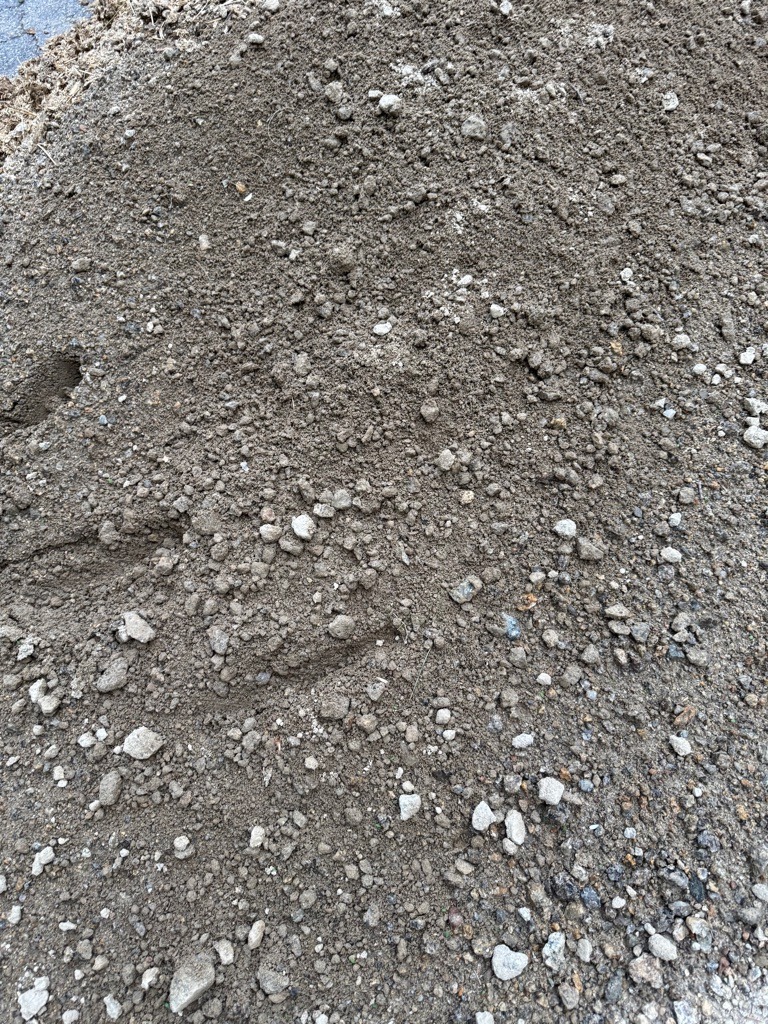
Alkaline Sandy Loam with Aggregate Gravel
Sandy Loam · Alluvial outwash, glacial till, or weathered granitic residuum common in arid, semi-arid, or temperate transitional zones.
AI Disclaimer
This soil report was produced by AI from a single photo. Treat it as a starting point, not laboratory truth.
pH, drainage, fertility, and composition are visual estimates — send a sample to an accredited lab before any decision that would be painful to get wrong.
Crop and amendment tips are general guidance — local climate, microclimate, and gardening history always win over an AI's best guess.
pH
Likely slightly to moderately alkaline (7.2 to 8.0) based on the pale grayish coloration and visible mineral fragments, though confirmation via a digital pH meter or test strip is strongly recommended.
Drainage
Well Drained. The high sand and gravel content creates large macro-pores that allow water to percolate rapidly through the profile, preventing prolonged waterlogging.
Organic Matter
Low (1-2%). The pale color and lack of dark humus staining indicate a minimal reserve of organic matter, which limits native microbial activity and natural nutrient cycling.
Erosion Risk
Moderate to High for wind and water erosion when bare, particularly on slopes, because the light, sandy particles and weak aggregates easily detach and wash or blow away.
Overall Read
A workable, highly aerated, and fast-draining soil that requires active management. While its low organic matter and fertility limit immediate high yields, regular additions of compost make it a highly responsive and versatile medium for gardeners and farmers alike.
Texture
Coarse and gritty with small rock fragments; forms a weak, easily broken ribbon when tested, indicating a high sand fraction with just enough silt and clay to hold loose aggregates together.
Color Analysis
Light grayish-brown (Munsell 10YR 5/2 to 5/3). The light value and dull chroma suggest low organic matter content, presence of weathering minerals, and possibly free carbonates contributing to the lighter grey tones.
Estimated Composition
Roughly 65 percent sand, 20 percent silt, 10 percent clay, and 5 percent or less organic matter. This visual estimate carries a moderate confidence level due to visible coarse particles and small stones.
Water Retention
Low to Moderate. Due to the coarse, sandy texture, water will drain quickly and the soil may dry out rapidly under direct sun. Plant-available water holding capacity is limited compared to an ideal loam.
Aeration
Excellent. The coarse texture and abundance of macro-pores ensure high oxygen availability and robust gas exchange for plant roots and soil microbes.
Compaction Level
Loose and friable in unconfined piles, though it can form a dense crust or pack down under heavy foot traffic due to the lack of stabilizing organic binding agents.
Structure & Aggregation
Weak granular to single-grain structure mixed with small stones. Peds are fragile and break apart easily under slight pressure, offering little inherent resistance to surface water erosion.
Fertility Indicators
Low overall fertility. Visual clues show pale coloration, rock fragments, and very little visible humus or biological activity. Nutrient retention (Cation Exchange Capacity) will be relatively low.
Climate Suitability
Thrives best in temperate or Mediterranean climates where supplemental irrigation and regular organic amendments are applied to compensate for quick drainage.
Crops Worth Trying
Root vegetables like carrots and radishes, drought-tolerant herbs like rosemary and thyme, Mediterranean fruit trees, warm-season grasses, and specific cover crops like crimson clover or daikon radish.
Plants To Avoid
Acid-loving plants such as blueberries, azaleas, and rhododendrons, as well as moisture-loving bog plants that require constant soil saturation.
Home Garden Use
Great for raised beds, xeriscaping, succulent gardens, and herb patches once amended. Less suited for shallow container mixes without added moisture retainers.
Agricultural Use
Suitable for irrigated row crops, orchards, and vineyards if managed with frequent, lighter irrigations and heavy cover cropping to build organic matter.
Landscaping Use
Ideal for drought-tolerant ornamental landscapes, rock gardens, and as a base for permeable pathways or native grass establishment.
Common Problems
Rapid nutrient leaching, quick drying out between rain events, surface crusting after heavy downpours, and low overall organic fertility.
Amendments Needed
Heavy incorporation of finished compost, aged manure, and organic mulches to boost water retention, nutrient holding capacity, and microbial populations.
Try These At Home Tests
Perform a jar test to separate sand, silt, and clay particles by settling speed; conduct a ribbon test to check plasticity; and use a basic soil pH test kit.
Professional Lab Recommendation
Send a sample to a local extension lab for a complete nutrient panel, organic matter percentage, and cation exchange capacity to determine precise fertilizer and lime or sulfur needs.
Fun Facts
Sandy loam soils warm up much faster in the spring than heavy clays, giving growers an earlier head start on planting root crops and early-season vegetables.