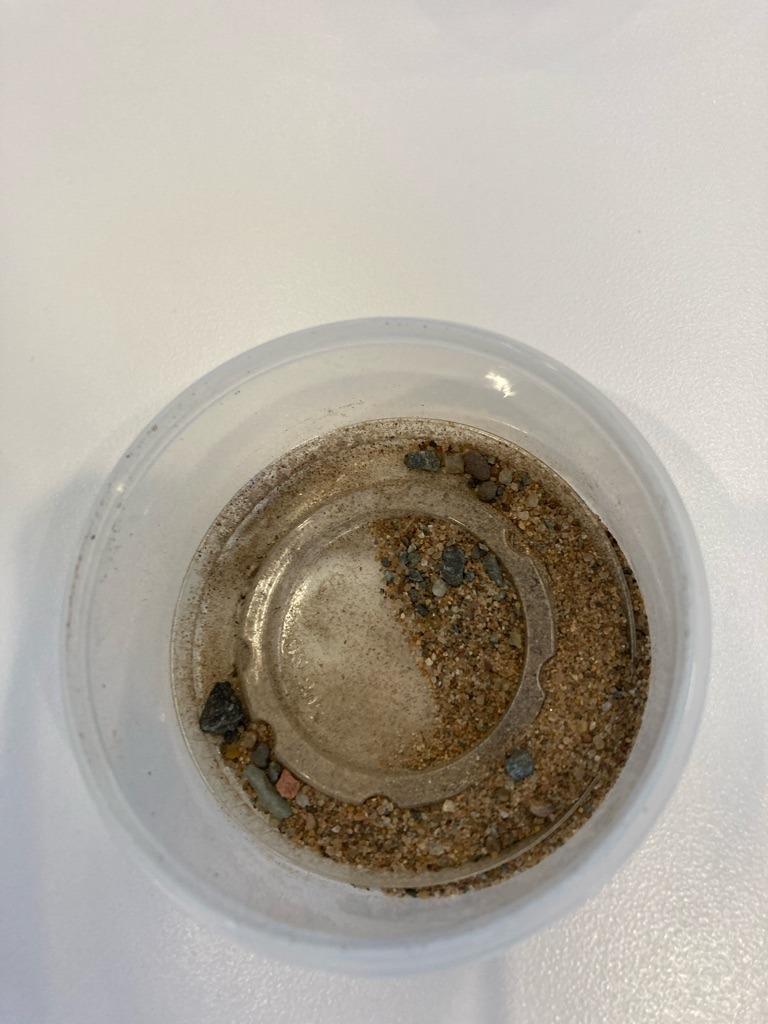
Coarse Alluvial Sandy Sediment
Sand · Alluvial floodplain deposit, river sandbar, or glacial outwash plain.
AI Disclaimer
This soil report was produced by AI from a single photo. Treat it as a starting point, not laboratory truth.
pH, drainage, fertility, and composition are visual estimates — send a sample to an accredited lab before any decision that would be painful to get wrong.
Crop and amendment tips are general guidance — local climate, microclimate, and gardening history always win over an AI's best guess.
pH
Neutral to slightly alkaline (6.8–7.5), typical of many river-deposited sands derived from mixed mineralogy, though chemical testing is required for verification.
Drainage
Excessively Drained. The coarse texture and lack of fine particles create large macro-pores that allow water to pass through almost immediately.
Organic Matter
Very low (<1%). The pale color and lack of dark humus or visible decaying plant material indicate minimal biological activity.
Erosion Risk
Very high risk of wind and water erosion due to single-grain structure, lack of cohesion, and sparse vegetative cover.
Overall Read
This is a coarse, sandy material with low fertility, rapid drainage, and virtually no organic matter. While challenging for general gardening without substantial amendment, its excellent drainage makes it perfect for specific xeriscaping, root crops, or as a component to lighten heavier clay soils.
Texture
Coarse, gritty, and completely loose with zero cohesion. Fails to form a ribbon entirely and falls apart instantly when squeezed, indicating an extremely high sand fraction and virtually no silt or clay.
Color Analysis
Light yellowish-brown to pale tan with mixed mineral grains (quartz, feldspar, dark accessory minerals). Munsell approximation 10YR 6/4. Suggests low organic matter content, oxidized iron coatings on quartz grains, and well-drained conditions without prolonged waterlogging.
Estimated Composition
Sand: 90-95%, Silt: 3-5%, Clay: 1-3%, Organic Matter: <1%. Visual estimate has high confidence due to the visible separation of coarse grains and lack of fine powdery residue.
Water Retention
Extremely low. Water drains straight through rapidly, leaving the soil dry very quickly after rainfall or irrigation and resulting in low plant-available water holding capacity.
Aeration
Excessive aeration. Oxygen is abundantly available to roots and microbes, but the lack of moisture retention makes it a harsh environment for most beneficial soil life.
Compaction Level
Loose and friable. Because there are no binding clays or organic glues, the material does not pack down into hard clods or hardpans.
Structure & Aggregation
Single-grain structure. Particles exist as independent, unattached grains with zero aggregate stability, rendering it highly susceptible to shifting.
Fertility Indicators
Low overall fertility. There is a complete absence of dark humus, root density, earthworm activity, and nutrient-holding colloidal surfaces, rating overall fertility as Low.
Climate Suitability
Thrives best in arid or semi-arid climates where excessive drainage prevents root rot, or requires heavy irrigation in hot, dry environments.
Crops Worth Trying
Drought-tolerant root crops like carrots and radishes (in loose soil), bulbs (garlic, onions), succulents, Mediterranean herbs (rosemary, thyme, lavender), and warm-season grasses.
Plants To Avoid
Moisture-loving plants, heavy feeders, shallow-rooted annuals requiring steady moisture, and crops susceptible to drought stress like corn or leafy greens without constant irrigation.
Home Garden Use
Useful for drainage layers, mixing into heavy clay to improve aeration, or creating specialized xeriscapes and rock gardens. Not suitable for standard unamended vegetable beds.
Agricultural Use
Unsuitable for rainfed row crops due to extreme leaching of nutrients and water. Requires frequent, fertigated drip irrigation if used for specialized agricultural production.
Landscaping Use
Ideal for backfill around drainage pipes, sub-base material, cactus and succulent gardens, or drought-tolerant ornamental plantings with drip systems.
Common Problems
Rapid nutrient leaching, extreme drought stress, low cation exchange capacity, wind erosion, and inability to hold fertilizers.
Amendments Needed
Heavy additions of compost, aged manure, peat moss, or well-rotted organic matter to build up water retention and nutrient-holding capacity. Apply several inches and till or work deeply into the profile.
Try These At Home Tests
Perform a jar settling test (sand settles within 1 minute, leaving clear water above), attempt a ribbon test (it will completely collapse), or do an infiltration test (water will vanish almost instantly).
Professional Lab Recommendation
Recommended if planning intensive agricultural use. Request a complete soil test including Cation Exchange Capacity (CEC), organic matter percentage, and basic nutrient levels to establish a baseline for heavy amendment.
Fun Facts
Sandy soils warm up much faster in the spring than heavy clay soils, giving growers a head start on early season planting, which is why many early market gardens historically developed on sandy river terraces.