Coastal Sandy Loam
Sandy Loam · Alluvial floodplain deposit or coastal marine terrace dominated by quartz sands.
AI Disclaimer
This soil report was produced by AI from a single photo. Treat it as a starting point, not laboratory truth.
pH, drainage, fertility, and composition are visual estimates — send a sample to an accredited lab before any decision that would be painful to get wrong.
Crop and amendment tips are general guidance — local climate, microclimate, and gardening history always win over an AI's best guess.
pH
Slightly acidic to neutral 6.0–7.0 based on typical coastal weathering, though a test strip is necessary for confirmation.
Drainage
Excessively Drained. Water moves through the large pore spaces rapidly, leading to quick dry-down times following rain or irrigation.
Organic Matter
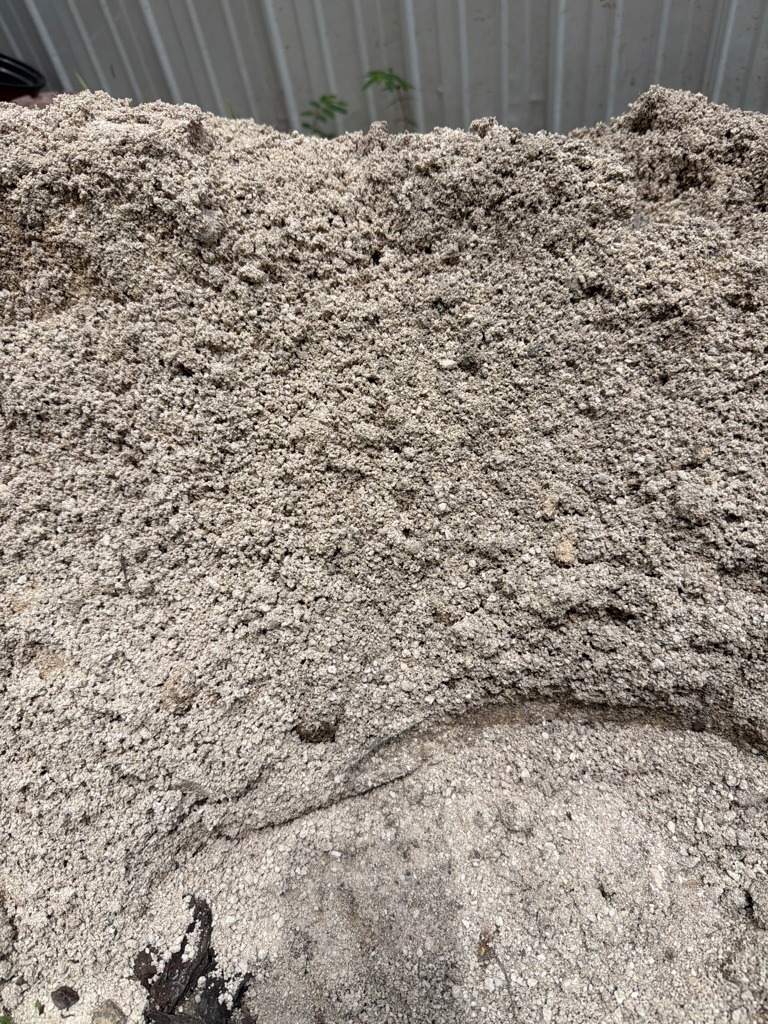
Low (1–2%). Evidenced by the pale coloration and lack of visible decomposing plant debris, pointing to limited microbial activity.
Erosion Risk
High risk of wind and water erosion due to single-grain structure and lack of cohesive clay or organic binding agents.
Overall Read
A highly workable, well-aerated soil that lacks natural water-holding capacity and fertility. With consistent organic amendments and regular watering, it transforms into an excellent medium for root crops and gardening.
Texture
Coarse and gritty with low cohesion; fails to form a ribbon during a ribbon test, falling apart easily due to dominant sand particle makeup.
Color Analysis
Light gray to pale tan, indicating low organic matter content, washed quartz minerals, and well-leached conditions typical of high-rainfall or coastal environments.
Estimated Composition
75% sand, 15% silt, 8% clay, 2% organic matter. Moderate-high confidence level based on visual particle prominence and lack of dark humus staining.
Water Retention
Low. Holds minimal plant-available water and dries out quickly under direct sun, requiring frequent irrigation for demanding crops.
Aeration
Excellent. Plentiful large pore spaces ensure high oxygen availability for roots and soil microbes, virtually eliminating risks of anaerobic conditions.
Compaction Level
Loose and friable. Resists severe natural compaction due to large particle spacing, though heavy machinery can still compress it temporarily.
Structure & Aggregation
Single-grain structure with virtually no stable aggregates. Highly susceptible to shifting and lacks natural structural bonding.
Fertility Indicators
Low fertility overall. Pale color, lack of humus, and absence of visible biological activity (like earthworm casts) point to limited native nutrient reserves.
Climate Suitability
Thrives in humid subtropical or temperate coastal climates where regular rainfall or irrigation offsets rapid drainage.
Crops Worth Trying
Root vegetables (carrots, radishes), potatoes, strawberries, and drought-tolerant herbs like rosemary and lavender.
Plants To Avoid
Heavy moisture-loving plants and shallow-rooted perennials that cannot tap deep water tables quickly.
Home Garden Use
Ideal for raised bed foundations, pathways, and specific drainage-heavy garden zones when heavily amended.
Agricultural Use
Suitable for specialized truck farming and root crop production under high-input irrigation and fertilization management.
Landscaping Use
Great for drought-tolerant xeriscaping, succulent gardens, and as a base component for custom landscape mixes.
Common Problems
Rapid nutrient leaching, moisture stress during dry spells, and low natural fertility.
Amendments Needed
Heavy incorporation of finished compost, aged manure, and organic matter to build up water retention and Cation Exchange Capacity.
Try These At Home Tests
Perform a simple jar settling test to separate sand, silt, and clay fractions, or try squeezing a moist handful to see if it holds shape.
Professional Lab Recommendation
Send a sample to a lab for a basic nutrient analysis and organic matter percentage to accurately tailor fertilizer and irrigation schedules.
Fun Facts
Sandy soils warm up much faster in the spring than heavy clays, allowing farmers to plant earlier in the season.