Temperate Garden Sandy Loam
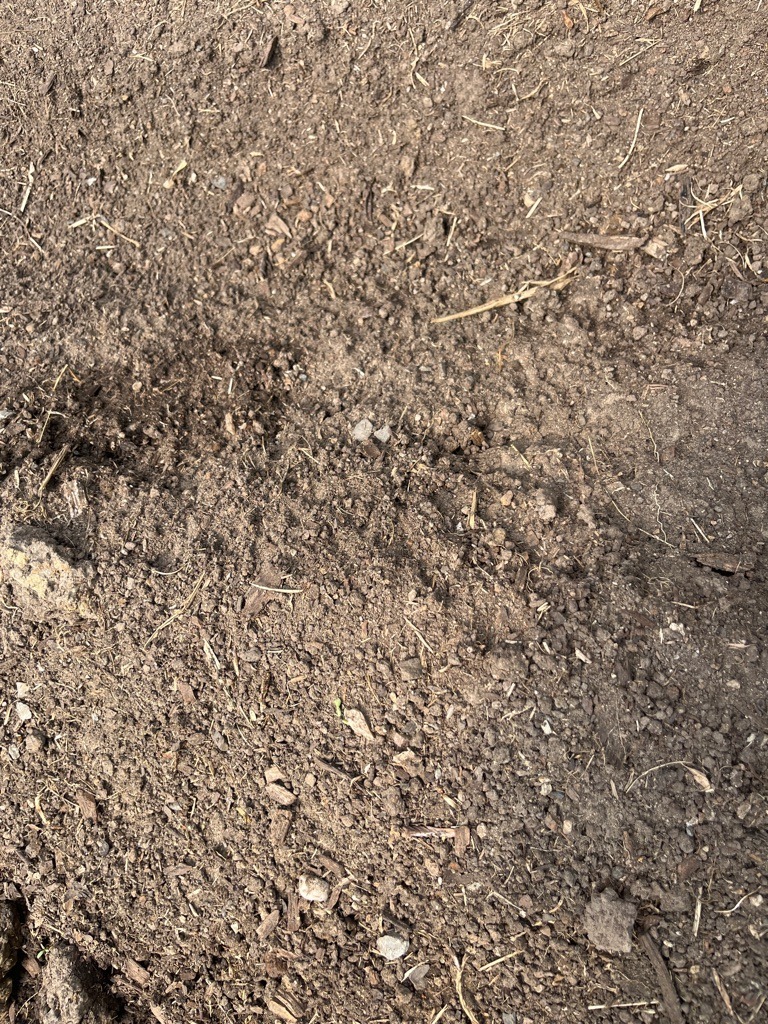
Sandy Loam · Glacial outwash plain or alluvial river terrace topsoil enriched with organic amendments.
AI Disclaimer
This soil report was produced by AI from a single photo. Treat it as a starting point, not laboratory truth.
pH, drainage, fertility, and composition are visual estimates — send a sample to an accredited lab before any decision that would be painful to get wrong.
Crop and amendment tips are general guidance — local climate, microclimate, and gardening history always win over an AI's best guess.
pH
Slightly acidic to neutral 6.2–6.8, based on healthy biological breakdown and typical temperate topsoil development. Confirmation requires a test strip or digital pH meter.
Drainage
Well Drained, due to the high sand and coarse particulate fraction which prevents water from pooling while maintaining adequate moisture retention via organic fractions.
Organic Matter
Moderate (2-4%), evidenced by the visible small wood chips, root fibers, and dark crumbly appearance supporting healthy microbial populations.
Erosion Risk
Moderate water and wind erosion risk on slopes or bare surfaces due to the loose sandy texture; best mitigated with cover crops or organic mulching.
Overall Read
An exceptionally versatile, workable, and fertile garden soil that offers great drainage and root penetration, needing only regular organic matter additions to maintain high productivity.
Texture
Moderately coarse with visible sand grains and small aggregates, likely forming a weak, short ribbon that breaks easily under a ribbon test, indicating a balanced mix of sand with enough silt and clay to hold loose structure.
Color Analysis
Medium grayish-brown to dark brown, approximately Munsell 10YR 4/3, indicating moderate organic matter content, well-drained conditions without prolonged waterlogging, and standard iron-bearing mineral composition.
Estimated Composition
Sand 60 percent, silt 25 percent, clay 10 percent, organic matter 5 percent. Moderate visual confidence.
Water Retention
Moderate; the sandy component allows excess water to drain freely, while the organic debris and finer particles help retain sufficient plant-available moisture between waterings.
Aeration
Excellent, with plentiful pore spaces between sand grains and loose aggregates allowing high oxygen diffusion to plant roots and soil microbes.
Compaction Level
Loose and friable, showing minimal signs of heavy crusting or hardpan, though surface traffic could easily compact it if left unmulched.
Structure & Aggregation
Weak to moderate granular structure, friable and easily crumbled, which promotes easy root penetration and good gas exchange.
Fertility Indicators
Moderate fertility, indicated by visible decomposing organic debris and dark humus tones, though supplemental feeding will support heavy-yielding crops.
Climate Suitability
Temperate and Mediterranean climates, benefiting greatly from organic mulches during hot, dry summer months to prevent rapid moisture loss.
Crops Worth Trying
Root vegetables like carrots and radishes, tomatoes, peppers, potatoes, leafy greens, and various annual herbs that prefer loose, well-draining soil.
Plants To Avoid
Wetland or bog-loving species that require consistently saturated, heavy clay environments, as they may dry out too quickly here.
Home Garden Use
Ideal for in-ground vegetable gardens, raised beds, perennial borders, and ornamental flower beds requiring easy digging and rapid warm-up in spring.
Agricultural Use
Well-suited for diversified vegetable farming, small-scale orchards, and rotational cropping systems under regular irrigation.
Landscaping Use
Great for turf establishment, ornamental planting beds, and drought-tolerant or native shrub installations where good initial drainage is required.
Common Problems
Prone to drying out quickly during hot spells and potential leaching of water-soluble nutrients like nitrogen due to rapid internal drainage.
Amendments Needed
Incorporate finished compost annually to boost water-holding capacity and slowly release nutrients; add organic mulch on the surface to conserve moisture.
Try These At Home Tests
Perform a jar test by shaking a sample in water and letting it settle to verify sand-silt-clay percentages, and use a squeeze test to see if the soil forms a loose ball that crumbles easily.
Professional Lab Recommendation
Send a sample to a local extension service every 2-3 years for a complete nutrient panel, cation exchange capacity (CEC), and exact pH measurement to optimize fertilizer regimens.
Fun Facts
Sandy loam soils are often called 'gardener's gold' because they combine the easy working nature of sand with the fertility benefits of loamy silt and clay.