Calcareous Silt Loam Subsoil
Silt Loam · Glacial loess deposits or alluvial/colluvial subsoil material commonly found in temperate agricultural regions.
AI Disclaimer
This soil report was produced by AI from a single photo. Treat it as a starting point, not laboratory truth.
pH, drainage, fertility, and composition are visual estimates — send a sample to an accredited lab before any decision that would be painful to get wrong.
Crop and amendment tips are general guidance — local climate, microclimate, and gardening history always win over an AI's best guess.
pH
Slightly to moderately alkaline (7.4–8.2) due to the pale coloration and typical characteristics of calcareous silt subsoils.
Drainage
Moderately well drained. The high silt fraction can impede vertical water movement slightly compared to sandy soils, but the open structure prevents severe waterlogging.
Organic Matter
Low to moderate (1.5–3%), suggested by the lighter gray tone and lack of deep dark humus layers.
Erosion Risk
High susceptibility to water and wind erosion when left bare due to the fine, powdery silt particles easily detaching.
Overall Read
A fertile yet structurally vulnerable silt loam that offers good water retention and crop potential, provided organic matter is actively built up and surface crusting is managed.
Texture
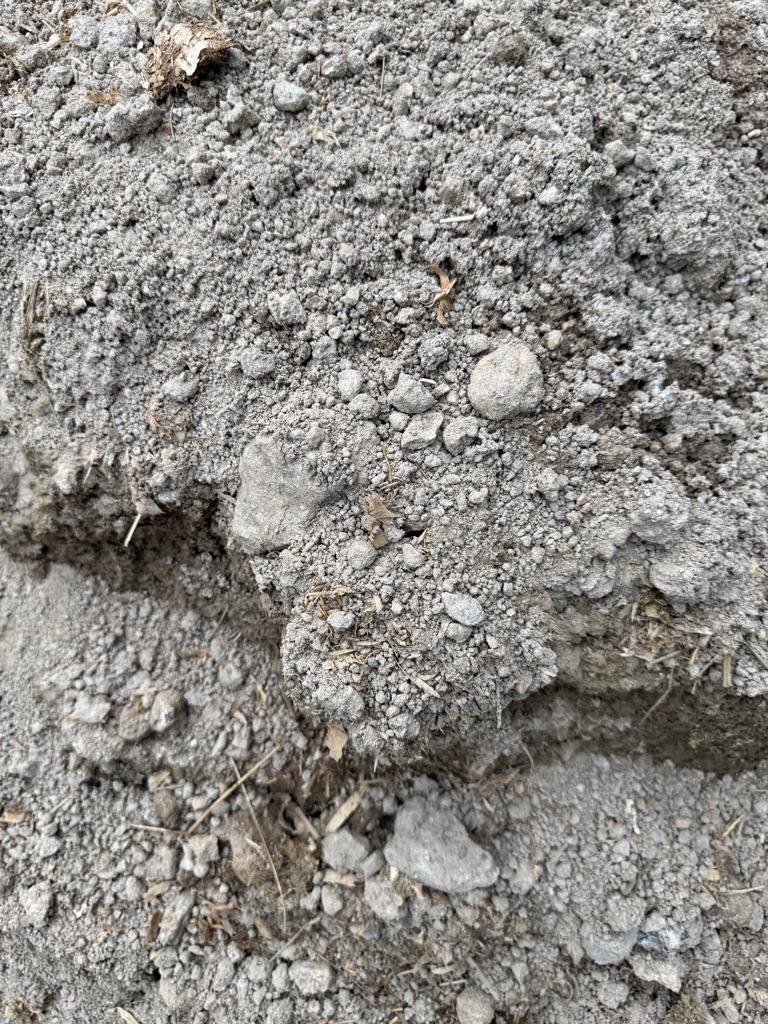
Fine, powdery, and somewhat silty with moderate crusting tendencies. It feels smooth rather than gritty or sticky, crumbling easily into fine aggregates or powder when dry.
Color Analysis
Light gray to pale brownish-gray (Munsell approximately 10YR 6/2), indicating low organic matter, high silt content, and likely presence of carbonates or weathered parent material with minimal iron oxide staining.
Estimated Composition
Sand: 20%, Silt: 65%, Clay: 12%, Organic Matter: 3%
Water Retention
Moderate to high plant-available water holding capacity due to fine silt capillary pores, though it can form a surface crust that reduces infiltration during heavy rains.
Aeration
Moderate. Adequate under dry conditions, but heavy rainfall can saturate the fine pores and temporarily reduce oxygen exchange.
Compaction Level
Moderately firm to compacted, especially at depth or on exposed surfaces where crusting has occurred.
Structure & Aggregation
Subangular blocky to massive when compacted, breaking down into weak granular or powdery peds. Aggregate stability is moderate and susceptible to breakdown under heavy impact rain.
Fertility Indicators
Low to moderate overall fertility. Pale color and low organic matter suggest lower inherent nitrogen and active microbial cycling, requiring fertilization.
Climate Suitability
Thrives best in temperate climates with moderate rainfall, though irrigation and cover cropping are beneficial in arid or semi-arid zones.
Crops Worth Trying
Wheat, barley, alfalfa, corn, and certain brassicas that tolerate fine-textured silty soils and neutral-to-alkaline pH.
Plants To Avoid
Acid-loving plants like blueberries, azaleas, and rhododendrons, which will suffer in higher pH and low organic conditions.
Home Garden Use
In-ground vegetable gardens and flower beds, provided generous amounts of organic matter are incorporated first.
Agricultural Use
Extensively used for cereal grain and forage production in broad-acre farming with standard tillage and fertilization regimes.
Landscaping Use
General turf establishment and hardy ornamental plantings, though slope stabilization is required to prevent erosion.
Common Problems
Surface crusting after rain, sealing of pores, susceptibility to wind/water erosion, and nutrient tie-up if pH is elevated.
Amendments Needed
Heavy incorporation of finished compost, aged manure, or cover crop residue to boost organic matter, improve structure, and buffer pH.
Try These At Home Tests
Perform a jar settling test to verify sand/silt/clay percentages, and use a standard soil pH test kit or digital probe.
Professional Lab Recommendation
Send a sample to a local agricultural extension service for a complete nutrient panel, organic matter percentage, and exact pH/cation exchange capacity.
Fun Facts
Silt soils are often derived from wind-blown glacial dust known as loess, which blankets millions of acres worldwide and forms some of the most productive agricultural lands when properly managed.