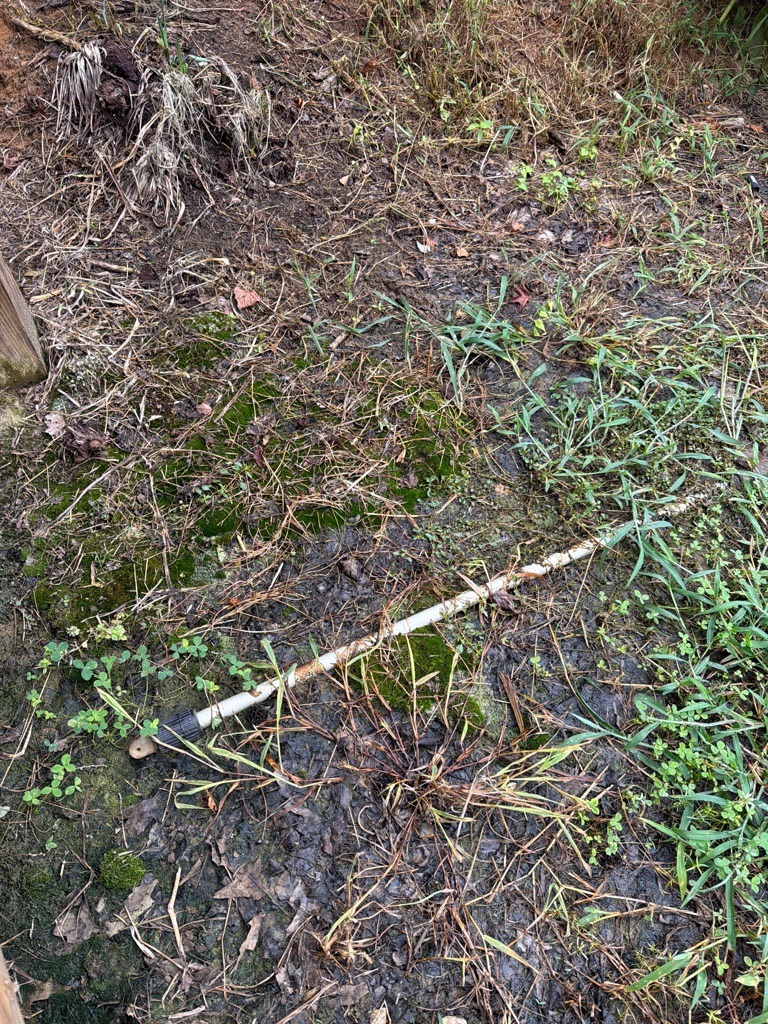
Urban Silt-Clay Loam with High Moisture
Clay Loam · Alluvial or reworked urban residential topsoil containing a mixture of native fine-textured mineral sediments and accumulated organic mulch.
AI Disclaimer
This soil report was produced by AI from a single photo. Treat it as a starting point, not laboratory truth.
pH, drainage, fertility, and composition are visual estimates — send a sample to an accredited lab before any decision that would be painful to get wrong.
Crop and amendment tips are general guidance — local climate, microclimate, and gardening history always win over an AI's best guess.
pH
Slightly acidic to neutral, roughly 6.2 to 6.8, common in temperate lawns and garden beds, though confirmation requires a lab test or test strip.
Drainage
Poorly Drained, because the soil surface appears waterlogged, slick, and compacted with visible pooling tendencies and slow infiltration.
Organic Matter
Moderate to rich (3-6%), evidenced by surface thatch, decaying grass clippings, and dark coloration from active surface humus accumulation.
Erosion Risk
Low wind erosion risk due to moisture, but moderate water erosion or sheet runoff risk on slopes during heavy downpours.
Overall Read
A fertile yet heavy and poorly drained soil that offers great nutrient retention capacity but requires structural improvement, aeration, and organic amendments to unlock its full gardening potential.
Texture
Fine, sticky when wet, smooth, and forms a strong, flexible ribbon in hand tests, indicating a high proportion of fine silt and clay particles.
Color Analysis
Dark brown to grayish-brown, suggesting high moisture retention, decomposing surface organic debris, and occasional anaerobic saturation conditions.
Estimated Composition
40 percent silt, 35 percent clay, 15 percent sand, and 10 percent organic matter, estimated visually with moderate confidence due to surface litter and heavy moisture.
Water Retention
Very high water retention, holding onto moisture for extended periods after rain, which can lead to saturation and slow drying.
Aeration
Low aeration when saturated, limiting oxygen diffusion to plant roots and beneficial aerobic soil microbes.
Compaction Level
Moderately to heavily compacted, especially in foot-traffic zones, exhibiting flat, smoothed surfaces and restricted air pore space.
Structure & Aggregation
Subangular blocky to massive when wet, showing reduced aggregate stability due to surface compaction and pooling water.
Fertility Indicators
Moderate to high fertility indicated by dark organic layers and thriving surface weeds, but limited by poor oxygen exchange and waterlogging.
Climate Suitability
Thrives best in temperate and humid continental climates with balanced rainfall, provided drainage is properly managed.
Crops Worth Trying
Pasture grasses, moisture-tolerant perennials, leafy greens, brassicas, and certain fruit trees that tolerate heavier soils.
Plants To Avoid
Drought-loving herbs, Mediterranean plants like lavender and rosemary, and sensitive root vegetables that deform in heavy clay.
Home Garden Use
Suitable for established perennial beds or rain gardens, but challenging for delicate seedlings without structural amendments.
Agricultural Use
Well-suited for permanent pasture, grass-based livestock grazing, or heavy-feeding row crops with tile drainage installed.
Landscaping Use
Good for turfgrass and moisture-loving rain gardens, but needs aeration and grading adjustments near building foundations.
Common Problems
Surface crusting, seasonal waterlogging, compaction, slow spring warm-up, and restricted root penetration.
Amendments Needed
Incorporate coarse organic compost, aged manure, and gypsum to break up compaction, improve structure, and enhance drainage.
Try These At Home Tests
Perform a ribbon test to confirm clay content, and a jar settling test to precisely quantify sand, silt, and clay percentages.
Professional Lab Recommendation
Recommended before installing high-value gardens; request a complete nutrient panel, cation exchange capacity, organic matter percentage, and texture analysis.
Fun Facts
Fine-textured soils like this hold onto nutrients remarkably well compared to sandy soils, acting like a natural chemical sponge for plant food.