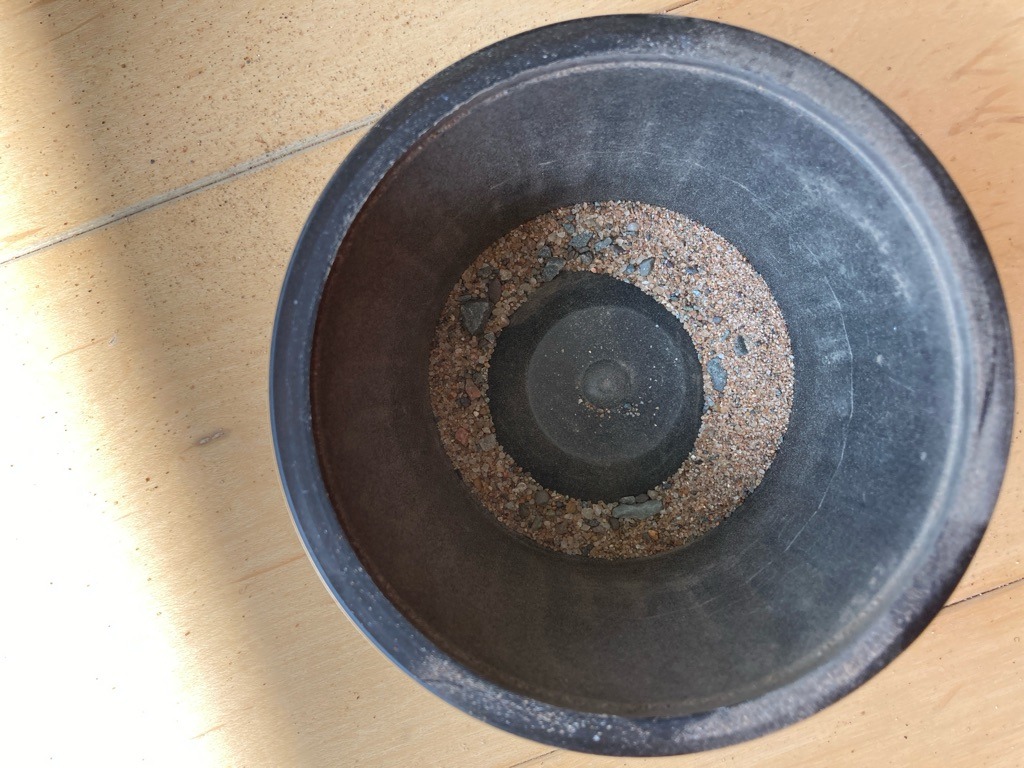
Coarse Sandy Potting Aggregate
Sand · Alluvial river wash or processed, washed horticultural sand.
AI Disclaimer
This soil report was produced by AI from a single photo. Treat it as a starting point, not laboratory truth.
pH, drainage, fertility, and composition are visual estimates — send a sample to an accredited lab before any decision that would be painful to get wrong.
Crop and amendment tips are general guidance — local climate, microclimate, and gardening history always win over an AI's best guess.
pH
Neutral 6.5 to 7.5 due to inert mineral composition, though lab testing is needed for confirmation.
Drainage
Excessively drained due to large macropores and complete lack of fine silt or clay particles to hold moisture.
Organic Matter
Very low (<1%) due to the absence of decomposed plant material, humus, or dark coloration.
Erosion Risk
High susceptibility to wind and water erosion when dry, though in this container context, runoff displacement is the primary concern.
Overall Read
This material is purely mineral grit rather than a functional growing soil. While excellent for drainage or mixing, using it alone will lead to plant failure from drought and starvation.
Texture
Extremely coarse and gritty, completely lacking cohesion or ability to form a ribbon test.
Color Analysis
Tan to light brown mixed with gray and reddish mineral fragments, indicating quartz, feldspar, and weathered rock without significant organic accumulation.
Estimated Composition
90 percent sand, 5 percent silt, 2 percent clay, 3 percent coarse fragments and minimal organic matter.
Water Retention
Extremely poor water-holding capacity; water will immediately flush through without retaining plant-available moisture.
Aeration
Excessive aeration; roots have unlimited oxygen access, but the substrate dries out too fast to support typical biological activity.
Compaction Level
Loose and friable; completely uncompacted due to the large, coarse particle size.
Structure & Aggregation
Single-grain structure with zero aggregate stability, resulting in loose, shifting particles.
Fertility Indicators
Low fertility; completely devoid of organic matter, microbial life indicators, and nutrient-holding colloidal surfaces.
Climate Suitability
Arid or coastal environments naturally, though used globally in containers for specific drainage needs.
Crops Worth Trying
Cacti, succulents, and drought-tolerant Mediterranean herbs like rosemary and lavender when mixed properly.
Plants To Avoid
Heavy moisture-loving plants, ferns, leafy greens, and heavy-feeding vegetables that require constant moisture and high fertility.
Home Garden Use
Primarily used at the bottom of pots for drainage layers or as a component to dilute heavy clay in custom soil mixes.
Agricultural Use
Unsuitable for direct agricultural use unless drastically amended with massive amounts of organic compost and clay.
Landscaping Use
Useful for French drain backfill, pathway stabilization, or as a base layer for xeriscaping.
Common Problems
Rapid nutrient leaching, extreme drought stress, and lack of structural stability for root anchorage.
Amendments Needed
Heavy incorporation of compost, peat moss, or well-aged manure to supply organic matter, moisture retention, and nutrients.
Try These At Home Tests
Perform a squeeze test when wet; the material will fall apart instantly with zero binding.
Professional Lab Recommendation
Unnecessary unless checking for specific chemical contaminants if sourced from industrial areas; basic texture is obvious visually.
Fun Facts
Pure sand consists mostly of weathered quartz, one of the most durable and chemically resistant minerals on Earth.