Rich Temperate Humic Loam
Loam (bordering on Silt Loam) · Glacial till or alluvial floodplain deposits from a temperate region like the Midwestern USA, Central Europe, or Southern Canada.
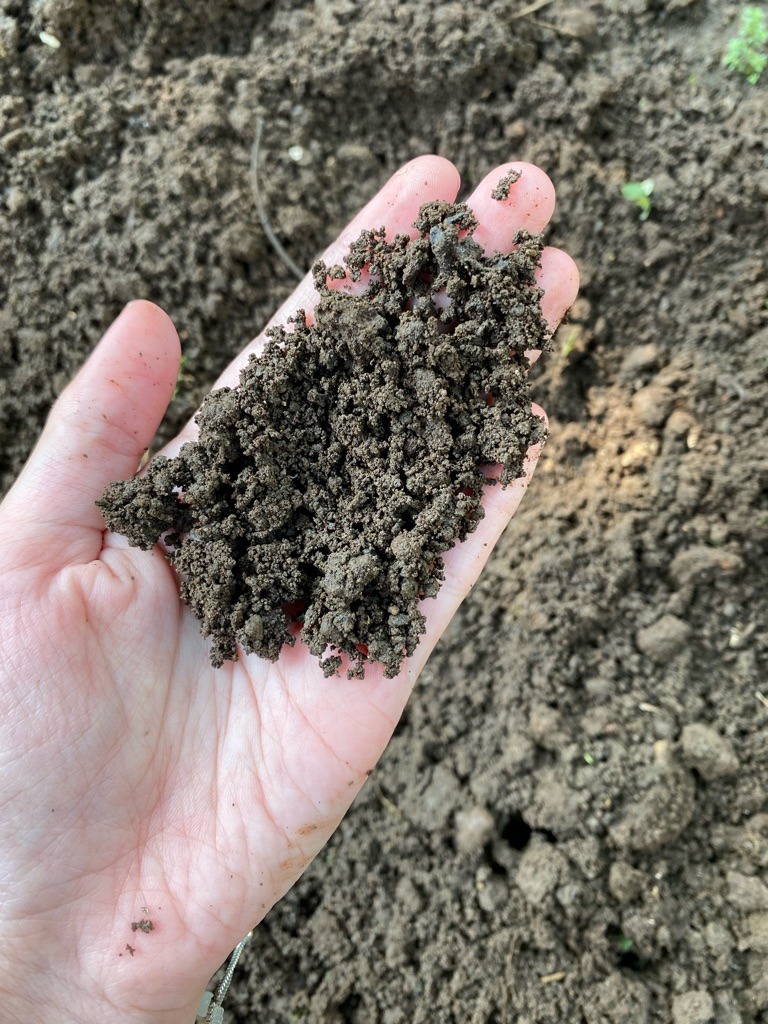
AI Disclaimer
This soil report was produced by AI from a single photo. Treat it as a starting point, not laboratory truth.
pH, drainage, fertility, and composition are visual estimates — send a sample to an accredited lab before any decision that would be painful to get wrong.
Crop and amendment tips are general guidance — local climate, microclimate, and gardening history always win over an AI's best guess.
pH
Slightly acidic to neutral (6.2–7.0). Dark, organic-rich temperate soils typically fall in this range, though high calcium could push it to 7.2.
Drainage
Well Drained. The granular structure allows water to pass through macropores while micro-aggregates retain sufficient moisture.
Organic Matter
Rich (4–8%). The dark hue and distinct 'chocolate' texture indicate significant humus accumulation and active biology.
Erosion Risk
Moderate. While stable due to aggregation, the fine particles are susceptible to water runoff on slopes if left bare without vegetative cover.
Overall Read
Top-tier agricultural soil. Rated 9/10 for versatility and productivity. Immediate action: Plant immediately and use mulch to protect the excellent structure.
Texture
Friable, crumbly, and slightly gritty. It appears it would form a weak, breakable ribbon under 2.5cm, indicating a balanced mix of sand, silt, and clay.
Color Analysis
Very dark grayish brown (Munsell 10YR 3/2). This deep, dark coloring strongly suggests a high concentration of decomposed organic matter and good moisture-holding capacity.
Estimated Composition
40% Sand, 40% Silt, 15% Clay, 5% Organic Matter. High confidence in the 'loam' classification due to visible crumb structure.
Water Retention
High. The high organic content and balanced texture create a sponge-like effect, providing excellent plant-available water between rains.
Aeration
Excellent. The visible voids between soil aggregates suggest high oxygen availability for root respiration and aerobic microbial life.
Compaction Level
Loose and friable. The soil in the hand shows no signs of platy compaction or massive clodding; it appears easily workable.
Structure & Aggregation
Strong Granular Structure. The soil forms small, stable crumbs (peds) that provide excellent pore space for air and water movement.
Fertility Indicators
Very High. Visual clues include the dark color (humus), lack of mineral crusting, and crumbly texture. Likely rich in Nitrogen and Carbon.
Climate Suitability
Temperate Humid climates. It provides a buffer against short dry spells but performs best with regular rainfall and seasonal cooling.
Crops Worth Trying
High-demand vegetables (tomatoes, brassicas), fruit trees, and deep-rooted perennials. Its balance supports almost any standard crop.
Plants To Avoid
Xeric/Desert plants (cacti, succulents) which may suffer from root rot, and 'pioneer' weeds that prefer nutrient-poor, sandy soils.
Home Garden Use
Ideal for in-ground vegetable beds and premium perennial borders. It is the gold standard for 'black gold' garden soil.
Agricultural Use
Highly suitable for intensive row cropping, no-till organic farming, and high-value orchards due to its natural fertility.
Landscaping Use
Excellent for establishing high-end turf, ornamental planting pits, and rain gardens (due to high infiltration rates).
Common Problems
Can be prone to 'tillage radish' or weed pressure because it is so fertile. May become muddy if worked while excessively wet.
Amendments Needed
Minimal. Occasional light compost top-dressing to maintain organic levels. If pH is slightly low, a light dusting of garden lime might be considered.
Try These At Home Tests
Squeeze test: It should hold its shape when squeezed but crumble easily when poked. Jar test: Should show roughly even layers of sand and silt.
Professional Lab Recommendation
Request a 'Standard Soil Health' test including CEC (Cation Exchange Capacity) to measure its high ability to hold nutrients.
Fun Facts
This type of soil is often called 'Mollisol.' If this were in the US Midwest, it would be part of the soil group that makes the region the 'Breadbasket of the World.'