Coastal Sandy Loam
Sandy Loam · Alluvial floodplain deposit or coastal plain transitional terrace, formed from weathered parent materials washed down and deposited by water over time.
AI Disclaimer
This soil report was produced by AI from a single photo. Treat it as a starting point, not laboratory truth.
pH, drainage, fertility, and composition are visual estimates — send a sample to an accredited lab before any decision that would be painful to get wrong.
Crop and amendment tips are general guidance — local climate, microclimate, and gardening history always win over an AI's best guess.
pH
Slightly acidic to neutral (6.0–7.0), typical of many weathered coastal or lowland soils, though this cannot be confirmed visually. A digital pH meter or colorimetric test kit is recommended for exact measurement.
Drainage
Well drained, due to the high sand fraction and loose, crumbly structure that allows excess water to move freely through the profile without waterlogging.
Organic Matter
Moderate (2–4%), indicated by the medium brown coloration and visible small organic fragments, supporting healthy baseline microbial activity and nutrient turnover.
Erosion Risk
Moderate risk of water and wind erosion if left bare on sloped or exposed sites, due to the loose sandy-loam texture. Cover crops and surface mulches are effective mitigations.
Overall Read
An exceptionally versatile, easy-to-work soil with a highly favorable texture for gardening and light agriculture. Its main limitations—rapid drainage and moderate nutrient leaching—are easily managed with regular organic amendments and thoughtful irrigation.
Texture
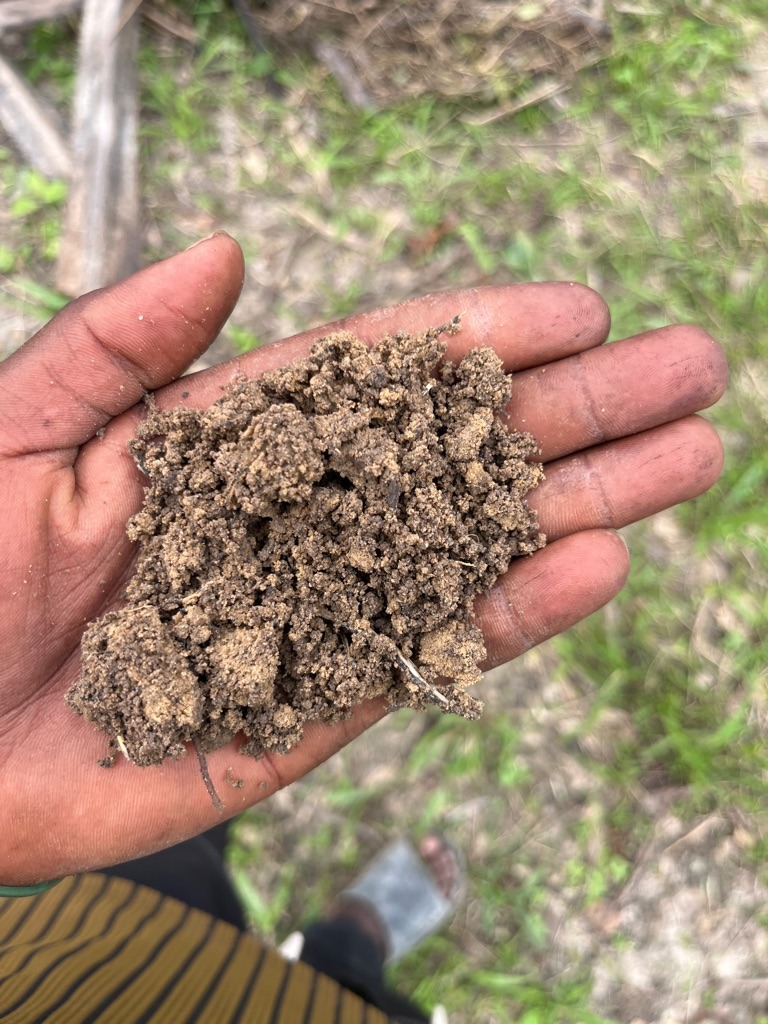
Gritty and friable, showing weak to moderate cohesion; likely forms a short, fragile ribbon that easily breaks apart, pointing to a higher percentage of sand with enough silt and clay to hold the aggregate shape.
Color Analysis
Medium brown to grayish-brown (approximately 10YR 4/3 to 5/3) with moderate value and chroma. The hue suggests a mix of weathered mineral grains and a modest amount of humified organic matter, with balanced drainage history and typical iron oxidation states.
Estimated Composition
Approximately 65% sand, 20% silt, 10% clay, and 5% organic matter. This visual estimate carries moderate-to-high confidence based on the visible gritty surface profile and crumbly aggregate behavior.
Water Retention
Moderate to low plant-available water holding capacity. It will drain quickly after heavy rainfall and may dry out relatively fast in direct summer sun, requiring regular irrigation during dry spells.
Aeration
Good aeration due to the coarse sand particles and open pore spaces, ensuring a steady supply of oxygen to plant roots and aerobic soil microbes.
Compaction Level
Loose and friable when moist, showing little to no natural crusting or severe compaction in the sample shown, making it easy to dig and plant in by hand.
Structure & Aggregation
Weak to moderate granular structure with fair aggregate stability. The crumbly peds offer easy root penetration and good gas exchange, though heavy mechanical tillage can easily break down the aggregates.
Fertility Indicators
Moderate fertility. The soil shows a healthy earthy appearance and some organic residue, but lacks the deep black humus characteristic of ultra-fertile prairie soils.
Climate Suitability
Thrives well in temperate, subtropical, and Mediterranean climates where seasonal moisture balances support diverse root systems and prevent severe leaching.
Crops Worth Trying
Root vegetables (carrots, radishes, potatoes), tomatoes, peppers, leafy greens, squash, strawberries, and various herbs that prefer warm, well-aerated rooting zones.
Plants To Avoid
Bog or wetland species that require constantly saturated, heavy anaerobic conditions, as this soil dries out too quickly for them to thrive naturally.
Home Garden Use
Ideal for in-ground vegetable gardens, raised beds, perennial borders, and pollinator or herb gardens where good drainage and loose texture are advantageous.
Agricultural Use
Well-suited for diversified market gardening, small-scale orchards, and rotational row cropping under irrigation. Management focuses on preventing nutrient leaching and maintaining organic matter.
Landscaping Use
Excellent for ornamental shrub beds, drought-tolerant native plantings, turf grass establishment, and foundation plantings where waterlogged soils are undesirable.
Common Problems
Nutrient leaching during heavy rains, rapid drying in summer heat, and potential loss of organic matter if tilled intensively without regular compost additions.
Amendments Needed
Regular additions of finished compost, leaf mold, or aged manure to boost water retention and cation exchange capacity, alongside light cover cropping.
Try These At Home Tests
Perform a standard soil jar test to accurately separate sand, silt, and clay sedimentation layers, and conduct a ribbon test to confirm the sandy loam textural classification.
Professional Lab Recommendation
Send a sample to a local agricultural extension office for a comprehensive fertility, CEC, and pH analysis every 2 to 3 years to fine-tune fertilizer and lime inputs economically.
Fun Facts
Sandy loam soils are often called 'gardener's gold' because they combine the easy-working nature of sandy soils with enough nutrient-holding clay and silt to support lush plant growth.