Urban Sandy Loam Fill
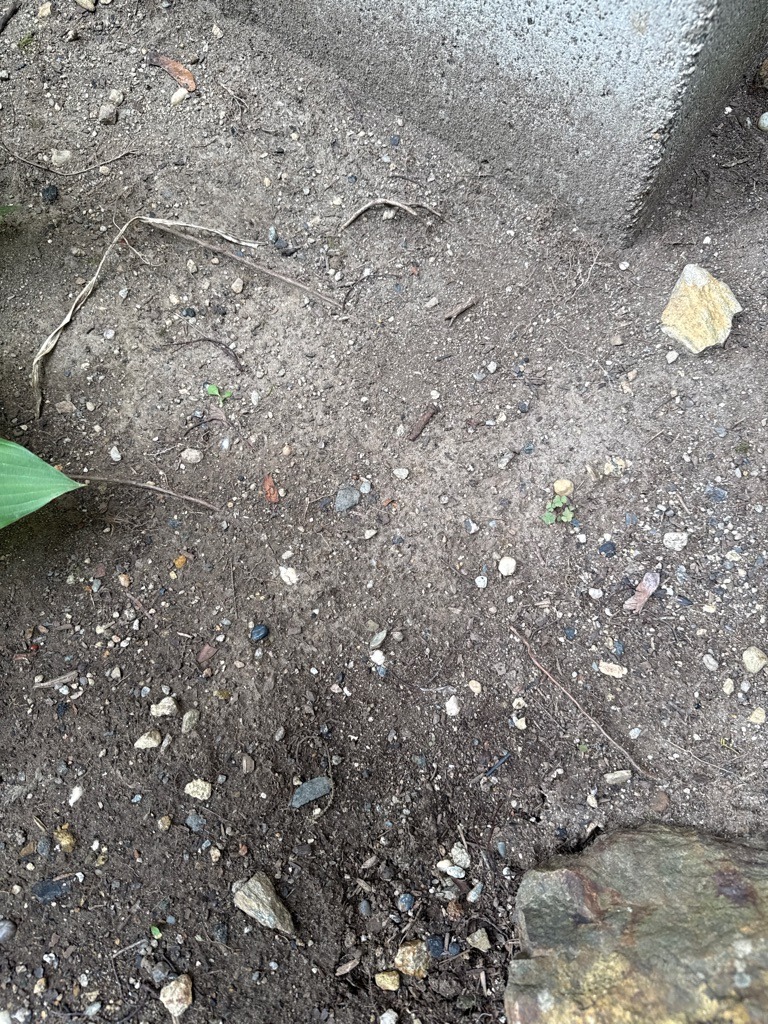
Sandy Loam · Disturbed urban or suburban roadside/foundation fill, likely derived from mixed glacial outwash or local weathered parent material.
AI Disclaimer
This soil report was produced by AI from a single photo. Treat it as a starting point, not laboratory truth.
pH, drainage, fertility, and composition are visual estimates — send a sample to an accredited lab before any decision that would be painful to get wrong.
Crop and amendment tips are general guidance — local climate, microclimate, and gardening history always win over an AI's best guess.
pH
Slightly alkaline to neutral (6.8–7.5), often influenced by nearby concrete structures and weathering minerals, though confirmation requires a lab test or strip.
Drainage
Excessively to well drained. The high coarse-sand content and loose surface structure allow water to percolate rapidly with minimal risk of pooling or waterlogging.
Organic Matter
Low (1–2%), evidenced by the pale coloration, sparse surface residue, and weak aggregate formation.
Erosion Risk
Moderate to high susceptibility to water and wind erosion due to lack of strong aggregation and sparse plant cover on the surface.
Overall Read
A workable but low-fertility sandy loam that drains exceptionally well but demands regular additions of organic matter and moisture management to support thriving garden plants.
Texture
Coarse and gritty with visible mineral fragments and sand grains, forming a weak, fragile ribbon that quickly breaks apart, implying a dominant sand fraction with minimal clay binder.
Color Analysis
Light grayish-brown to pale brown hue (Munsell 10YR 5/2 to 6/3), indicating low organic matter content, well-aerated conditions, and limited iron oxide accumulation typical of weathered or disturbed mineral soils.
Estimated Composition
Approximately 70% sand, 20% silt, 7% clay, and 3% organic matter based on visual particle size distribution and surface litter.
Water Retention
Low plant-available water holding capacity. The soil dries out quickly under direct sun and wind due to the large pore spaces and low clay/organic content.
Aeration
High. The abundant macro-porosity and coarse texture ensure excellent oxygen diffusion to roots and soil microbes.
Compaction Level
Moderately firm surface crusting with loose underlying grains, showing susceptibility to surface sealing after rainfall events.
Structure & Aggregation
Single-grain to very weak granular structure with low aggregate stability, making it prone to surface displacement and particle sorting by heavy rain.
Fertility Indicators
Low fertility overall. Visual clues include pale coloration, sparse microbial life signs, and absence of dark humus layers, indicating low natural nutrient reserves.
Climate Suitability
Adaptable to various climates, but requires careful irrigation management in arid or hot regions and heavy mulching in temperate zones.
Crops Worth Trying
Drought-tolerant plants, root vegetables like carrots and radishes (if loosened), herbs like rosemary and thyme, and warm-season grasses.
Plants To Avoid
Moisture-loving bog plants, heavy feeders requiring high organic fertility, and crops susceptible to drought stress without consistent supplemental irrigation.
Home Garden Use
Suitable for xeriscaping, rock gardens, container mixes (when amended), or raised beds after significant organic incorporation.
Agricultural Use
Poor choice for unamended row crops or intensive agriculture due to low water retention and nutrient leaching, but manageable with drip irrigation and fertigation.
Landscaping Use
Good as a base layer for drought-tolerant ornamental plantings, hardscape surroundings, or areas requiring rapid drainage away from foundations.
Common Problems
Rapid nutrient leaching, quick drying out, surface crusting after rain, and low natural fertility requiring frequent inputs.
Amendments Needed
Heavy incorporation of compost, aged manure, leaf mold, or peat moss to boost organic matter, water retention, and CEC, followed by slow-release organic fertilizers.
Try These At Home Tests
Perform a jar settling test to verify sand/silt/clay ratios, and a squeeze test to check if the soil crumbles easily without holding a rigid shape.
Professional Lab Recommendation
Send a sample to a local extension service for a standard fertility and organic matter test to baseline nutrient requirements before planting valuable crops.
Fun Facts
Sandy loam soils are often favored by archaeologists because artifacts are easily uncovered, and they warm up much faster in the spring than heavy clay soils.