Tropical Red Sandy Clay Loam
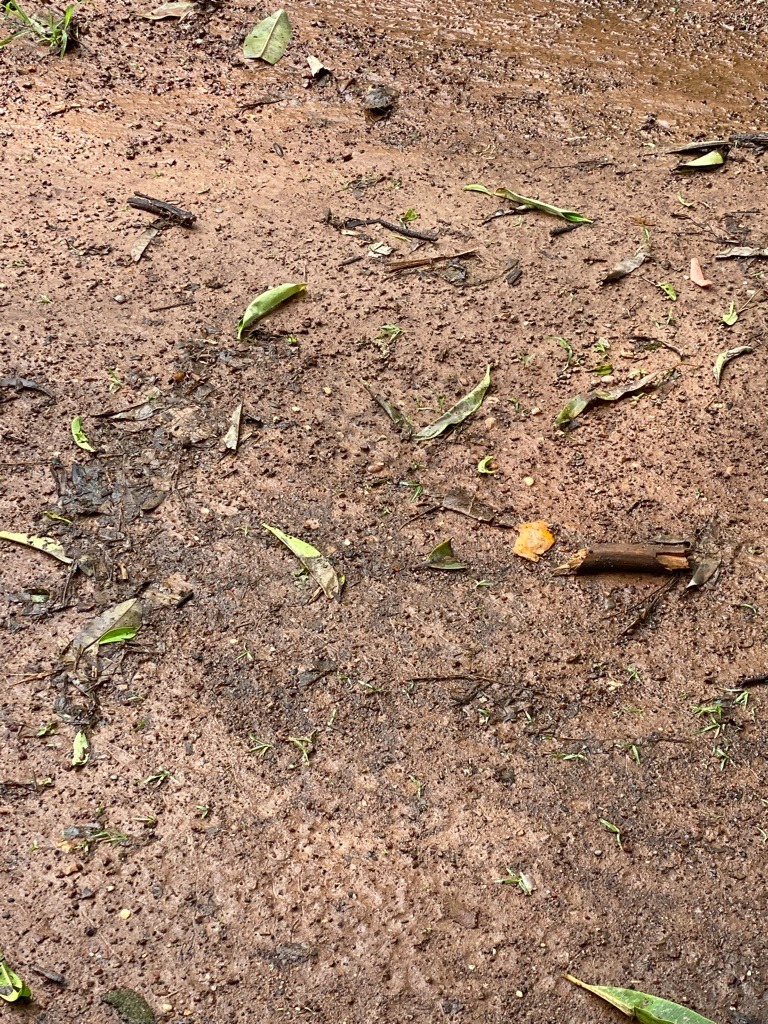
Sandy Clay Loam · Highly weathered Ultisol or Alfisol, possibly from the Southeastern US (Piedmont), Brazil, South Asia, or parts of Australia where iron-rich parent material is common.
AI Disclaimer
This soil report was produced by AI from a single photo. Treat it as a starting point, not laboratory truth.
pH, drainage, fertility, and composition are visual estimates — send a sample to an accredited lab before any decision that would be painful to get wrong.
Crop and amendment tips are general guidance — local climate, microclimate, and gardening history always win over an AI's best guess.
pH
Strongly to moderately acidic (5.0–6.0). Red weathered soils in tropical or humid temperate regions typically lose base cations like calcium, leading to low pH.
Drainage
Moderately Drained. Surface appears saturated or puddled, suggesting slow infiltration due to clay content or surface sealing, though sandy grains help subsurface percolation.
Organic Matter
Moderate (2–4%). There is visible leaf litter and some darkening, but the dominant red-brown hue suggests mineral oxides outweigh the humic content.
Erosion Risk
High. The fine silt and clay particles are easily detached by rain (slaking) and can wash away on slopes, while the sand remains behind as 'lag' deposits.
Overall Read
A productive but demanding soil. It has good water-holding capacity and mineral potential, but requires pH management and protection from compaction to reach its full potential.
Texture
Gritty and slick; visible coarse sand grains embedded in a sticky, fine-textured clay matrix. Likely produces a medium-length ribbon (2-4 cm) that breaks easily.
Color Analysis
Dull reddish brown to brown (approx. 5YR 4/4); indicates high iron oxide content (hematite/goethite) and significant weathering. The depth of color suggests moderate leaching and oxidative conditions.
Estimated Composition
50% Sand, 20% Silt, 25% Clay, 5% Organic Matter. Visible coarse grit suggests a significant sand fraction despite the heavy appearance.
Water Retention
High. The clay fraction and organic debris will hold moisture well, but it may become hard and crusty on the surface if it dries out rapidly in direct sun.
Aeration
Moderate to Low. While wet, oxygen diffusion is restricted. The visible puddling and lack of large pore spaces on the surface suggest temporary anaerobic conditions during heavy rain.
Compaction Level
Moderately high. The smooth, flat surface suggests traffic or rain-induced compaction, which can lead to 'capping' or a hard surface crust upon drying.
Structure & Aggregation
Weakly granular to massive. The surface appears somewhat 'melted' or smeared (platey/massive) from rain impact, indicating poor surface aggregate stability.
Fertility Indicators
Moderate. The presence of organic debris and varied mineral color is positive, but heavy leaching of nutrients is likely given the reddish pigmentation. Rating: Moderate.
Climate Suitability
Humid subtropical or Tropical. Thrives in areas with high annual rainfall but requires careful timing of work to avoid seasonal compaction or 'brick-like' drying.
Crops Worth Trying
Legumes (fix nitrogen), Sweet potatoes (tolerate acidity), Cassava, Citrus, and tough ornamental shrubs like Azaleas or Camellias that prefer acidic conditions.
Plants To Avoid
Lavender and Mediterranean herbs (too much moisture/acidity), Brassicas (require high calcium/pH), and delicate succulents that demand perfect drainage.
Home Garden Use
Best for in-ground beds with significant organic additions. Not ideal for delicate seedlings until the surface 'crusting' issue is managed with mulch.
Agricultural Use
Suitable for agroforestry, orchards, or no-till grain systems. Conventional tillage must be avoided when wet to prevent severe clod formation.
Landscaping Use
Good for stabilized slopes or native plantings. Can be used for turfs but needs regular aeration to overcome the surface sealing visible in the image.
Common Problems
Surface crusting (capping), phosphorus fixation (due to iron oxides), acidic pH, and compaction if worked while wet.
Amendments Needed
Application of Dolomitic Lime (to raise pH/calcium), gypsum (to improve aggregation), and consistent mulch/compost to prevent surface sealing.
Try These At Home Tests
Jar Test: Shake in water to see sand settle first. Squeeze Test: A wet ball should hold its shape but crumble with a hard poke. Infiltration: Time how long a cup of water takes to vanish.
Professional Lab Recommendation
Request a 'Standard Soil Profile' plus Extractable Iron and Aluminum. This will confirm if Phosphorus is being 'locked' by the red minerals.
Fun Facts
The red color comes from iron minerals essentially 'rusting' over thousands of years. This soil type (Ultisols) covers about 8% of the ice-free land surface on Earth.