Organic-Rich Bark-Based Potting Mix
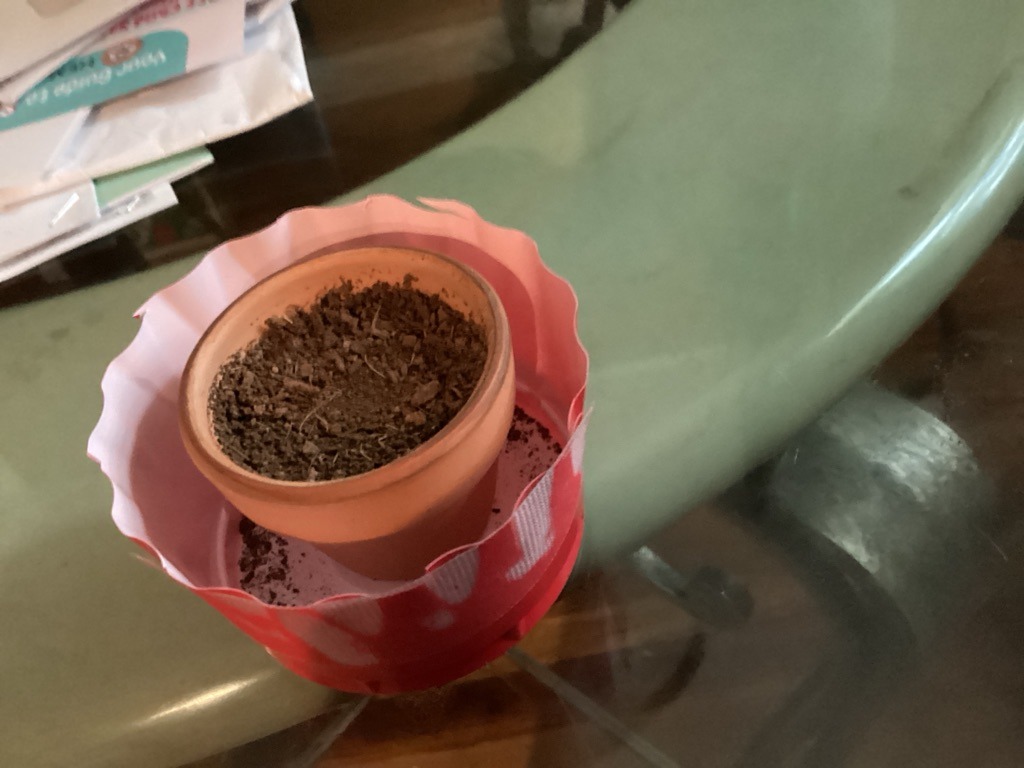
Peat-Free / Bark-Based Soilless Media · Commercial horticultural production, likely manufactured using aged softwood or hardwood bark from forestry byproducts (common in North America and Europe).
AI Disclaimer
This soil report was produced by AI from a single photo. Treat it as a starting point, not laboratory truth.
pH, drainage, fertility, and composition are visual estimates — send a sample to an accredited lab before any decision that would be painful to get wrong.
Crop and amendment tips are general guidance — local climate, microclimate, and gardening history always win over an AI's best guess.
pH
Slightly acidic (5.5–6.5). Most commercial bark-based mixes are buffered with lime to offset the natural acidity of wood tannins.
Drainage
Excessively Drained. The large pore spaces between bark chunks allow water to move through rapidly, preventing saturation.
Organic Matter
Very rich (>20%). This is not a mineral soil but a biologically active growing media composed almost entirely of decayed plant matter.
Erosion Risk
Low in this context, though the light weight makes it susceptible to floating or washing away during heavy surface irrigation in large containers.
Overall Read
A high-quality, professional-grade growing medium specifically designed for container culture. It offers a superior balance of aeration and moisture for root development but requires diligent monitoring of watering and fertilization.
Texture
Coarse, fibrous, and chunky; non-plastic and highly friable
Color Analysis
Dark yellowish brown (10YR 3/4) to very dark brown (10YR 2/2). The dark hue indicates high organic matter and decomposition, while the lack of grey suggests aerobic conditions.
Estimated Composition
70% composted bark/forest products, 20% peat moss or coconut coir, 10% fine mineral components/sand; organic matter is >60% total volume.
Water Retention
Moderate to High initial retention with rapid drying. While fibrous material holds water, once it dries out completely, it may become hydrophobic (water-repellent) and difficult to rewet.
Aeration
Excellent. The coarse particle size ensures high oxygen availability even when recently watered, which is ideal for root respiration.
Compaction Level
Loose and highly aerated. There is no evidence of compaction, though the mix will settle over time as the organic matter decomposes further.
Structure & Aggregation
Massive-granular/Fibrous. It lacks a true mineral structure, relying on the physical size of the bark chips to create aeration pockets.
Fertility Indicators
Moderate fertility. While rich in carbon, bark-based mixes can cause 'nitrogen tie-up' where microbes consume nitrogen to break down wood, potentially leading to plant yellowing.
Climate Suitability
Controlled indoor or temperate greenhouse environments. In very hot/arid climates, this medium will require frequent watering due to high evaporation rates.
Crops Worth Trying
Herbs (basil, rosemary), houseplants (philodendrons, pothos), and container vegetables like peppers or tomatoes which require high aeration.
Plants To Avoid
Cacti and succulents (may hold too much water in the fibers long-term) or plants requiring heavy, mineral-rich clays like certain wild prairie species.
Home Garden Use
Perfect for small-scale containers, terracotta pot gardening, and starting larger seedlings before transplanting.
Agricultural Use
Not typically used at field scale due to cost; primary use is in greenhouse nursery production for 'soilless' growing of ornamentals.
Landscaping Use
Used as a high-quality soil conditioner when tilled into beds or as a specialized backfill for containerized specimen trees.
Common Problems
Hydrophobicity (it repels water when bone dry), nutrient leaching (fast drainage washes away fertilizer), and nitrogen immobilization.
Amendments Needed
Balanced slow-release fertilizer (N-P-K) and a wetting agent or mulch layer to prevent surface drying and ensure water penetration.
Try These At Home Tests
Squeeze test: a handful should hold its shape when wet but crumble instantly with a touch. Squeeze to see if water drips out to check current saturation.
Professional Lab Recommendation
Generally unnecessary for home pots; if plants are failing, a saturated media extract (SME) test can check for salt buildup from synthetic fertilizers.
Fun Facts
The 'soilless' revolution began in the 1960s at Cornell University, changing how plants are grown globally by utilizing bark and peat rather than heavy field soil.