Tupi Volcanic Loam
Clay Loam · Volcanic ash residuum and alluvial-colluvial deposits derived from regional volcanic activity around Mount Matutum in South Cotabato.
AI Disclaimer
This soil report was produced by AI from a single photo. Treat it as a starting point, not laboratory truth.
pH, drainage, fertility, and composition are visual estimates — send a sample to an accredited lab before any decision that would be painful to get wrong.
Crop and amendment tips are general guidance — local climate, microclimate, and gardening history always win over an AI's best guess.
pH
Slightly acidic to neutral (6.0–7.0), typical of volcanic upland soils in the region, though testing is necessary for confirmation.
Drainage
Moderately well drained. The crumbly structure provides adequate macropores, but the clay loam texture holds onto moisture.
Organic Matter
Moderate (3–5%), suggested by the granular crumb structure and visible fine root fragments throughout the sample.
Erosion Risk
Moderate risk on sloping lands, primarily from heavy tropical downpours; sheet and rill erosion can occur if left bare.
Overall Read
A fertile, highly productive tropical volcanic loam with great agricultural potential, requiring only standard organic amendments and erosion management for sustained high performance.
Texture
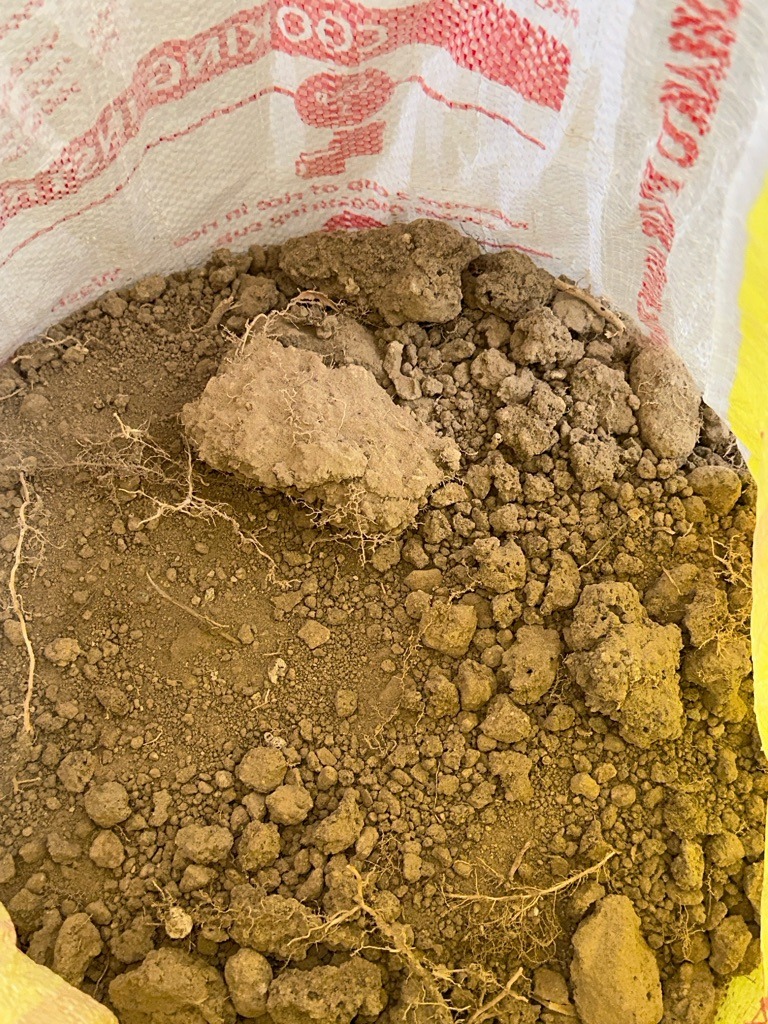
Fine-textured with strong crumbly aggregates and firm clods; forms a moderate ribbon in the wet state, indicating a significant clay fraction balanced by sufficient silt and organic matter.
Color Analysis
Warm yellowish-brown to dark brownish-yellow (approximating 10YR 5/4 to 5/6), indicative of weathered volcanic ash parent material rich in iron and aluminum oxides under tropical weathering conditions.
Estimated Composition
35% sand, 30% silt, 25% clay, 10% organic matter (visual estimate with medium confidence).
Water Retention
Good water-holding capacity. It retains plant-available moisture well during dry spells without easily waterlogging under normal conditions.
Aeration
Good aeration due to stable structural peds and visible root channels, maintaining adequate oxygen for both roots and soil microbes.
Compaction Level
Moderately firm in larger dried clods, but overall friable and loose in the finer aggregate fractions.
Structure & Aggregation
Subangular blocky to granular structure with moderate to high aggregate stability, encouraging good root penetration and gas exchange.
Fertility Indicators
Moderate to high fertility, signaled by the dark, nutrient-retentive volcanic mineral matrix and embedded organic root residues.
Climate Suitability
Tropical humid climate with distinct wet and dry seasons; highly responsive to moisture management and organic mulching.
Crops Worth Trying
Pineapple, corn, coffee, vegetables (peppers, tomatoes), bananas, and various tropical fruit trees thrive exceptionally well here.
Plants To Avoid
Plants requiring strictly sandy, excessively drained, or highly acidic peat soils will struggle without substantial modification.
Home Garden Use
In-ground vegetable gardens, fruit tree orchards, and perennial shrub borders; less suited for heavy clay-sensitive root crops without amendment.
Agricultural Use
Highly suitable for commercial production of corn, pineapple, coffee, and upland rice under standard sustainable tillage and cover cropping.
Landscaping Use
Excellent for turfgrass establishment, ornamental flower beds, and structural plantings, provided surface crusting is managed.
Common Problems
Surface crusting after heavy rains, seasonal drying into hard clods if exposed to intense sun, and potential phosphorus fixation.
Amendments Needed
Incorporation of well-aged compost to enhance microbial life and prevent clodding, plus occasional balanced organic fertilizers.
Try These At Home Tests
Perform a jar sedimentation test to confirm sand/silt/clay percentages and a ribbon test to check plasticity and clay content.
Professional Lab Recommendation
Send a sample to a regional agricultural lab for a complete nutrient panel (NPK), cation exchange capacity (CEC), and pH test to optimize crop yields.
Fun Facts
Soils derived from volcanic ash, such as those found around Mount Matutum in Tupi, are prized globally for their exceptional fertility and unique agricultural terroir.
Your Notes
Found in tupi south cotabato