Suburban Front Yard Sandy Loam
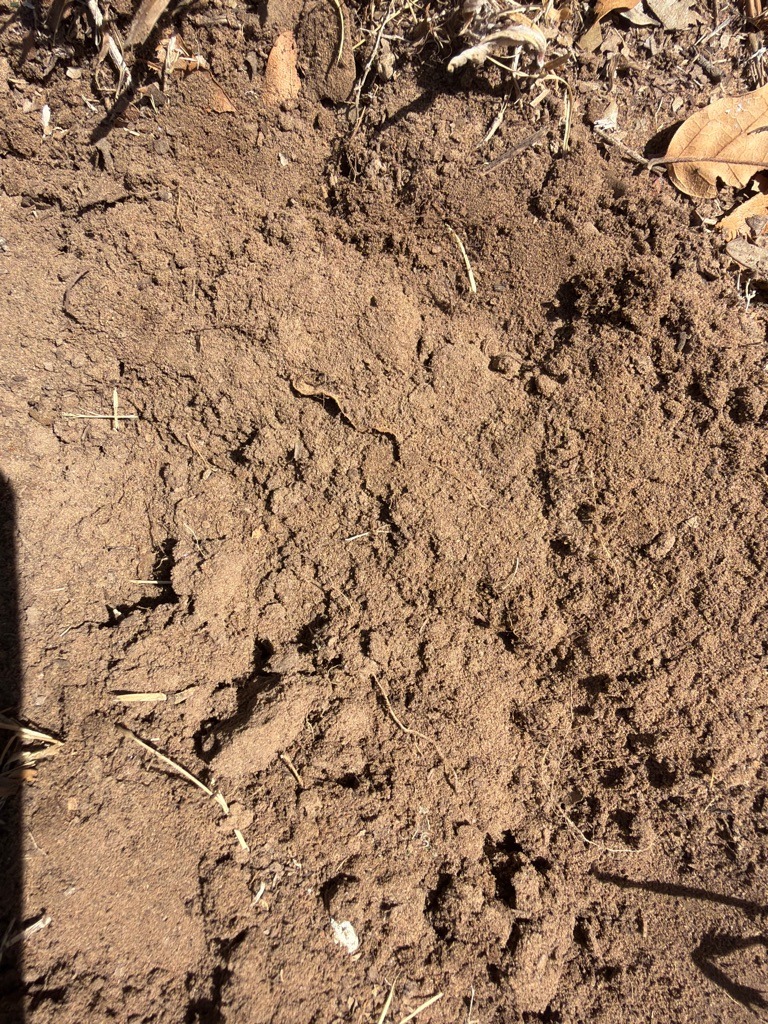
Sandy Loam · Weathered coastal plain or transported residential topsoil mix common in suburban developments.
AI Disclaimer
This soil report was produced by AI from a single photo. Treat it as a starting point, not laboratory truth.
pH, drainage, fertility, and composition are visual estimates — send a sample to an accredited lab before any decision that would be painful to get wrong.
Crop and amendment tips are general guidance — local climate, microclimate, and gardening history always win over an AI's best guess.
pH
Slightly acidic 6.0–6.8 based on typical residential topsoil profiles, though confirmation with a test kit is needed.
Drainage
Well Drained, due to the high sand content providing rapid infiltration and preventing standing water.
Organic Matter
Moderate (2-4%), suggested by the light surface mulch and brownish hue, supporting steady microbial life.
Erosion Risk
Moderate water and wind erosion risk on bare spots, best mitigated by ground covers, turf, or organic mulch.
Overall Read
A versatile, easy-to-work sandy loam with good drainage and decent aeration, though it will benefit from added compost to improve moisture retention and nutrient holding capacity.
Texture
Coarse and somewhat gritty with moderate friability; would form a weak, short ribbon before breaking during a ribbon test.
Color Analysis
Medium yellowish brown, roughly 10YR 5/4, indicating moderate organic matter and well-aerated iron oxides without excessive waterlogging.
Estimated Composition
65% sand, 20% silt, 10% clay, and 5% organic matter based on visual particle size and crumb structure.
Water Retention
Moderate to low; tends to dry out faster than a pure loam, requiring regular irrigation during dry spells.
Aeration
Good, due to the coarse sand particles and loose surface layer allowing ample oxygen exchange for roots.
Compaction Level
Moderately firm from foot traffic in a front yard setting, but not fully locked into a hardpan.
Structure & Aggregation
Weak granular structure with moderate aggregate stability, typical of disturbed residential turf or front yard soils.
Fertility Indicators
Moderate fertility, indicated by some surface debris and decent color, though supplemental nitrogen and phosphorus will benefit heavy feeders.
Climate Suitability
Thrives in temperate and subtropical climates where regular watering can offset the sandy drainage tendencies.
Crops Worth Trying
Root vegetables like carrots and radishes, tomatoes, peppers, turfgrasses, and drought-tolerant ornamentals.
Plants To Avoid
Bog plants or heavy moisture-loving species that suffer when soils dry out quickly between waterings.
Home Garden Use
Ideal for perennial borders, pollinator gardens, flower beds, and root crop vegetable gardens.
Agricultural Use
Well-suited for market gardening and root crop production with supplemental irrigation and fertility management.
Landscaping Use
Great for turf establishment, foundation plantings, and well-draining ornamental landscape beds.
Common Problems
Prone to drying out quickly, nutrient leaching during heavy rains, and surface crusting if left bare.
Amendments Needed
Incorporate finished compost to boost organic matter and moisture retention, plus balanced organic fertilizers.
Try These At Home Tests
Perform a jar settling test for exact particle percentages and a ribbon test to verify sand-to-clay ratios.
Professional Lab Recommendation
Send a sample to a local extension service for a complete nutrient, pH, and organic matter analysis before planting high-value crops.
Fun Facts
Sandy loam soils are often considered a gardener's best friend because they are easy to till and work with across a wide range of weather conditions.
Your Notes
Side front yard