Coastal Calcareous Sand and Coral Rubble
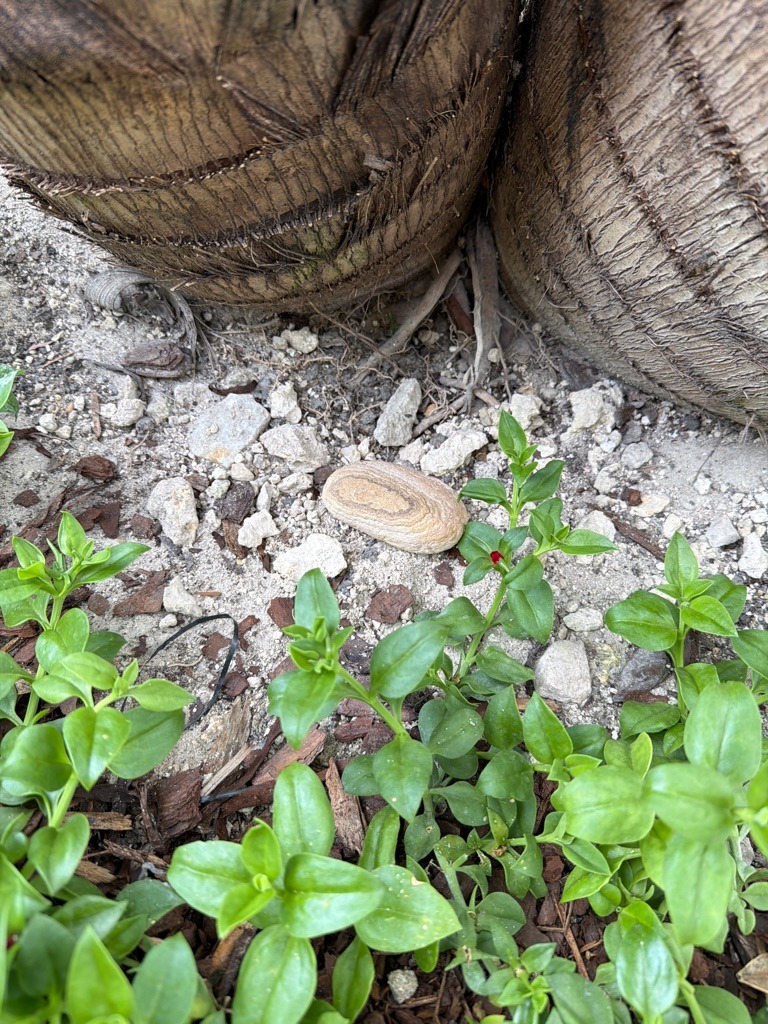
Sandy (Coarse-textured) · Coastal marine deposit, coral key, or beach ridge common to tropical and subtropical shorelines (e.g., South Florida or Caribbean coasts).
AI Disclaimer
This soil report was produced by AI from a single photo. Treat it as a starting point, not laboratory truth.
pH, drainage, fertility, and composition are visual estimates — send a sample to an accredited lab before any decision that would be painful to get wrong.
Crop and amendment tips are general guidance — local climate, microclimate, and gardening history always win over an AI's best guess.
pH
Alkaline 7.8–8.5, driven by the presence of calcareous sand and coral-derived limestone fragments; confirm with a digital pH meter.
Drainage
Excessively drained due to large macropores, coarse particle size, and absence of fine-textured binding agents.
Organic Matter
Very low (<1% in the mineral soil matrix), though localized surface areas show artificially added wood chip mulch.
Erosion Risk
High risk of wind and water erosion when exposed, mitigated here by surface vegetation and palm root networks.
Overall Read
A challenging, excessively drained, and alkaline coastal soil that excels at supporting adapted tropical plants and palms but requires intensive organic amendment and frequent irrigation for general gardening.
Texture
Extremely coarse and gritty, highly abrasive, single-grained with virtually no cohesion; will not form a ribbon during a ribbon test.
Color Analysis
Light gray to pale whitish-tan, indicative of quartz and calcium carbonate mineralogy with very low iron oxide staining and minimal organic accumulation.
Estimated Composition
85% sand, 5% silt, 2% clay, and 8% organic matter (mostly surface mulch and root debris).
Water Retention
Very low plant-available water holding capacity; water percolates rapidly past the root zone, causing the soil to dry out within hours of rainfall or irrigation.
Aeration
Excessive aeration; oxygen levels are consistently high, though rapid drying can stress biological activity.
Compaction Level
Loose and friable in the upper loose matrix, but may overlay dense underlying marine sediment or hardpan limestone bedrock.
Structure & Aggregation
Single-grain structure with zero structural stability or aggregation; particles exist independently.
Fertility Indicators
Low intrinsic fertility; pale coloration, lack of natural humus, and rapid nutrient leaching indicate poor baseline nutrient reserves.
Climate Suitability
Tropical and subtropical coastal climates with high ambient humidity and seasonal heavy rainfall.
Crops Worth Trying
Drought-tolerant coastal palms, succulents, bougainvillea, sea grapes, and native dune grasses.
Plants To Avoid
Acid-loving plants (blueberries, azaleas, rhododendrons), moisture-demanding heavy feeders, and crops requiring high cation exchange capacity.
Home Garden Use
Coastal landscaping, rock gardens, and containerized gardening with specialized media.
Agricultural Use
Unsuitable for traditional row crops or intensive agriculture without heavy amendment and continuous fertigation.
Landscaping Use
Tropical resort landscaping, palm tree installations, and dry-tolerant coastal ground cover beds.
Common Problems
Rapid nutrient leaching, extreme drought stress, high pH-induced iron chlorosis, and lack of structural support for heavy plants.
Amendments Needed
Heavy and continuous applications of compost, well-rotted manure, peat moss, or organic mulch to build water-holding capacity and lower pH if needed.
Try These At Home Tests
Perform a jar test to verify the high sand percentage, and use a standard soil pH test kit to confirm alkalinity.
Professional Lab Recommendation
Send a sample to a commercial lab for a complete nutrient panel, organic matter percentage, and cation exchange capacity (CEC) to guide fertilization strategies.
Fun Facts
Soils derived from coral and shell fragments often contain high levels of calcium carbonate, which actively buffers soil pH and creates unique geochemical environments for specialized coastal flora.