Organic-Rich Alluvial Loam with Horticultural Amendments
Sandy Clay Loam / Modified Loam · Likely a high-quality garden blend or a topsoil horizon from a temperate river valley (Mollisol-like characteristics), potentially augmented with perlite.
AI Disclaimer
This soil report was produced by AI from a single photo. Treat it as a starting point, not laboratory truth.
pH, drainage, fertility, and composition are visual estimates — send a sample to an accredited lab before any decision that would be painful to get wrong.
Crop and amendment tips are general guidance — local climate, microclimate, and gardening history always win over an AI's best guess.
pH
Slightly acidic (6.0–6.5); the dark color and presence of organic fibers often correlate with a mild acidity ideal for nutrient availability.
Drainage
Well Drained; the coarse visible aggregates and inclusion of porous materials suggest high macroporosity and rapid gravitational water movement.
Organic Matter
Rich (6–10%); visible plant fibers, dark coloration, and 'fluffy' aggregate structure indicate a high carbon content.
Erosion Risk
Moderate; while the structure is stable, the high sand/organic content makes it susceptible to washing away in heavy rains if not covered by mulch or roots.
Overall Read
This is a 'black gold' soil profile. It offers an elite balance of drainage, fertility, and structure, making it a 9/10 for almost any general gardening or agricultural pursuit.
Texture
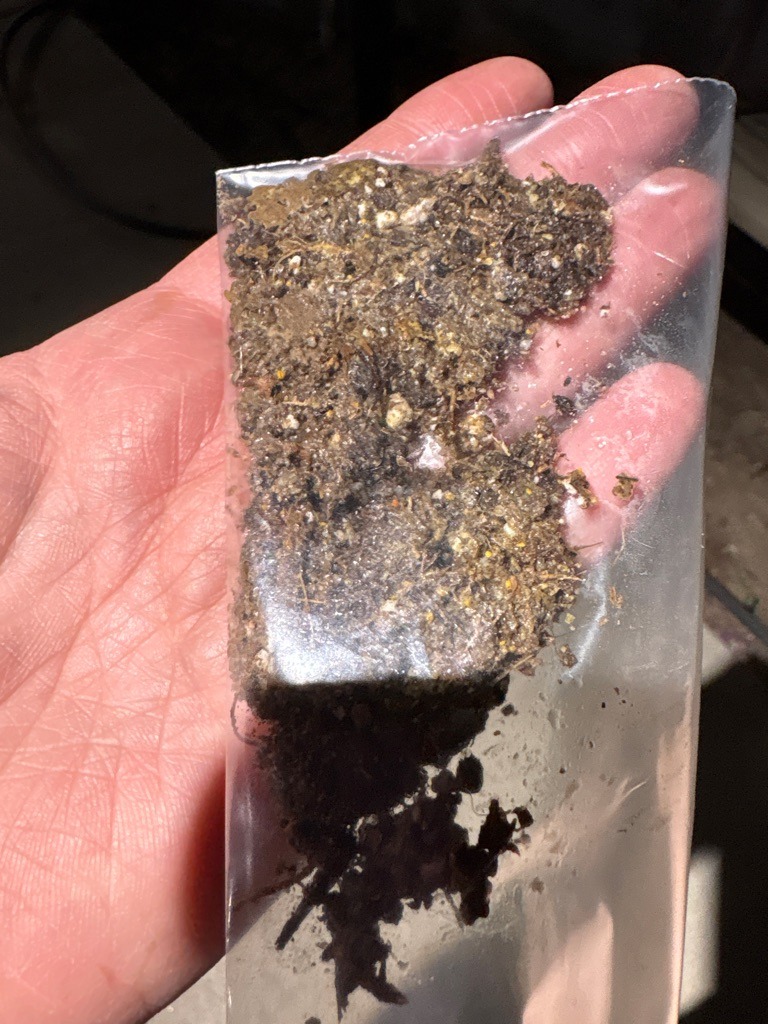
Friable and gritty with visible particulate matter; likely produces a 1-inch weak ribbon before breaking, indicating a balance of sand and clay binder.
Color Analysis
Very dark grayish brown (10YR 3/2); the high value suggests significant humified organic matter and consistent moisture, with white specks likely being perlite or mineral fragments.
Estimated Composition
40% Sand, 30% Silt, 20% Clay, 10% Organic Matter. Confidence is moderate given the mix of natural mineral soil and apparent container amendments.
Water Retention
High; the high organic content and clay fraction allow it to hold significant plant-available water while the sandy texture prevents waterlogging.
Aeration
Excellent; the variegated particle sizes ensure plenty of pore space for oxygen exchange, critical for healthy rhizosphere microbes.
Compaction Level
Low; the sample in the bag appears loose and aerated, showing no signs of tectonic compression or platy layering.
Structure & Aggregation
Granular to sub-angular blocky; the soil shows good crumb structure which facilitates root respiration and prevents surface crusting.
Fertility Indicators
Very High; the dark color indicates a high Cation Exchange Capacity (CEC) and the presence of diverse organic precursors suggests a rich nutrient bank.
Climate Suitability
Temperate to Humid Subtropical; thrives where regular rainfall or irrigation can maintain the organic moisture without extreme desiccation.
Crops Worth Trying
High-value vegetables (tomatoes, peppers), leafy greens, and ornamental perennials that require nutrient-dense, well-drained media.
Plants To Avoid
Xeric cacti or succulents that require extremely lean, rocky soil, as the high organic water retention may cause root rot in those specific species.
Home Garden Use
Ideal for raised beds, high-end kitchen gardens, or as a premium transplanting mix for young shrubs and trees.
Agricultural Use
Suited for intensive market gardening or high-tunnel production where soil quality directly dictates yield per square foot.
Landscaping Use
Perfect for floral display beds and 'statement' plantings near home entrances where quick establishment is desired.
Common Problems
Can become 'hungry' for nitrogen if the organic matter is still actively decomposing; may settle over time in deep containers.
Amendments Needed
Minimal; a light application of balanced organic fertilizer at planting and a wood-chip mulch to protect the surface structure.
Try These At Home Tests
Squeeze test (should hold shape then crumble easily); Jar test (to see sand/silt/clay layers); Earthworm count (look for 5+ per shovelful).
Professional Lab Recommendation
Submit a sample for a 'Standard Soil Health' test ($20-$50) to check lead levels (if urban) and specific N-P-K ratios before heavy fertilization.
Fun Facts
This soil likely contains 'humins,' the most stable form of organic matter that can stay sequestered in the ground for hundreds of years.