Alluvial Valley Clay Loam
Clay Loam · Alluvial floodplain deposits or low-lying depressional areas near river valleys where fine sediments settle out of slow-moving water.
AI Disclaimer
This soil report was produced by AI from a single photo. Treat it as a starting point, not laboratory truth.
pH, drainage, fertility, and composition are visual estimates — send a sample to an accredited lab before any decision that would be painful to get wrong.
Crop and amendment tips are general guidance — local climate, microclimate, and gardening history always win over an AI's best guess.
pH
Neutral to slightly alkaline 6.8–7.5, typical of many valley alluviums, though confirmation via a pH test strip or probe is strongly recommended.
Drainage
Poorly Drained, as the fine texture and high clay content severely restrict water movement, leading to waterlogging and slow infiltration.
Organic Matter
Moderate (2–4%), supported by the dark, fertile-looking matrix and the accumulation of organic debris in alluvial deposition zones.
Erosion Risk
Moderate water erosion risk on slopes due to slow infiltration rates leading to surface runoff, and low tillage erosion resistance when wet.
Overall Read
A fertile yet challenging heavy clay loam with high nutrient-holding capacity and water retention, requiring careful moisture management, organic amendments, and avoidance of tilling when wet to unlock its full growing potential.
Texture
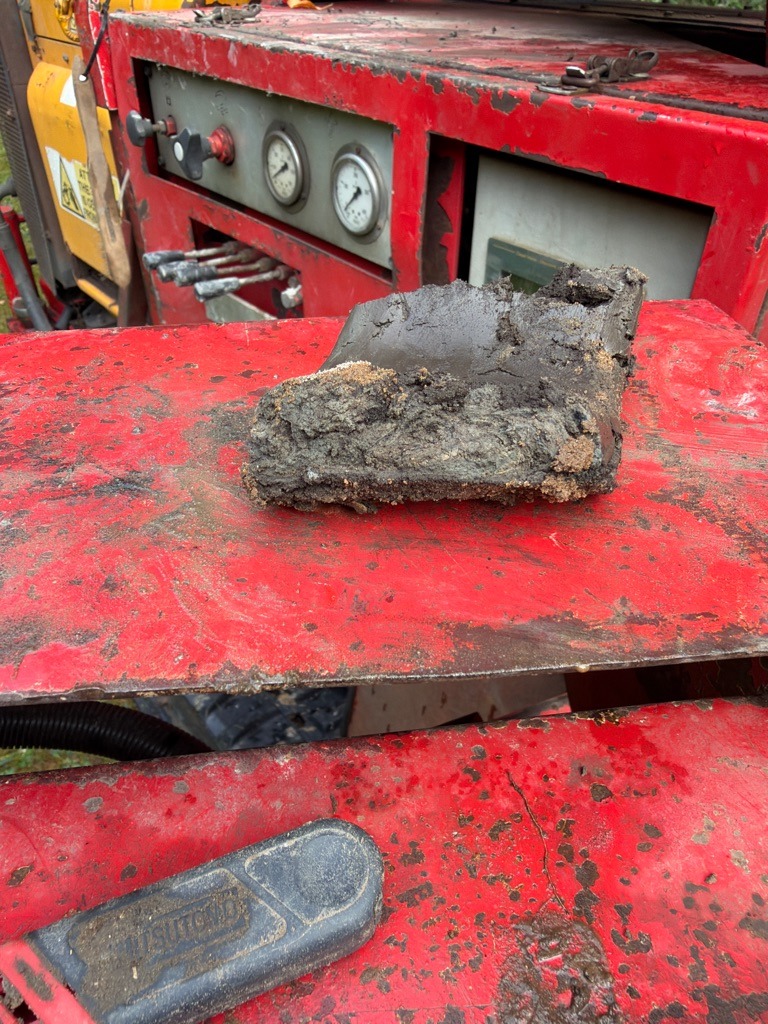
Smooth, plastic, and highly cohesive when wet, capable of forming a long, flexible ribbon during a ribbon test, indicating a high proportion of fine clay particles.
Color Analysis
Dark grayish-brown to olive-gray, suggesting prolonged wetness, reducing conditions, and a moderate amount of organic matter mixed with reduced iron minerals.
Estimated Composition
40 percent sand, 20 percent silt, 35 percent clay, and 5 percent organic matter, estimated visually with moderate confidence due to the cohesive, wet clod structure.
Water Retention
Extremely high water retention capacity. It holds onto water tightly, staying wet long after rainfall and drying out slowly, but can be prone to forming a hard crust as it dries.
Aeration
Low aeration, particularly when wet, as water fills the pore spaces and limits oxygen diffusion to roots and beneficial soil microbes.
Compaction Level
Moderately to severely compacted, especially when worked or driven over while wet, resulting in a dense, heavy clod with restricted macro-pore space.
Structure & Aggregation
Massive to subangular blocky structure when dried, with low aggregate stability when saturated, making it easily smeared and compacted.
Fertility Indicators
Moderate to High inherent fertility due to mineral richness and moderate organic matter, though nutrient availability can be hindered by poor aeration and compaction.
Climate Suitability
Thrives best in temperate and sub-humid climates where adequate moisture prevents extreme cracking, though requires careful management of irrigation and drainage.
Crops Worth Trying
Willows, poplars, turfgrasses, corn, soybeans, and pasture grasses that tolerate heavier root-zone moisture and dense soils.
Plants To Avoid
Drought-loving native plants, taproot crops like carrots and parsnips, and species sensitive to root rot like lavender or deep-rooted conifers.
Home Garden Use
Best suited for established perennial borders or raised beds where the native heavy soil is replaced or heavily amended; poorly suited for direct in-ground root crop gardening without extensive conditioning.
Agricultural Use
Extensively used for commodity row crops like corn and soybeans or permanent pasture, often requiring tile drainage and careful timing of machinery to avoid severe compaction.
Landscaping Use
Good for rain gardens or turfgrass establishment, but challenging for backfill in retaining walls or tree planting pits due to shrink-swell and drainage issues.
Common Problems
Prone to waterlogging, surface crusting, deep cracking during dry spells, severe compaction, and difficult tillage windows.
Amendments Needed
Heavy additions of coarse organic matter such as compost, leaf mold, and aged manure, combined with gypsum to flocculate clay particles and improve structure over time.
Try These At Home Tests
Perform a jar test to separate sand, silt, and clay sedimentation layers, and attempt a ribbon test to verify the high clay content and plasticity.
Professional Lab Recommendation
Send a sample to an agricultural extension lab for a complete nutrient analysis, cation exchange capacity (CEC), and organic matter percentage to guide fertilizer and amendment rates.
Fun Facts
Clay-rich alluvial soils have supported human agriculture for millennia, acting as natural nutrient banks because clay particles hold onto positively charged plant nutrients exceptionally well.