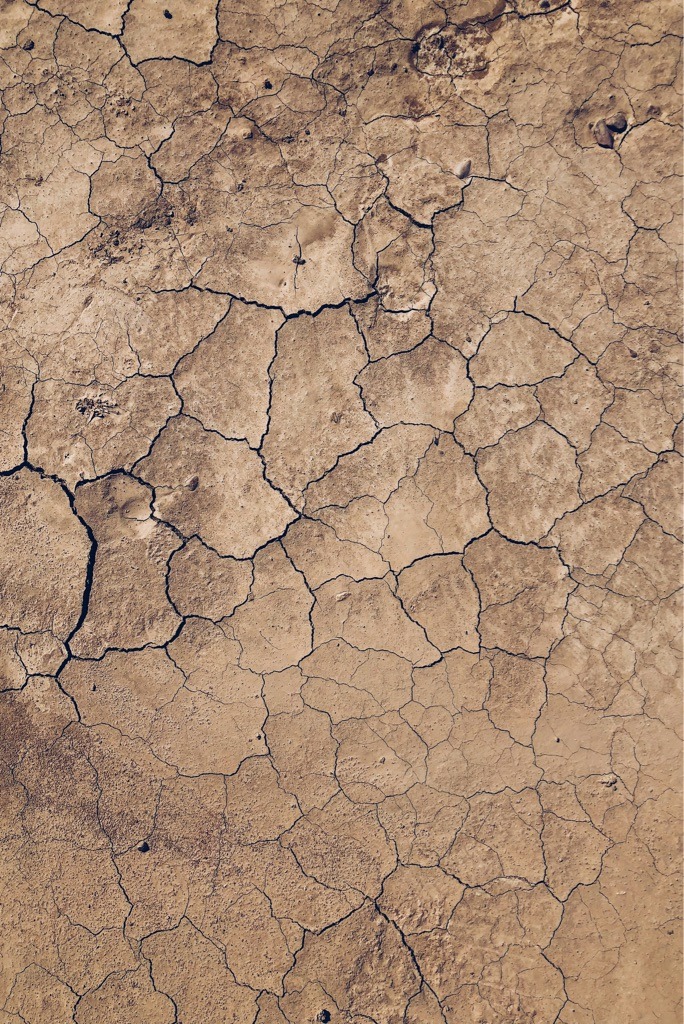
Arid Crust-Forming Heavy Clay
Clay / Silty Clay · Alluvial or lacustrine deposits in an arid/semi-arid basin, such as the American Southwest, parts of Central Asia, or the Australian Outback.
AI Disclaimer
This soil report was produced by AI from a single photo. Treat it as a starting point, not laboratory truth.
pH, drainage, fertility, and composition are visual estimates — send a sample to an accredited lab before any decision that would be painful to get wrong.
Crop and amendment tips are general guidance — local climate, microclimate, and gardening history always win over an AI's best guess.
pH
Alkaline 7.5–8.5. The pale color and arid appearance often correlate with calcium carbonate accumulation and low leaching, typical of basic soils.
Drainage
Poorly Drained. The fine texture and massive structure slow water infiltration significantly, leading to surface ponding followed by rapid runoff.
Organic Matter
Very Low (<1%). There is no visible humus or plant residue; the soil appears biologically 'thirsty' and chemically mineral-heavy.
Erosion Risk
High. Very susceptible to water erosion (runoff) because of the impermeable surface, and wind erosion of the fine silt particles once the crust is disturbed.
Overall Read
A challenging 'Heavy Clay' soil with a 4/10 rating for immediate productivity. Its strengths lie in nutrient retention, but its physical state is currently hostile to most seeds. Long-term success requires breaking the crust and aggressively adding organic carbon.
Texture
Fine and plastic; would produce a long, flexible ribbon (over 2 inches) and feel extremely smooth or sticky when wet, becoming rock-hard and brittle when dry.
Color Analysis
Yellowish brown to pale brown (Munsell 10YR 5/4); suggests high mineral content with significant iron oxides but low organic matter. The light value indicates a lack of humified carbon.
Estimated Composition
Clay: 45-60%, Silt: 30-40%, Sand: 5-10%, Organic Matter: <1%. High confidence in high clay content due to prominent desiccation cracking.
Water Retention
High total water holding capacity but low plant-availability. The clay binds water molecules tightly, and the surface crusting prevents water from entering the profile initially.
Aeration
Very Poor. When wet, pores are filled with water; when dry, the soil is too dense for gas exchange. Cracks are the only current avenue for oxygen.
Compaction Level
Severely Compacted / Surface Crusted. The visible 'hardpan' surface prevents root penetration and easy tillage.
Structure & Aggregation
Massive to Angular Blocky. The large polygonal cracks indicate a 'shrink-swell' behavior. Aggregate stability is poor once wet, leading to surface sealing.
Fertility Indicators
Low. Lack of organic matter and potential micronutrient tie-up (due to high pH) suggest a challenging environment for microbes and roots.
Climate Suitability
Arid and Semi-Arid climates. Management must focus on reducing evaporation and breaking the surface seal to capture rare rainfall.
Crops Worth Trying
Drought-tolerant grasses, sunflowers, or deep-taprooted plants like Alfalfa that can penetrate heavy clays. Salt-tolerant shrubs (Saltbush) may also thrive.
Plants To Avoid
Blueberries (require acid soil), root vegetables like Carrots (cannot expand in hard clay), and moisture-loving ferns.
Home Garden Use
Not suitable for direct in-ground gardening without heavy modification. Best used as a base for raised beds filled with imported topsoil and compost.
Agricultural Use
Challenging for row crops; requires 'no-till' to preserve any structure or heavy irrigation management to prevent salt buildup and crusting.
Landscaping Use
Possible for xeriscaping with native arid-land plants. Avoid using as backfill for retaining walls as it expands and may exert pressure when wet.
Common Problems
Surface crusting, poor drainage, high alkalinity, and 'baking' in the sun which kills surface microbiology.
Amendments Needed
Heavy applications of organic matter (compost/manure) to build structure, and Gypsum (Calcium Sulfate) to help flocculate clay particles and improve drainage.
Try These At Home Tests
Jar Test: Most sediment will settle after 24-48 hours, leaving a thick layer of clay. Ribbon Test: Squeeze wet soil to see if it forms a long, unbreakable string.
Professional Lab Recommendation
High Priority. Request a 'Saturated Paste Extract' test to check for salinity and Sodicity (SAR), which are common in soils that crack this severely.
Fun Facts
The polygonal cracks are a result of 'Vertic' properties—specific clays like smectite actually shrink in volume as they lose water, creating deep fissures.