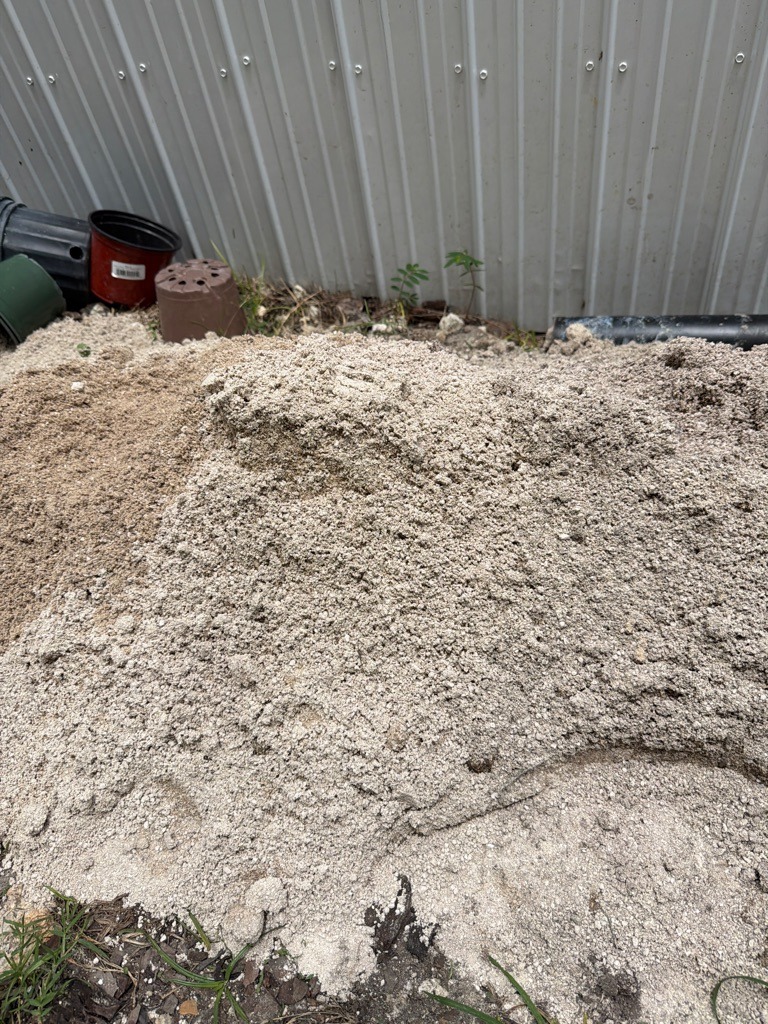
Coastal Pale Quartz Sand
Sand · Coastal plain deposits, beach ridges, or dredged fill material common in coastal or low-lying regions.
AI Disclaimer
This soil report was produced by AI from a single photo. Treat it as a starting point, not laboratory truth.
pH, drainage, fertility, and composition are visual estimates — send a sample to an accredited lab before any decision that would be painful to get wrong.
Crop and amendment tips are general guidance — local climate, microclimate, and gardening history always win over an AI's best guess.
pH
Neutral to slightly alkaline (6.8–7.5), common in coastal or shell-fragmented sands, though it can also be acidic if purely quartz. pH cannot be confirmed visually and must be tested using strips or a probe.
Drainage
Excessively drained. Water passes through this soil almost instantaneously due to the large macropores between sand grains and the complete absence of fine-textured particles to hold moisture.
Organic Matter
Very low (<1%). The pale color, lack of aggregation, and absence of visible decomposing plant residues point to a nearly sterile, highly oxidized environment with minimal microbial activity.
Erosion Risk
High susceptibility to both wind and water erosion. Without roots, organic binders, or clay particles to hold it together, loose sand shifts readily during heavy rainstorms or high winds.
Overall Read
This is a sterile, excessively draining quartz sand with high permeability and virtually zero natural fertility or water retention. While challenging for general gardening, it serves as an excellent blank slate that can be transformed into a productive medium through substantial organic amendments.
Texture
Coarse, gritty, and loose with zero plasticity. It will not form a ribbon during a ribbon test, falling apart instantly due to the lack of cohesive silt or clay particles.
Color Analysis
Light gray to off-white with pale tan undertones, closely aligning with a high-value Munsell designation (e.g., 10YR 7/1 to 8/2). This pale coloring indicates an almost total absence of organic matter and leached mineral profiles, often dominated by weathered quartz.
Estimated Composition
90% sand, 5% silt, 2% clay, and 3% or less organic matter. This visual estimate carries a high confidence rating given the distinct single-grain granular texture and pale color.
Water Retention
Extremely low. The soil dries out rapidly under sun exposure and has minimal plant-available water holding capacity, requiring frequent irrigation to sustain non-drought-tolerant vegetation.
Aeration
Excessive aeration. Oxygen availability is high, but this is counterproductive for many plants because it dries out the root zone rapidly and prevents moisture retention.
Compaction Level
Loose and friable. Because there are no binding clays or silts, the material flows easily and does not form hardpans through traditional compaction, though surface crusting can occasionally occur.
Structure & Aggregation
Single-grain structure with virtually no structural aggregation. Individual sand particles lie independently, leading to extreme susceptibility to displacement and zero natural binding.
Fertility Indicators
Low fertility overall. There is a complete lack of dark humus, worm casts, or visible organic matter. Cation exchange capacity (CEC) is extremely low, meaning nutrients wash away easily.
Climate Suitability
Thrives best in arid, semi-arid, or coastal environments where specialized native flora are adapted to rapid drainage and high heat, though irrigation is required for conventional gardening.
Crops Worth Trying
Drought-tolerant plants, succulents, root vegetables like carrots and radishes (if amended), lavender, rosemary, beach plums, and specific warm-season grasses.
Plants To Avoid
Moisture-loving plants, heavy-feeding heavy-yield crops, ferns, and plants prone to drought stress or nutrient deficiencies unless heavily amended.
Home Garden Use
Best used as a base component for mixing custom potting soils, lightening heavy clay soils, or creating specialized xeriscapes and cactus gardens. Unsuitable for unamended in-ground vegetable beds.
Agricultural Use
Poor suitability for broad-scale agriculture without massive, ongoing inputs of irrigation and organic fertilizers. Sometimes used for specialized tree crops with micro-irrigation systems.
Landscaping Use
Excellent for drainage layers, backfilling retaining walls, creating dry creek beds, or establishing drought-tolerant native coastal landscapes.
Common Problems
Rapid nutrient leaching, extreme drought stress, lack of biological activity, poor seed germination due to shifting surfaces, and wind/water displacement.
Amendments Needed
Heavy applications of finished compost, aged manure, peat moss, or coconut coir to build organic matter and water-holding capacity, followed by slow-release fertilizers.
Try These At Home Tests
Perform a jar test: shake the soil with water in a jar and watch how quickly it settles (sand settles within seconds). Try the squeeze test: moisten a handful and squeeze—it will collapse immediately upon opening your hand.
Professional Lab Recommendation
Send a sample to a lab for a basic nutrient and organic matter analysis to understand baseline fertility and CEC deficiencies before spending money on amendments.
Fun Facts
Pure quartz sands like this are often mined for industrial uses such as glassmaking, filtration systems, and concrete manufacturing in addition to construction and landscaping.