Coastal Sandy Fill Soil
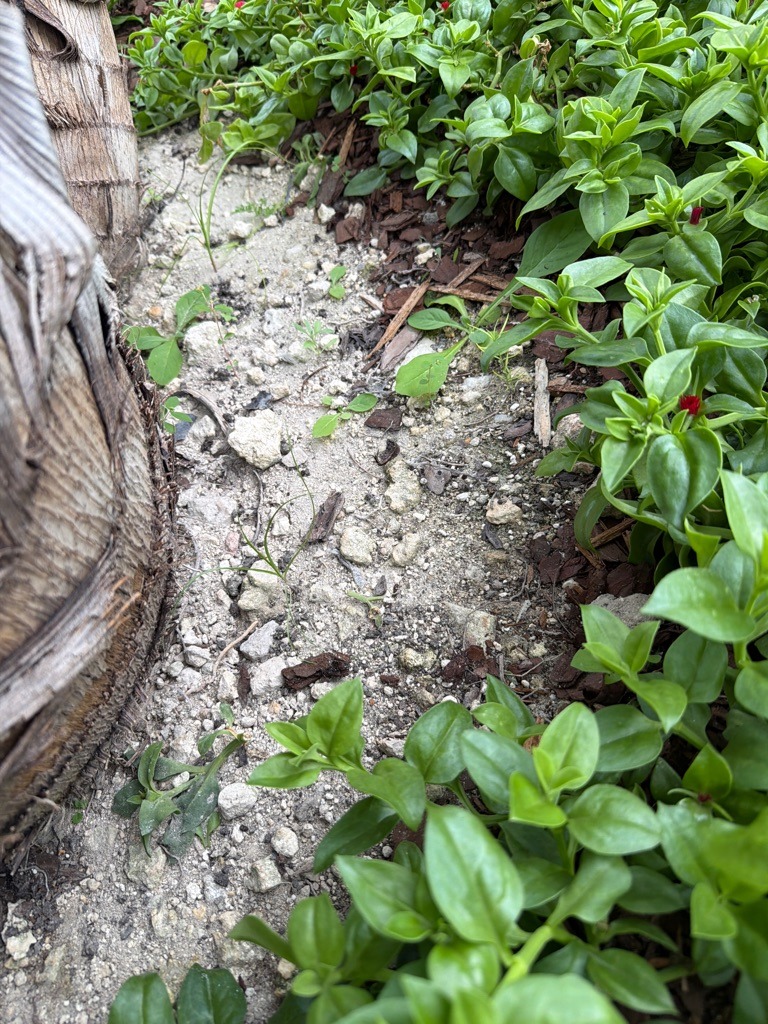
Sand / Loamy Sand · Coastal plain deposit, beach ridge, or imported sandy fill material used in modern landscaping projects.
AI Disclaimer
This soil report was produced by AI from a single photo. Treat it as a starting point, not laboratory truth.
pH, drainage, fertility, and composition are visual estimates — send a sample to an accredited lab before any decision that would be painful to get wrong.
Crop and amendment tips are general guidance — local climate, microclimate, and gardening history always win over an AI's best guess.
pH
Neutral to slightly alkaline (7.0–7.8), common in coastal or shell-fragment-derived sandy soils. This must be verified with a lab test or home meter.
Drainage
Excessively drained. Water moves rapidly downward through the large pore spaces between sand particles, leaving the soil dry shortly after rain or irrigation.
Organic Matter
Low (1–2%), primarily restricted to surface debris, wood mulch, and shallow root zones. This limits biological activity and rapid nutrient cycling.
Erosion Risk
High susceptibility to wind and water erosion when left bare, as individual sand grains are easily dislodged and transported.
Overall Read
A well-aerated but drought-prone sandy soil with low natural fertility and water retention. While challenging for standard garden plants, it responds exceptionally well to organic matter supplementation and is ideal for drought-tolerant landscaping.
Texture
Coarse, gritty, and loose with single-grain structure; will not form a cohesive ribbon when wet, indicating a very low clay content and high dominance of sand-sized quartz particles.
Color Analysis
Pale gray to light yellowish-white (10YR 7/1 to 8/2), indicating minimal organic matter accumulation, bleached quartz mineralogy, and an absence of concentrated iron oxides due to rapid leaching.
Estimated Composition
Approximately 85% sand, 10% silt, 3% clay, and 2% organic matter (mostly from surface mulch and debris). Visual confidence is high due to the exposed coarse mineral grains.
Water Retention
Very low plant-available water holding capacity. The soil dries out quickly under sun and cannot store moisture or nutrients effectively, causing frequent drought stress to plants.
Aeration
Excessive aeration. Oxygen is abundant due to large macropores, which is beneficial for root respiration but accelerates organic matter breakdown.
Compaction Level
Loose and friable at the surface, though slight mechanical packing may occur under heavy foot traffic. Hardpans are rare in pure sand unless cemented by minerals.
Structure & Aggregation
Single-grain structure with virtually no stable aggregates. The lack of clay and organic glues means particles exist independently, making the soil prone to shifting and wind/water displacement.
Fertility Indicators
Low overall fertility. Visual indicators include pale coloration, absence of rich humus, sparse native weed growth, and reliance on surrounding wood mulch for organic inputs.
Climate Suitability
Thrives best in warm, coastal, or arid climates where plants adapted to rapid drainage and drought are native. Requires careful irrigation management in hotter settings.
Crops Worth Trying
Drought-tolerant plants, succulents, ornamental grasses, root vegetables like carrots (in deeper profiles), rosemary, lavender, and certain heat-loving coastal shrubs.
Plants To Avoid
Moisture-loving bog plants, heavy feeders requiring high cation exchange capacity (CEC), and shallow-rooted crops that suffer rapidly during dry spells without frequent irrigation.
Home Garden Use
Suitable for xeriscaping, succulent gardens, and specialized root-crop beds, provided heavy organic amendments are incorporated.
Agricultural Use
Poor suitability for broad-scale rainfed agriculture without heavy irrigation and continuous fertigation; sometimes used for specialized specialty crops with intensive management.
Landscaping Use
Commonly found in foundation plantings, around palm trees and tropical groundcovers, and as base material for hardscapes or drought-tolerant perennial borders.
Common Problems
Rapid nutrient leaching, extreme drought stress, low cation exchange capacity, wind erosion, and difficulty establishing delicate seedlings.
Amendments Needed
Heavy and continuous additions of compost, aged manure, peat moss, or leaf mold to build organic matter, improve water retention, and enhance nutrient holding capacity.
Try These At Home Tests
Perform a soil jar settling test to confirm the high percentage of sand, and a ribbon test where the sample crumbles immediately without forming a shape.
Professional Lab Recommendation
Send a sample to a commercial lab for a basic nutrient package, organic matter percentage, and cation exchange capacity (CEC) to determine precise fertilizer and amendment needs.
Fun Facts
Sandy soils warm up much faster in the spring than clay soils, making them ideal for early-season planting in cooler climates, though they cool down rapidly at night.