Processed Coconut Coir Growing Medium
Peat-like Soilless Medium (Fibrous) · Tropical Coconut Plantations (e.g., Sri Lanka, India, or Southeast Asia). It is a byproduct of the coconut industry, processed through husking, retting, and drying.
AI Disclaimer
This soil report was produced by AI from a single photo. Treat it as a starting point, not laboratory truth.
pH, drainage, fertility, and composition are visual estimates — send a sample to an accredited lab before any decision that would be painful to get wrong.
Crop and amendment tips are general guidance — local climate, microclimate, and gardening history always win over an AI's best guess.
pH
Slightly acidic to Neutral (5.8–6.8). Coconut coir is naturally more pH-stable than peat moss but requires monitoring as it can fluctuate based on the quality of the wash and buffering during manufacture.
Drainage
Well Drained to Excessively Drained. The coarse fibrous structure allows for rapid water passage; however, the fibers themselves hold moisture internally, preventing immediate dehydration.
Organic Matter
Very rich (>90%). It is essentially pure organic material, which promotes excellent initial microbial colonization but lacks the long-term stable humus found in mineral soils.
Erosion Risk
Low (Indoor/Container). In an outdoor setting, dried coir is very light and highly susceptible to wind erosion and surface runoff if not mulched.
Overall Read
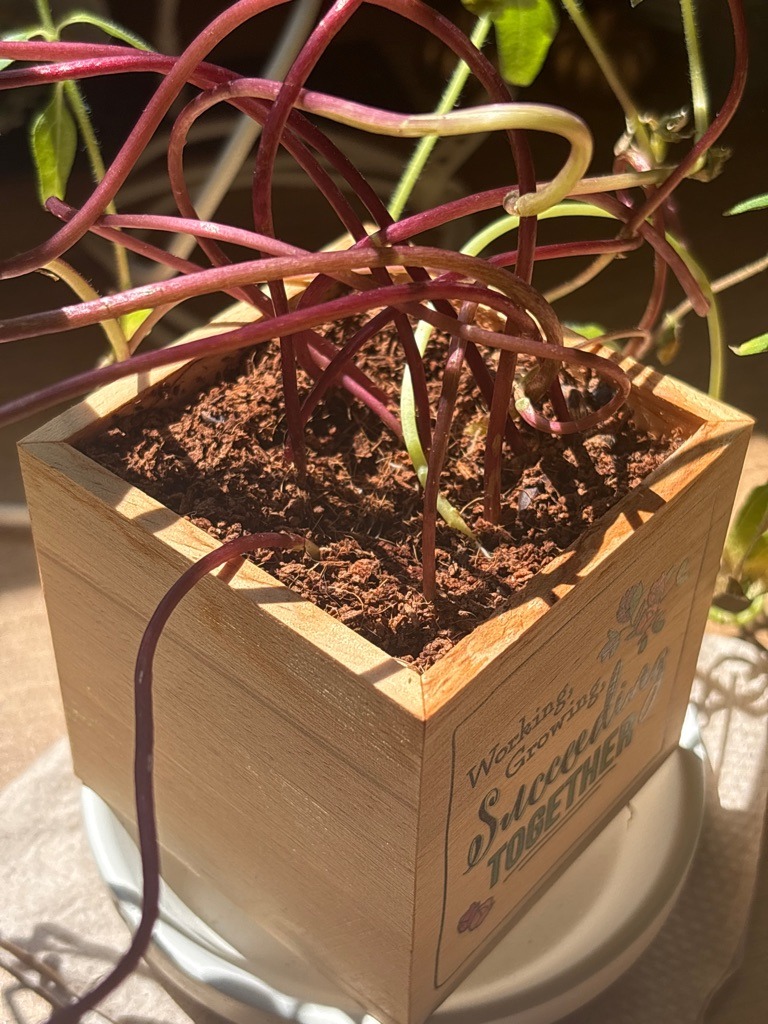
The soil shown is a high-quality, sterile potting medium, not a natural field soil. It is exceptional for drainage and aeration but is nutritionally inert. Success requires diligent fertilization and monitoring of moisture levels, but it provides a near-perfect environment for fast root development and seed germination.
Texture
Fibrous, spongy, and lightweight. It lacks the plasticity of clay or the grit of sand, feeling more like shredded carpet or cork when dry and spongy when wet. It would fail a ribbon test entirely as it cannot be formed into a stable shape.
Color Analysis
Reddish-brown (5YR 4/4 to 3/4). The warm rusty hue is characteristic of dried coconut husk processing. This color indicates high lignocellulosic content and low mineral iron presence, but high air-filled porosity.
Estimated Composition
0% Sand, 0% Silt, 0% Clay, 100% Organic Fibers (Processed Coconut Husk). Visually high confidence this is a pure soilless substrate.
Water Retention
High Water Holding Capacity (WHC). Despite its drainage, it can hold up to 10 times its weight in water, though it releases this water easily to plant roots compared to clay.
Aeration
Excellent. The large pore spaces between fibers ensure high oxygen availability, making it ideal for germinating seeds and supporting root respiration in containers.
Compaction Level
Loose and Friable. It is highly resistant to compaction compared to mineral soil, though it may settle or shrink slightly over many months of watering.
Structure & Aggregation
Fibrous and Single-Grain-like. It does not form traditional soil peds (aggregates) but creates a mesh-like matrix that offers superior gas exchange and low resistance to root penetration.
Fertility Indicators
Low Natural Fertility. While it looks rich, coir has a very high C:N ratio and lacks inherent N-P-K. It serves as a sterile 'blank slate' for hydroponic or liquid feeding. Fertility rating: Low (without amendments).
Climate Suitability
Controlled environments or humid tropical/subtropical climates. In arid climates, it requires frequent irrigation as the surface dries out quickly under direct sun.
Crops Worth Trying
Seedlings, microgreens, tropical houseplants (Pothos, Philodendron), and hydroponic berries or tomatoes. Its sterility is perfect for disease-sensitive starts.
Plants To Avoid
Cacti and succulents in deep pots (may hold too much water internally), and heavy-feeding field crops that require stable mineral mineralogy and high cation exchange capacity.
Home Garden Use
Excellent for seed starting mixes, amending heavy clay to improve aeration, or as a sustainable mulch for container gardening.
Agricultural Use
Widely used in commercial greenhouse hydroponics and vertical farming as a slab or bag medium for high-value vegetable production.
Landscaping Use
Used as a soil conditioner during planting or as a component in 'green roof' soil mixes where weight is a primary constraint.
Common Problems
Salt accumulation (sodium/potassium) if not pre-washed, calcium and magnesium 'lock-out' due to high cation exchange binding spots, and surface drying/crusting.
Amendments Needed
Complete water-soluble fertilizer including micronutrients; Cal-Mag (Calcium/Magnesium) supplements are essential to satisfy the medium's initial binding sites.
Try These At Home Tests
Squeeze Test: when saturated, only a few drops should come out if squeezed lightly. Smell Test: should be earthy and sweet; a sour smell indicates poor drainage and rot.
Professional Lab Recommendation
Request an 'EC' (Electrical Conductivity) test and a Cation Exchange Capacity (CEC) saturation report to check for residual salts from the sea-water processing of the husks.
Fun Facts
Coir is a renewable alternative to peat moss, which is mined from non-renewable bogs. It was once considered a waste product but is now a cornerstone of sustainable horticulture.