Temperate Silty Loam Agricultural Soil
Silt Loam · Glacial loess deposits or alluvial valley floodplains found commonly across the temperate Midwest or European agricultural zones.
AI Disclaimer
This soil report was produced by AI from a single photo. Treat it as a starting point, not laboratory truth.
pH, drainage, fertility, and composition are visual estimates — send a sample to an accredited lab before any decision that would be painful to get wrong.
Crop and amendment tips are general guidance — local climate, microclimate, and gardening history always win over an AI's best guess.
pH
Slightly acidic to neutral (6.2–7.0) based on typical temperate regional soils and moderate organic content, though laboratory confirmation via test strip or probe is necessary.
Drainage
Moderately well drained. The fine silt fraction allows for decent water retention while maintaining moderate percolation, but surface crusting can slow infiltration during heavy downpours.
Organic Matter
Moderate (2–4%). The color and presence of minor vegetative debris suggest a fair amount of decomposed humus, supporting baseline microbial activity and nutrient cycling.
Erosion Risk
Moderate to high risk for water and wind erosion when left bare and tilled, due to the predominance of fine silt particles that detach easily.
Overall Read
A versatile and productive silt loam with good baseline fertility and water retention, though prone to surface crusting and compaction. With regular additions of organic matter and careful tillage management, it will support exceptional plant growth.
Texture
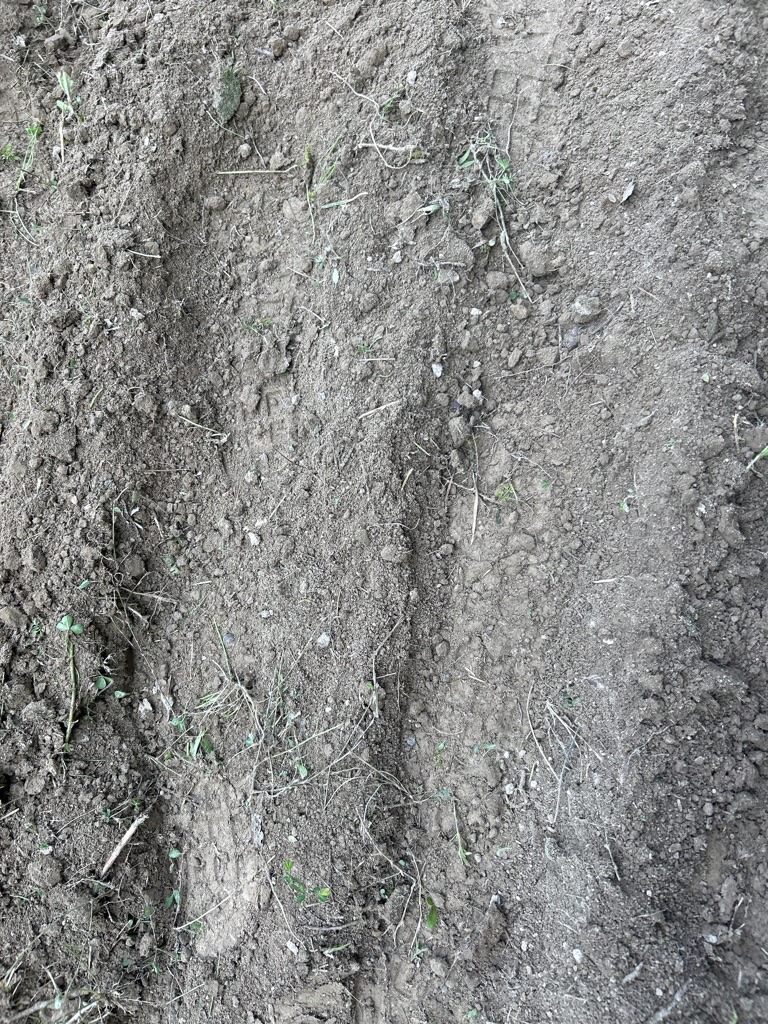
Smooth and powdery when dry, slightly plastic and cohesive when damp. Forms a weak, short ribbon before breaking, indicating a high proportion of silt with moderate clay and sand fractions.
Color Analysis
Light to medium grayish-brown (Munsell value around 10YR 5/2 to 5/3). The muted brown and gray tones indicate moderate organic matter coupled with weathering and potential past cultivation or surface drying.
Estimated Composition
Approximately 25% sand, 55% silt, 15% clay, and 5% organic matter. This visual estimate carries a moderate-to-high confidence level based on the smooth surface appearance and lack of heavy coarse fragments.
Water Retention
Good plant-available water holding capacity. It retains moisture well compared to sandy soils, though it can dry out and form a hard surface crust under intense sun and wind.
Aeration
Moderate. While pore space exists, surface crusting and compaction reduce oxygen diffusion into the root zone, requiring periodic surface cultivation or biological aeration.
Compaction Level
Moderately firm to compacted, evidenced by the visible surface smoothing and track marks, which can restrict early root penetration and gas exchange.
Structure & Aggregation
Subangular blocky to weak granular structure, somewhat disturbed by surface traffic or weathering. Aggregate stability is moderate and can degrade under excessive tillage.
Fertility Indicators
Moderate fertility. Sparse weed growth and scattered root residues indicate functional nutrient levels, but supplemental organic inputs will boost long-term vitality.
Climate Suitability
Thrives best in temperate, continental, or humid subtropical climates with balanced seasonal rainfall and moderate temperatures.
Crops Worth Trying
Corn, soybeans, small grains, root vegetables like carrots and potatoes, tomatoes, squash, and various cover crops like clover and rye.
Plants To Avoid
Drought-loving native succulents or acid-loving plants like blueberries unless significant specialized soil amendments are made.
Home Garden Use
Well-suited for in-ground vegetable gardens, raised beds, perennial borders, and general landscaping when amended with organic compost.
Agricultural Use
Highly productive for commercial row crops, forage pastures, and orchards when managed with conservation tillage to prevent crusting and erosion.
Landscaping Use
Good for turf establishment, ornamental planting beds, and general grading, provided compaction is relieved prior to planting.
Common Problems
Surface crusting after heavy rains, compaction from foot or vehicular traffic, and susceptibility to wind and water erosion when bare.
Amendments Needed
Aged compost or well-rotted manure to improve aggregation, reduce crusting, and increase organic matter; cover crops to protect the surface during off-seasons.
Try These At Home Tests
Perform a jar settling test for exact particle breakdown, a ribbon test to confirm silt-loam texture, and an infiltration ring test to check drainage speed.
Professional Lab Recommendation
Send a composite sample to a local agricultural extension or testing lab for a standard fertility, pH, CEC, and organic matter analysis to guide precise fertilizer applications.
Fun Facts
Silt soils are often wind-blown deposits known as loess, which cover vast areas of North America, Europe, and Asia, forming some of the most productive agricultural breadbaskets in the world.