Amended Organic Garden Loam with Perlite
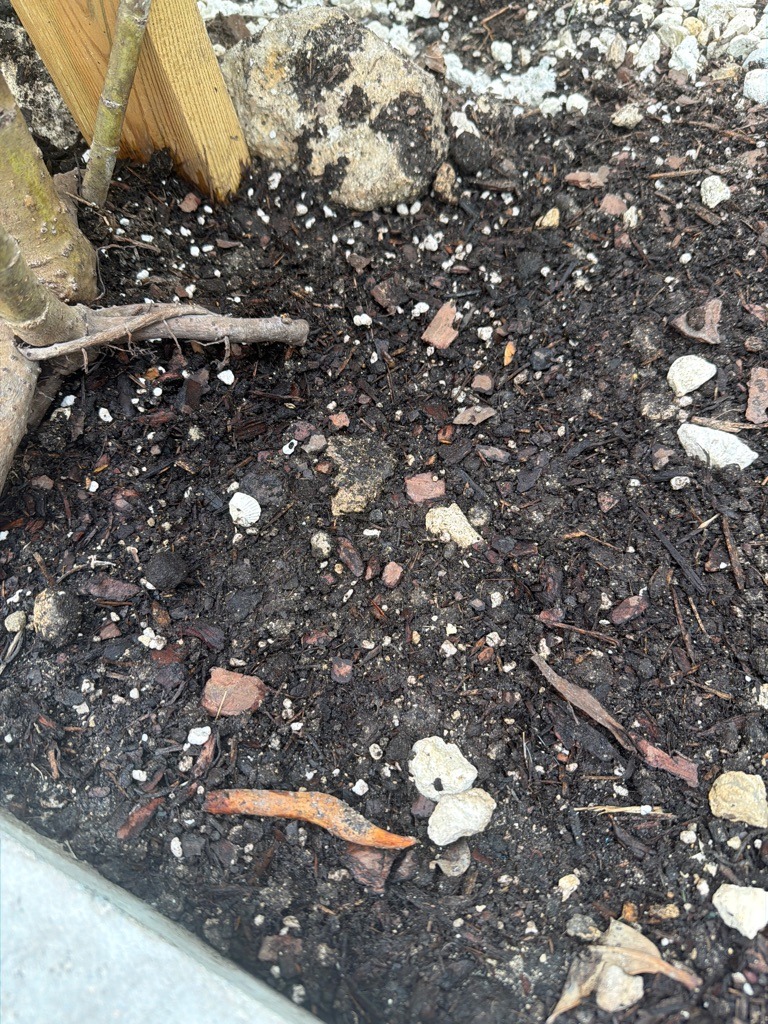
Loam · Anthropogenic or heavily managed garden soil/raised bed mix, likely created by blending native mineral soil with compost, bark fines, and perlite.
AI Disclaimer
This soil report was produced by AI from a single photo. Treat it as a starting point, not laboratory truth.
pH, drainage, fertility, and composition are visual estimates — send a sample to an accredited lab before any decision that would be painful to get wrong.
Crop and amendment tips are general guidance — local climate, microclimate, and gardening history always win over an AI's best guess.
pH
Slightly acidic to neutral (6.2–7.0), typical for well-managed garden soils enriched with compost and organic matter. Confirmation requires a soil test kit.
Drainage
Well drained. The loose structure, presence of perlite, and coarse organic bits allow excess water to move through readily while retaining adequate moisture.
Organic Matter
Rich (4–8%). Dark color, visible wood fragments, and crumbly aggregates indicate a healthy, biologically active organic fraction.
Erosion Risk
Low to moderate. While the crumbly structure resists water erosion, flat exposed surfaces in heavy downpours or high winds could experience minor displacement if unmulched.
Overall Read
An exceptionally fertile, premium-quality garden soil with balanced texture, excellent aeration, and high organic content. It provides an ideal environment for nearly all home gardening and horticultural applications.
Texture
Friable, crumbly, and slightly gritty due to visible perlite and organic fragments. Would form a weak-to-moderate ribbon when wet, indicating a balanced mix of sand, silt, and clay with high organic content.
Color Analysis
Dark brownish-black (approx. 10YR 2/1 to 10YR 2/2), indicating high organic matter content, active humus formation, and good moisture retention under moist conditions.
Estimated Composition
Approximately 40 percent sand, 30 percent silt, 15 percent clay, and 15 percent organic matter and amendments (like perlite). High confidence for an amended garden bed or container/raised bed soil.
Water Retention
High plant-available water holding capacity. The abundant organic matter acts like a sponge, holding moisture without becoming waterlogged.
Aeration
Excellent. Pores created by organic debris, soil fauna, and perlite ensure high oxygen diffusion to plant roots and beneficial microbes.
Compaction Level
Loose and friable. There are no signs of hardpan or heavy surface crusting, allowing roots to explore freely.
Structure & Aggregation
Granular structure with stable peds. This promotes excellent root penetration, gas exchange, and high resistance to water erosion.
Fertility Indicators
High fertility indicated by dark humus coloring, rich organic residues, and a favorable crumbly structure capable of supporting dense root systems.
Climate Suitability
Thrives in temperate and continental climates where moisture and temperature fluctuate seasonally, requiring standard mulching to preserve moisture in summer.
Crops Worth Trying
Tomatoes, peppers, leafy greens, squash, root vegetables, annual flowers, and most common garden vegetables and perennials.
Plants To Avoid
Extreme desert succulents or native plants adapted to very lean, sterile soils that may suffer from too much retained moisture and nutrients.
Home Garden Use
Ideal for raised beds, intensive in-ground vegetable gardens, container gardening, and perennial flower beds.
Agricultural Use
Typically too managed and amended for broad-acre agriculture, but exceptionally well-suited for high-value organic market gardening, urban farming, and horticulture.
Landscaping Use
Excellent for ornamental flower beds, shrub borders, and newly established residential plantings requiring high initial organic support.
Common Problems
Rapid decomposition of organic matter requiring annual replenishment; potential nutrient leaching if over-watered due to high permeability.
Amendments Needed
Minimal immediate amendments needed. Long-term maintenance requires annual top-dressing with finished compost to sustain organic matter levels.
Try These At Home Tests
Perform a jar test to verify sand/silt/clay ratios, squeeze a handful to check for friability, and test pH using inexpensive indicator strips.
Professional Lab Recommendation
Recommended every 2-3 years for commercial operations or high-stakes gardens; request a standard nutrient panel (NPK, micronutrients, CEC, and organic matter percentage).
Fun Facts
The inclusion of white perlite in garden soils mimics volcanic glass popping when heated to extreme temperatures, creating lightweight internal air pockets that prevent compaction.