Glacial Sandy Loam Topsoil
Sandy Loam · Glacial till or alluvial outwash deposit common in temperate northern regions with mixed mineralogy.
AI Disclaimer
This soil report was produced by AI from a single photo. Treat it as a starting point, not laboratory truth.
pH, drainage, fertility, and composition are visual estimates — send a sample to an accredited lab before any decision that would be painful to get wrong.
Crop and amendment tips are general guidance — local climate, microclimate, and gardening history always win over an AI's best guess.
pH
Likely slightly acidic to neutral (6.2 to 7.0) based on typical parent material, but cannot be confirmed visually; a test strip or digital pH meter is recommended.
Drainage
Well drained, due to the high proportion of coarser sand particles and loose aggregate structure allowing rapid percolation of water.
Organic Matter
Low to moderate (2% to 3%), estimated from the lighter brownish-grey tone and presence of small peds and minor plant debris.
Erosion Risk
Moderate wind and water erosion risk on sloped or bare surfaces due to loose, sandy-textured aggregates and low natural cohesion.
Overall Read
A highly versatile, workable sandy loam with great drainage and aeration, though it requires regular additions of organic matter to maintain fertility and moisture retention.
Texture
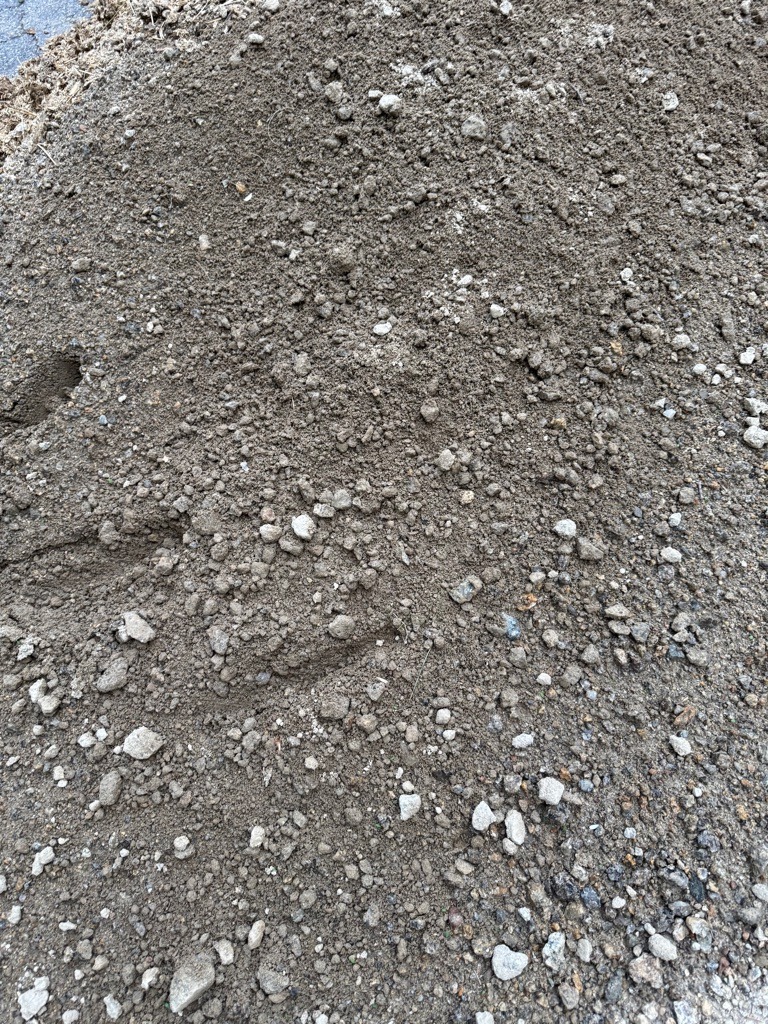
Coarse and gritty with visible mineral fragments and small aggregates; would form a weak, easily broken ribbon in a ribbon test indicating high sand content with enough silt and clay to provide minimal cohesion.
Color Analysis
Greyish brown to olive-brown (Munsell approximation 10YR 4/2), indicating moderate weathering, low-to-moderate organic matter, and well-drained mineral conditions without prolonged waterlogging.
Estimated Composition
Approximately 65 percent sand, 20 percent silt, 10 percent clay, and 5 percent organic matter, based on visual grit and crumb distribution; moderate confidence requiring jar testing for absolute verification.
Water Retention
Moderate to low plant-available water holding capacity; sandy loams tend to dry out more quickly under direct sun compared to fine-textured clays, requiring consistent irrigation during dry spells.
Aeration
High oxygen availability to roots and microbes thanks to large pore spaces and sandy texture facilitating rapid gas exchange.
Compaction Level
Low to moderate; the loose pile appearance indicates friable conditions, though localized crusting can occur after heavy rain due to low clay binding.
Structure & Aggregation
Weak granular to single-grain structure with small, fragile peds that break down easily under pressure or heavy rainfall.
Fertility Indicators
Moderate overall fertility; lacks the deep dark humus of rich prairie soils, showing a lighter mineral profile with some visible stone and gravel fragments.
Climate Suitability
Thrives in temperate and continental climates with moderate rainfall; benefits greatly from mulching in arid or hot regions to reduce rapid moisture evaporation.
Crops Worth Trying
Root vegetables like carrots and potatoes, tomatoes, peppers, strawberries, and various cover crops that benefit from loose, well-draining soil.
Plants To Avoid
Water-loving bog plants or crops requiring heavy, water-retentive clay unless substantial organic amendments are added.
Home Garden Use
Ideal for in-ground vegetable gardens, raised bed fills, perennial borders, and general landscaping beds requiring good drainage.
Agricultural Use
Well-suited for diversified vegetable farming, orchards, and irrigated row crop production when managed with regular organic inputs.
Landscaping Use
Great for general turf establishment, ornamental planting beds, and areas where standing water is undesirable.
Common Problems
Prone to rapid nutrient leaching, quick drying during droughts, and potential surface crusting after hard rains.
Amendments Needed
Incorporate well-rotted compost, aged manure, or leaf mold to boost organic matter, improve water retention, and enhance nutrient holding capacity.
Try These At Home Tests
Perform a jar test to accurately measure sand, silt, and clay percentages; conduct a ribbon test to verify the sandy loam classification.
Professional Lab Recommendation
Send a sample to a local extension lab for a complete nutrient panel, organic matter percentage, and exact pH if establishing a commercial or high-value garden.
Fun Facts
Sandy loam soils are often considered a gardener's favorite because they are easy to till, warm up quickly in the spring, and offer a forgiving balance for root growth.