Urban Back Gate Sandy Loam
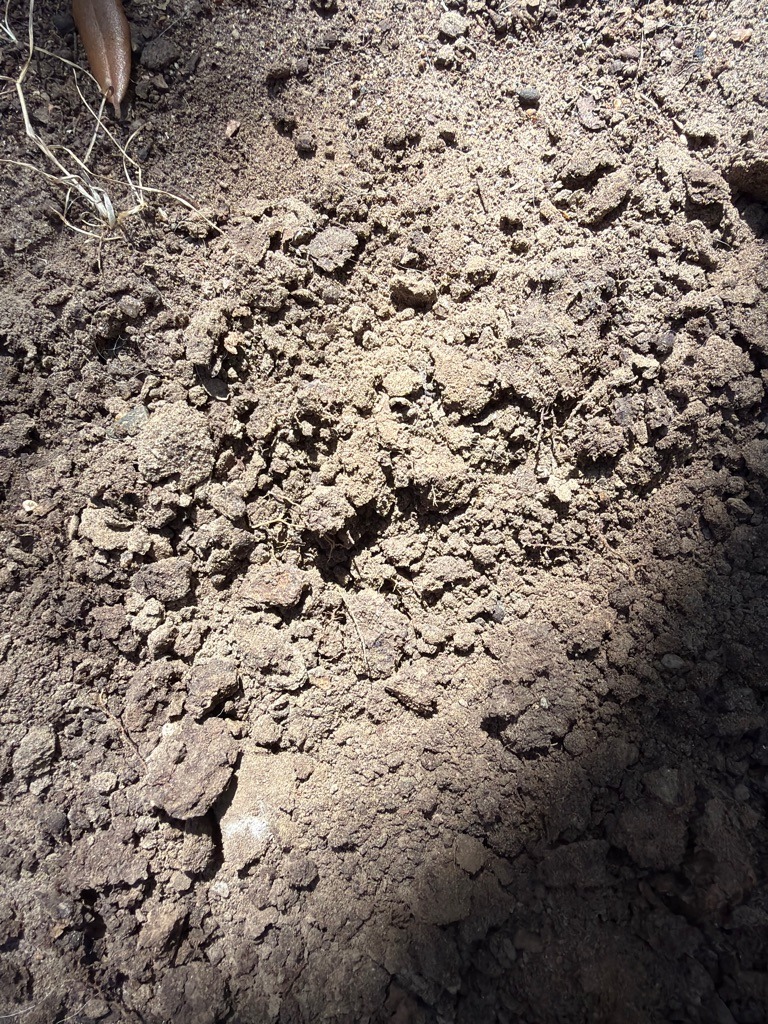
Sandy Loam · Alluvial or colluvial topsoil deposit typical of lowland margins, suburban residential backyards, or weathered terrace remnants.
AI Disclaimer
This soil report was produced by AI from a single photo. Treat it as a starting point, not laboratory truth.
pH, drainage, fertility, and composition are visual estimates — send a sample to an accredited lab before any decision that would be painful to get wrong.
Crop and amendment tips are general guidance — local climate, microclimate, and gardening history always win over an AI's best guess.
pH
Slightly acidic to neutral (6.2–7.0) based on typical regional weathered topsoils, though a chemical test or lab probe is necessary to confirm exact pH.
Drainage
Well Drained. The high sand fraction and loose, crumbly surface aggregates allow water to infiltrate rapidly and percolate downward without prolonged waterlogging.
Organic Matter
Low to moderate (1.5–3%). The color is somewhat pale and visible plant debris is sparse, indicating limited humus buildup.
Erosion Risk
Moderate. Dry sandy loam is susceptible to wind erosion when bare and can wash away easily under heavy, high-intensity rainfall if not covered by mulch or vegetation.
Overall Read
This is a workable, highly versatile sandy loam soil with good drainage and aeration, though it would greatly benefit from added organic matter to improve moisture retention and long-term fertility.
Texture
Coarse and gritty to the touch, with a moderate amount of finer mineral particles giving it slight cohesion. In a ribbon test, it would likely form a short, weak ribbon (less than 1 inch) before breaking, indicating a balanced mix of sand with enough silt and clay to hold loose aggregates together.
Color Analysis
Light grayish brown to dull brown, roughly corresponding to Munsell 10YR 5/3. This dry, lighter coloration indicates a relatively low organic matter content and moderate weathering, suggesting typical topsoil exposed to direct sun and drying conditions.
Estimated Composition
Roughly 65% sand, 20% silt, 12% clay, and 3% organic matter. Confidence level is moderate based on visual grain visibility and aggregate breakup.
Water Retention
Moderate to low. Because of the high sand content, it will drain quickly and tend to dry out faster under direct sunlight compared to heavier clay or silt loams, requiring more frequent watering during dry spells.
Aeration
Good to excellent. The coarse texture and open granular spaces allow ample oxygen exchange for plant roots and beneficial soil microbes.
Compaction Level
Moderately firm in undisturbed areas, but easily broken into loose fragments at the surface. Shows mild surface crusting where exposed to sun and foot traffic.
Structure & Aggregation
Weak to moderate granular structure near the surface, breaking down easily into individual coarse grains and small clods under mechanical pressure.
Fertility Indicators
Moderate fertility. The soil lacks deep organic darkness, but its decent mineral matrix provides a solid base for nutrient retention once amended with organic matter.
Climate Suitability
Thrives in temperate, subtropical, and Mediterranean climates where rainfall is balanced or supplemental irrigation is available.
Crops Worth Trying
Root vegetables (carrots, radishes), tomatoes, peppers, squash, herbs (rosemary, thyme), and drought-tolerant turf grasses.
Plants To Avoid
Extremely moisture-dependent bog plants or heavy-feeding crops that require constant high water tables without frequent irrigation.
Home Garden Use
Ideal for in-ground vegetable gardens, raised beds, perennial borders, and pollinator-friendly native plant gardens.
Agricultural Use
Well-suited for diversified vegetable farming, orchards, and vineyards with the addition of regular cover cropping and drip irrigation.
Landscaping Use
Great for ornamental flower beds, drought-tolerant xeriscaping, and general turf establishment.
Common Problems
Rapid drying out in hot weather, potential nutrient leaching due to fast drainage, and surface crusting after heavy rains.
Amendments Needed
Add plenty of well-rotted compost, aged manure, or leaf mold to boost organic matter, improve moisture retention, and enhance structural stability.
Try These At Home Tests
Perform a jar test by shaking a sample in water to separate sand, silt, and clay settling layers, and do a ribbon test to confirm the textural class.
Professional Lab Recommendation
Recommended if planning a high-yield garden or orchard. Request a standard fertility test, cation exchange capacity (CEC), and organic matter percentage.
Fun Facts
Sandy loams are often considered the most versatile soils for gardeners because they combine the easy working nature of sand with the nutrient-holding capacity of loam.
Your Notes
Back gate