Premium Humic Garden Loam
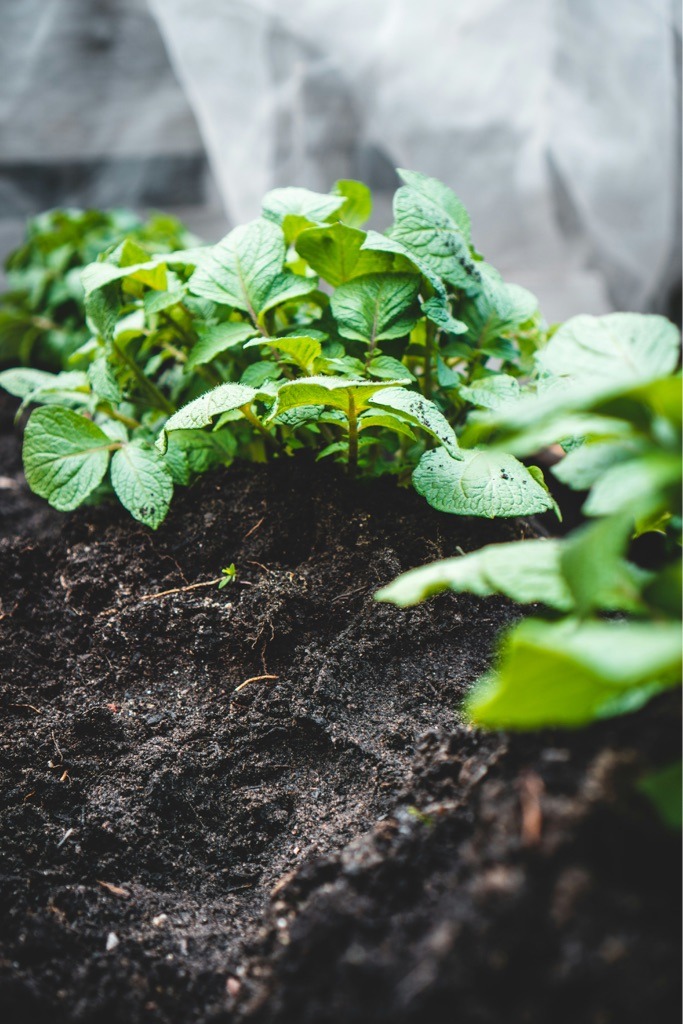
Loam to Sandy Loam · Likely an amended garden bed or 'potting-up' soil in a temperate region. It mimics a rich A-horizon (topsoil) from a mollisol (prairie soil) or a highly managed horticultural mix.
AI Disclaimer
This soil report was produced by AI from a single photo. Treat it as a starting point, not laboratory truth.
pH, drainage, fertility, and composition are visual estimates — send a sample to an accredited lab before any decision that would be painful to get wrong.
Crop and amendment tips are general guidance — local climate, microclimate, and gardening history always win over an AI's best guess.
pH
Slightly acidic to Neutral (6.0–7.2). The presence of healthy potato foliage (foreground) and high organic matter typically suggests a buffered, slightly acidic profile ideal for vegetable production.
Drainage
Well Drained. The granular structure and visible macropores allow for efficient water infiltration and downward movement, preventing saturation while maintaining moisture film on particles.
Organic Matter
Rich (5–8%+). The soil looks intensely dark and 'fluffy,' signifying a high level of decomposed compost or aged mulch, which supports robust microbial and fungal networks.
Erosion Risk
Low to Moderate. While the structure is stable, the loose nature of such high-quality soil makes it susceptible to water washing if on a slope or wind erosion if left bare and dry.
Overall Read
This is exemplary horticultural-grade soil. Its primary strengths are high fertility, superb tilth, and excellent water-to-air balance. Immediate action: keep it covered with plants or mulch to preserve its biological integrity. Verdict: 10/10 for vegetable gardening.
Texture
Friable and crumbly with a fine-to-medium granular feel. It would likely form a weak-to-moderate ribbon (1-2 cm) before breaking, indicating a balanced mix of sand and silt with sufficient clay for cohesion.
Color Analysis
Very dark brown to black (Munsell 10YR 2/1 or 2/2). This deep 'melanized' color strongly implies very high organic carbon content and active humification, suggesting excellent moisture and nutrient storage potential.
Estimated Composition
40% Sand, 40% Silt, 15% Clay, 5% Organic Matter. High confidence in the elevated organic fraction due to the dark hue and aggregated structure.
Water Retention
High plant-available water capacity. The organic matter acts like a sponge, holding moisture long after rain but releasing it easily to roots without the 'tight' suction found in heavy clays.
Aeration
Excellent. The irregular surface and visible void spaces indicate high oxygen diffusion, which is critical for root respiration and aerobic soil microbes.
Compaction Level
Low. The soil appears loose, aerated, and easily penetrable. There are no signs of surface crusting or massive, blocky structures associated with heavy compaction.
Structure & Aggregation
Fine Granular. Stable micro-aggregates are visible, providing a perfect balance of pore space for root elongation and gas exchange.
Fertility Indicators
Very High. Visual clues include the deep dark color (humus), visible fine root hairs exploring the surface, and the vigorous green growth of the potato plants. No mineral crusting or salt staining is evident.
Climate Suitability
Temperate and Mediterranean climates. It thrives where regular moisture is available to keep the high organic content from becoming hydrophobic, but it is versatile enough for most climates with irrigation.
Crops Worth Trying
Root vegetables (potatoes, carrots), leafy greens (spinach, kale), and heavy feeders (tomatoes, peppers). The loose texture is particularly excellent for tuber expansion.
Plants To Avoid
Cacti, succulents, and lavender. These plants generally require much leaner, faster-draining mineral soils with lower organic matter to prevent root rot.
Home Garden Use
Ideal for in-ground vegetable patches, intensive raised beds, and perennial flower borders requiring nutrient-dense environments.
Agricultural Use
High-value market gardening and organic row-cropping. This soil is essentially 'black gold' for small-scale regenerative agriculture.
Landscaping Use
Excellent for ornamental shrub installation and high-end flower bed establishment. Not recommended as a structural base for walkways or retaining walls due to its compressibility.
Common Problems
Rapid nutrient drawdown by heavy feeders (due to high biological activity) and potential for localized drying if the organic matter becomes too dry (hydrophobicity).
Amendments Needed
Minimal. Maintain with annual top-dressing of 1-2 inches of compost. Use light mulch (straw or wood chips) to protect the biological surface layer from UV rays and moisture loss.
Try These At Home Tests
The 'Squeeze Test': A handful of moist soil should hold its shape when squeezed but crumble easily when poked. The 'Earthworm Count': Check a shovel-full for 5+ worms as a sign of health.
Professional Lab Recommendation
Perform a standard nutrient and Organic Matter (OM) test every 2-3 years ($20-$50). Request a Lead/Heavy Metal test if located in an urban area to ensure food safety.
Fun Facts
The dark color is often caused by 'glomalin,' a sticky protein produced by fungi that helps glue soil particles together into the healthy crumbs seen here.