Organic-Rich Raised Bed Mix
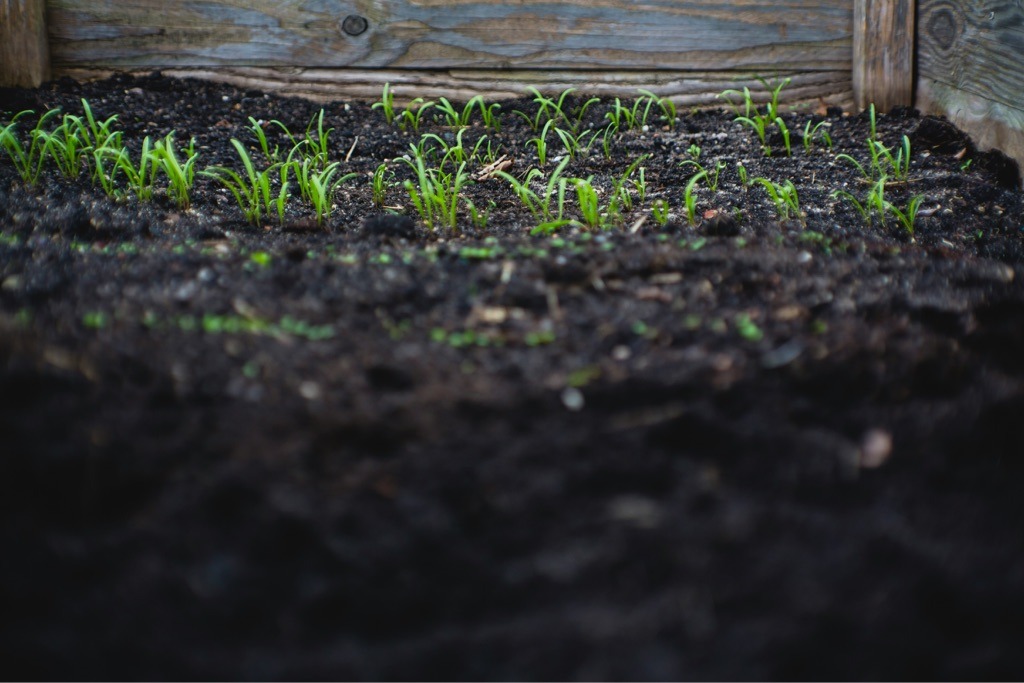
Humic Loam / Engineered Garden Soil · Engineered horticultural blend. Likely a mix of native topsoil, composted green waste, and perhaps peat or coco coir, typical for urban gardening in North America or Europe.
AI Disclaimer
This soil report was produced by AI from a single photo. Treat it as a starting point, not laboratory truth.
pH, drainage, fertility, and composition are visual estimates — send a sample to an accredited lab before any decision that would be painful to get wrong.
Crop and amendment tips are general guidance — local climate, microclimate, and gardening history always win over an AI's best guess.
pH
Slightly acidic to neutral (6.2–7.0). Most commercial or well-managed garden mixes aim for this range; lack of moss or white salt crusts supports this.
Drainage
Well Drained. The granular structure and visible macropores between crumbs allow excess water to move through while the organic sponge holds onto necessary moisture.
Organic Matter
Very rich (>8%). The darkness and 'fluffy' appearance of the surface aggregates are classic indicators of humic substances typical of premium compost-blended soils.
Erosion Risk
Low. Because it is contained within a wooden raised bed, water runoff and wind loss are physically mitigated. In an open field, this light soil would be wind-sensitive.
Overall Read
Grade: A. This is a premium 'black gold' soil specifically optimized for high-productivity gardening. Its primary strength is its friability and organic richness, making it a turnkey solution for most edible crops.
Texture
Friable, crumbly, and slightly gritty. Likely to form a weak, easily broken ribbon (<2.5cm) suggesting high organic matter and balanced silt/sand.
Color Analysis
Very dark brown to black (Munsell 10YR 2/1 or 2/2). This deep 'melanized' color indicates high levels of decomposed organic matter, humic acids, and excellent moisture retention.
Estimated Composition
40% Silt, 30% Sand, 15% Clay, 15% Organic Matter. High confidence in high organic content due to lack of mineral gloss and deep black hue.
Water Retention
High Water Holding Capacity. The high organic matter acts like a reservoir, significantly outperforming standard mineral loams in drought resistance.
Aeration
Excellent. The irregular shapes of the soil crumbs ensure plenty of oxygen channels for aerobic microbial respiration and root health.
Compaction Level
Loose and Friable. There is no evidence of surface crusting or 'platy' layering. The soil appears easily penetrable by hand or trowel.
Structure & Aggregation
Fine Granular. Small, soft aggregates (crumbs) predominate, which provides an ideal environment for delicate seedling roots to navigate and for gas exchange.
Fertility Indicators
Very High. The dark color suggests a high Cation Exchange Capacity (CEC). Visible healthy seedling emergence and lack of nutrient-deficiency chlorosis are positive signs.
Climate Suitability
Temperate to Mediterranean. This soil is designed to buffer variations in moisture, making it ideal for regions with seasonal rainfall or managed irrigation.
Crops Worth Trying
Leafy greens (spinach, lettuce), culinary herbs, and root vegetables like carrots or radishes which require loose soil to expand without resistance.
Plants To Avoid
Xeric/Desert plants (cacti, succulents) which may rot in high-moisture organic soils, and heavy woody shrubs that prefer more stable mineral clay buffers.
Home Garden Use
Ideally suited for intensive vegetable production in raised beds, kitchen gardens, and seedling nursery flats.
Agricultural Use
High-value market gardening (Bio-intensive or Permaculture systems). Too expensive and lightweight for large-scale broadacre grain farming.
Landscaping Use
Excellent for ornamental flower beds and as a 'soil booster' for tree planting holes in poor native dirt.
Common Problems
Rapid nutrient leaching of nitrogen if over-watered, and potential for 'sinking' over time as the organic matter decomposes and volume decreases.
Amendments Needed
Minimal. Periodic top-dressing with 1-inch of fresh compost annually to replace decomposed organic fraction and specialized organic nitrogen (blood meal or feather meal) for heavy feeders.
Try These At Home Tests
The 'Squeeze Test': A handful should form a ball that easily shatters when poked. If it stays a hard ball, there is too much clay; if it won't form a ball, there is too much sand.
Professional Lab Recommendation
Perform a standard soil test every 3 years ($15-$30) to monitor Phosphorus buildup and pH drift, as high-compost soils can sometimes accumulate excessive salts or phosphorus.
Fun Facts
A single teaspoon of this healthy, dark soil can contain more microorganisms than there are people on Earth, including miles of fungal hyphae and billions of bacteria.