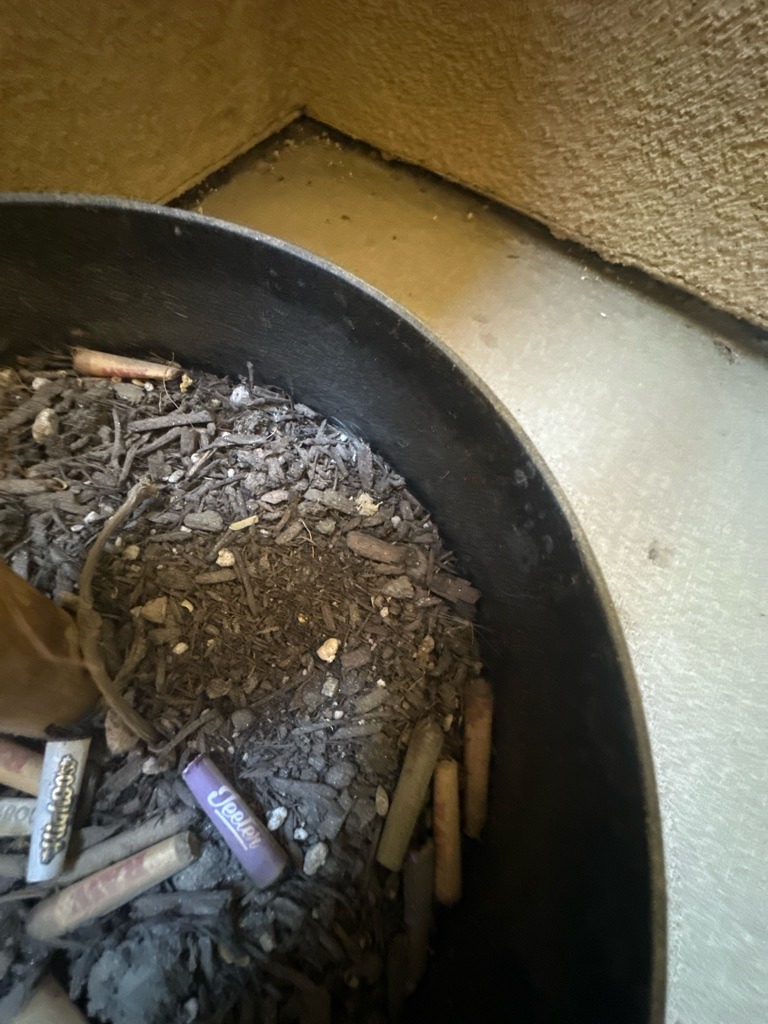
Urban Container Potting Mix with Heavy Debris Accumulation
Soilless Potting Mix / Organic-Mineral Blend · Manufactured or bagged commercial container potting soil subjected to urban usage as an ashtray.
AI Disclaimer
This soil report was produced by AI from a single photo. Treat it as a starting point, not laboratory truth.
pH, drainage, fertility, and composition are visual estimates — send a sample to an accredited lab before any decision that would be painful to get wrong.
Crop and amendment tips are general guidance — local climate, microclimate, and gardening history always win over an AI's best guess.
pH
Likely alkaline (7.5–8.5) due to the heavy accumulation of cigarette ash, which is highly basic. A lab test or probe is strongly recommended.
Drainage
Excessively Drained. The high percentage of coarse wood chips, perlite, and open container volume allows water to flush through rapidly.
Organic Matter
Very rich (>8%) in terms of total carbon, but much of it is raw, undecomposed wood mulch and toxic ash rather than beneficial humus.
Erosion Risk
Low wind and water erosion risk inside a container, though loose surface debris can easily scatter if disturbed.
Overall Read
Poor overall quality due to severe anthropogenic contamination. While it possesses the physical structure of a potting mix, the heavy accumulation of cigarette waste renders it toxic and completely unsuitable for healthy plant growth. Immediate remediation requires complete soil replacement and thorough cleaning of the container.
Texture
Coarse, heterogeneous, and highly fibrous with wood chips, perlite, and anthropogenic debris. Would fail to form a ribbon completely due to lack of cohesive clay particles.
Color Analysis
Dark grayish brown to charcoal black, indicating high carbon/ash content and decomposing organic matter, though heavily littered with cigarette butts and grey ash.
Estimated Composition
Roughly 40 percent woody organic matter, 30 percent perlite and mineral fines, 20 percent ash and anthropogenic debris, and 10 percent actual soil particles. Low confidence due to extreme contamination.
Water Retention
Poor to moderate. While organic matter holds some moisture, the large particle sizes and wood mulch allow rapid drainage and quick drying in warm conditions.
Aeration
High. Large pore spaces between wood chips and perlite ensure abundant oxygen flow to the root zone.
Compaction Level
Loose and friable at the surface, but likely stratified or slightly crusted underneath due to ash compaction from watering.
Structure & Aggregation
Loose and single-grain to fragmental. Lacks natural stable soil aggregates due to container confinement and foreign objects.
Fertility Indicators
Low to Moderate actual fertility for plants. While dark, the fertility is heavily compromised by chemical residues, heavy metals from ash, and lack of true microbial soil life.
Climate Suitability
Universal in terms of container gardening, but heavily dependent on manual watering and protection from chemical pollutants.
Crops Worth Trying
Ornamental hardy potted plants that tolerate poor conditions, though growing edible crops in this specific medium is strongly discouraged.
Plants To Avoid
All edibles (vegetables, fruits, herbs) and sensitive ornamentals, due to heavy metal contamination, nicotine residues, and unknown toxins.
Home Garden Use
None recommended in its current contaminated state. Must be completely emptied and cleaned before agricultural or domestic gardening use.
Agricultural Use
Zero applicability. This material is unsuitable for commercial or small-scale farming.
Landscaping Use
Unsuitable for landscaping unless completely replaced with clean topsoil or fresh mulch.
Common Problems
Chemical contamination from cigarette waste, nicotine toxicity, pH imbalances from ash, lack of balanced nutrients, and hydrophobic dry pockets.
Amendments Needed
Total replacement is recommended. If salvaging the container, discard all contents, wash thoroughly, and refill with a fresh, clean organic potting mix.
Try These At Home Tests
Perform a visual inspection to remove foreign debris, check the pH using inexpensive test strips, and do a smell test (which will likely reveal stale tobacco odors rather than earthy aromas).
Professional Lab Recommendation
Not necessary unless testing for specific heavy metal toxicity (like cadmium or lead from ash). Usually, visual identification of contamination is sufficient to warrant total disposal.
Fun Facts
Cigarette butts are the most commonly littered item globally, and when tossed into potted plants, they leach thousands of toxic chemicals, heavy metals, and nicotine directly into the root zone.