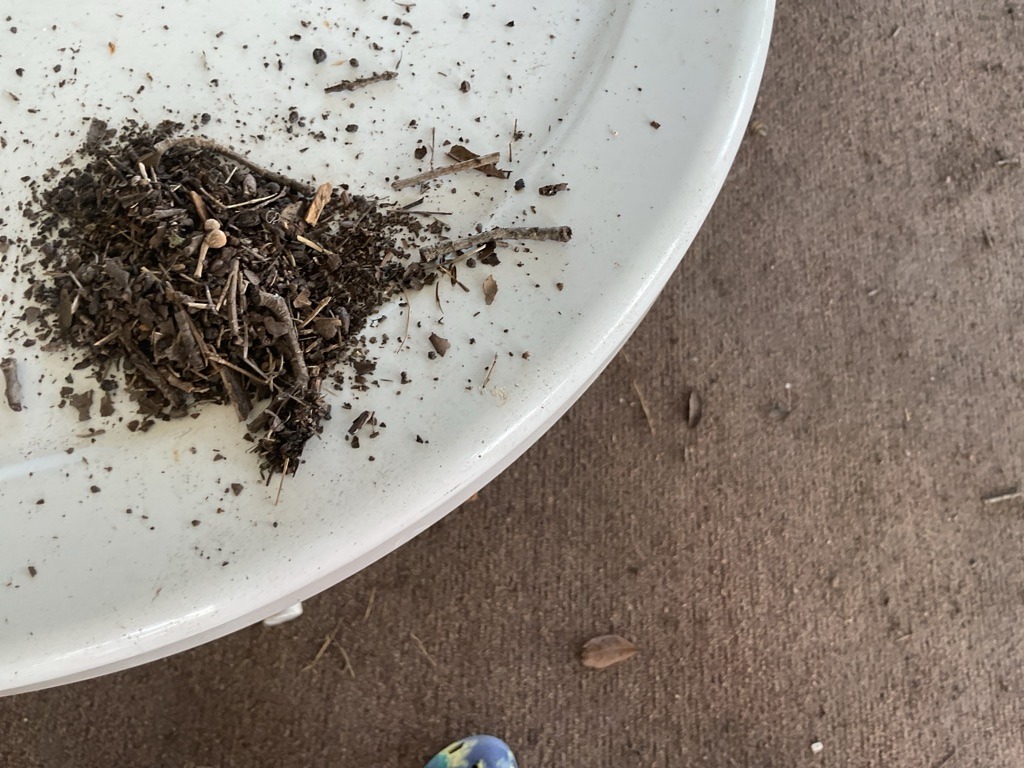
Woodland Leaf Litter and Organic Forest Floor Sample
Organic Rich Forest Humus / Leaf Mold · Temperate deciduous forest floor or woodland surface layer.
AI Disclaimer
This soil report was produced by AI from a single photo. Treat it as a starting point, not laboratory truth.
pH, drainage, fertility, and composition are visual estimates — send a sample to an accredited lab before any decision that would be painful to get wrong.
Crop and amendment tips are general guidance — local climate, microclimate, and gardening history always win over an AI's best guess.
pH
Slightly acidic to moderately acidic 5.5–6.5 based on forest litter composition and organic accumulation, though a test strip is required for verification.
Drainage
Excessively to well drained; the loose fibrous structure and high proportion of organic debris prevent water pooling and ensure rapid infiltration.
Organic Matter
Very rich (>8%), heavily dominated by forest floor litter, twigs, and decaying organic matter which drives intense microbial activity and nutrient cycling.
Erosion Risk
High risk of displacement by wind or heavy running water if left uncovered on slopes due to the lightweight, loose nature of the organic debris.
Overall Read
An exceptionally fertile and biologically active organic forest floor sample that shines as a top-tier natural mulch and soil conditioner, though it requires mineral soil blending for structural support in standard garden beds.
Texture
Fibrous, coarse, and loose with abundant undecomposed and partially decomposed plant material; fails to form a cohesive ribbon, crumbling easily.
Color Analysis
Dark brown to nearly black (approx. 10YR 2/1 to 10YR 3/2) indicating very high organic matter content and active biological decomposition processes.
Estimated Composition
40 percent sand and silt mineral fraction, 10 percent clay, and 50 percent organic matter in various stages of decomposition; visual estimate confidence is moderate due to high debris visibility.
Water Retention
High capacity for holding moisture like a sponge due to the abundant organic matter, though coarse particles mean it can dry out quickly under direct sun and wind exposure.
Aeration
Excellent oxygen availability to roots and microbes due to the loose, porous matrix of twigs and organic fragments.
Compaction Level
Loose and uncompacted; highly porous with zero hardpan indicators, making it exceptionally easy for fine roots to penetrate.
Structure & Aggregation
Loose, crumbly, and friable single-grain to granular fragments with weak aggregate stability until further integrated into mineral soil.
Fertility Indicators
High biological activity, visible fungal mycelium or decomposing residue, dark humus coloration, and high root density; overall fertility is rated High.
Climate Suitability
Temperate and humid continental climates with distinct seasonal leaf drop and adequate moisture to support woodland ecology.
Crops Worth Trying
Woodland understory plants, acid-loving berries like blueberries, shade-loving ornamentals, ferns, and mushrooms or mycorrhizal-dependent perennials.
Plants To Avoid
Heavy agricultural row crops requiring firm mineral root anchorage or plants needing high-pH, highly compacted, or heavy clay soils.
Home Garden Use
Top-dressing for garden beds, primary ingredient for homemade potting mixes, mulch around perennial plantings, and amendment for woodland or shade gardens.
Agricultural Use
Not suited as a primary broad-acre agricultural soil on its own, but excellent as a harvested amendment or compost ingredient for specialty crops.
Landscaping Use
Ideal as an organic mulch layer, forest garden top-dress, and amendment for naturalistic woodland landscapes and tree planting pits.
Common Problems
Rapid decomposition leading to volume reduction, potential temporary nitrogen immobilization if mixed uncomposted into root zones, and extreme drying out in hot sun.
Amendments Needed
Needs blending with mineral topsoil (loam or sandy loam) and potentially agricultural lime if pH is too low for non-acid-loving plants.
Try These At Home Tests
Perform a smell test for a sweet, earthy forest aroma; check for earthworm presence; and do a squeeze test to see if it springs back or crumbles.
Professional Lab Recommendation
Recommended if blending large quantities for specialized container horticulture; request a basic nutrient panel, organic matter percentage, and pH test.
Fun Facts
This material represents the O-horizon of soil development, where nature continuously recycles fallen canopy nutrients to feed the entire understory ecosystem.