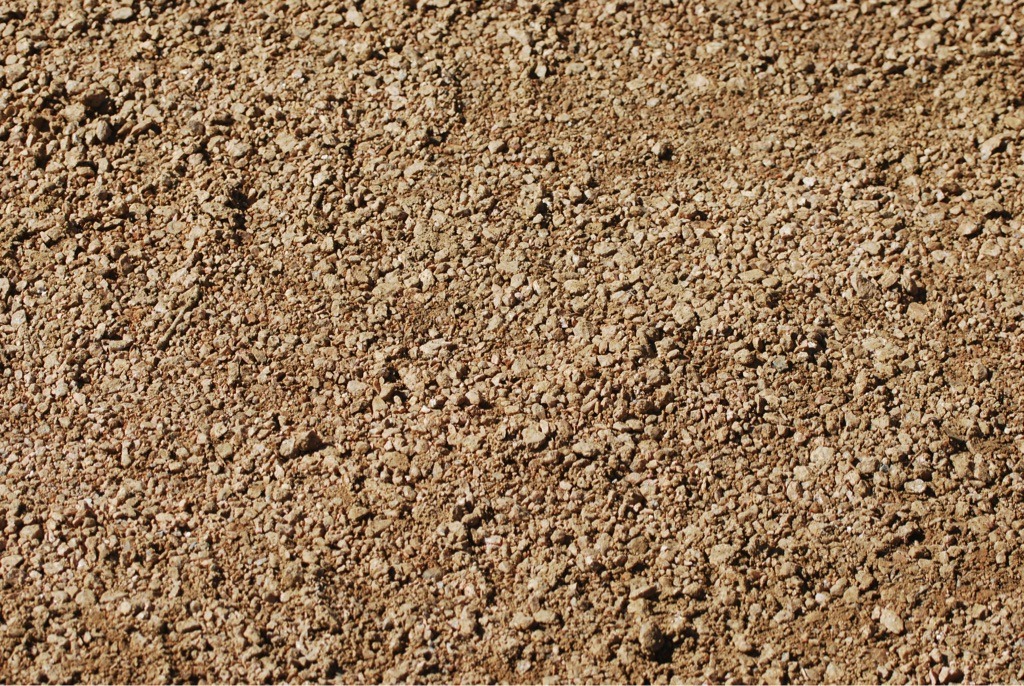
Arid Decomposed Granite Sandstone
Sand / Coarse Loamy Sand · Weathered granitic parent material, likely from a desert wash, alluvial fan, or mountain slope in the Southwestern United States (Arizona, California) or similar Mediterranean/Arid climates.
AI Disclaimer
This soil report was produced by AI from a single photo. Treat it as a starting point, not laboratory truth.
pH, drainage, fertility, and composition are visual estimates — send a sample to an accredited lab before any decision that would be painful to get wrong.
Crop and amendment tips are general guidance — local climate, microclimate, and gardening history always win over an AI's best guess.
pH
Neutral to slightly alkaline (7.0–8.0). Common in arid/semi-arid regions where low rainfall prevents leaching of alkaline-forming cations like calcium and magnesium.
Drainage
Excessively Drained. The large macropores between coarse grains allow water to pass through almost instantly, posing a risk of rapid drying and nutrient leaching.
Organic Matter
Very Low (<1%). There is no visible humus, plant residue, or darkening of the mineral matrix, suggesting very low microbial and biological activity.
Erosion Risk
High for wind and water sheet erosion. The lightweight, loose particles are easily moved by wind when dry and can be washed away on slopes during heavy rain events.
Overall Read
This is a challenging, 'hungry' soil for traditional gardening but a perfect medium for arid-climate specialties. It provides unparalleled drainage but requires diligent nutrient management. Rating: 3/10 for vegetables, 9/10 for desert natives.
Texture
Coarse and gritty with sharp, angular particles. It will likely fail a ribbon test entirely, collapsing into a pile of grit with zero plasticity or stickiness.
Color Analysis
Light yellowish brown (approx. 10YR 6/4). This high value and low chroma suggest minimal organic matter and a dominance of primary minerals like quartz and feldspar; the warm hue implies presence of oxidized iron.
Estimated Composition
85% Sand/Gravel, 10% Silt, 3% Clay, 2% or less Organic Matter. Visual confidence: High for texture, Moderate for mineralogy.
Water Retention
Very Low. Expected to dry out rapidly after rain or irrigation. It lacks the clay and organic matter necessary to hold plant-available water at field capacity.
Aeration
Excellent. Oxygen availability is high due to large pore spaces. However, this high aeration can lead to rapid oxidation of any added organic matter.
Compaction Level
Loose and friable. Because it is mostly coarse grit, it resists true structural compaction (hardpan) but can be physically packed down in high-traffic areas without losing total porosity.
Structure & Aggregation
Single-grain structure. The soil lacks cohesive aggregates or peds. This results in high stability against compaction but makes it highly susceptible to shifting and wind movement.
Fertility Indicators
Low. The lack of clay (which provides cation exchange capacity) and organic matter indicates very poor natural nutrient storage. Fertility rating: Low.
Climate Suitability
Arid and semi-arid climates. It requires significant irrigation and mulching to support non-native plants due to high evaporation and low storage.
Crops Worth Trying
Succulents (Cacti, Agave), Lavender, Sage, Mediterranean herbs (Rosemary, Thyme), and native desert scrub. These species handle low fertility and 'wet feet' intolerance well.
Plants To Avoid
Leafy greens (Kale, Spinach), Berries (Blueberries, Strawberries), and moisture-loving Ornamentals (Hydrangeas, Ferns) will struggle with the lack of water and acidic preference.
Home Garden Use
Excellent as a base for xeriscaping or rock gardens. Not suitable for traditional in-ground vegetable beds without massive amendment; best used for native desert planting.
Agricultural Use
Highly limited. Could be used for vineyards with precise 'fertigation' (irrigation-mixed fertilizers) or orchard crops like Pistachios or Olives that tolerate sandy textures.
Landscaping Use
Ideal for path surfacing, DG (Decomposed Granite) walkways, well-draining fill for retaining walls, and surrounding drought-tolerant landscape focal points.
Common Problems
Rapid nutrient leaching (especially Nitrogen), frequent need for watering, instability on slopes, and possible high surface temperature due to lack of vegetative cover.
Amendments Needed
Heavy application of finished compost and biochar to build Cation Exchange Capacity (CEC). Mulching with organic matter is essential to prevent evaporation.
Try These At Home Tests
A 'Jar Test' will show almost immediate settling of the sand at the bottom with very little cloudiness from silt or clay. A 'Squeeze Test' will result in the soil crumbling immediately when the hand is opened.
Professional Lab Recommendation
Request a basic nutrient suite plus CEC (Cation Exchange Capacity) and Salinity (EC). CEC will likely be below 5 meq/100g, confirming the need for organic matter.
Fun Facts
This type of soil is essentially 'young' in geological terms, representing raw disintegrated rock that hasn't yet undergone the chemical weathering to become clay.