Weathered Piedmont Sandy Clay Loam
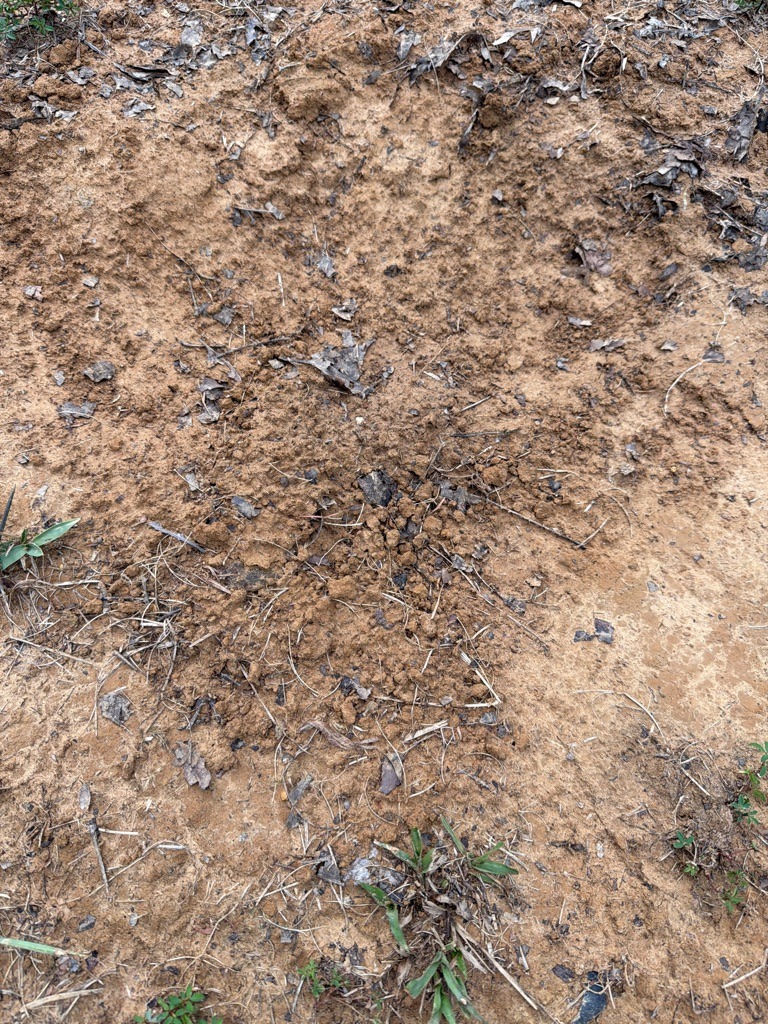
Sandy Clay Loam · Weathered residual soil from the Piedmont region or similar rolling upland areas derived from granite, gneiss, or schist parent material.
AI Disclaimer
This soil report was produced by AI from a single photo. Treat it as a starting point, not laboratory truth.
pH, drainage, fertility, and composition are visual estimates — send a sample to an accredited lab before any decision that would be painful to get wrong.
Crop and amendment tips are general guidance — local climate, microclimate, and gardening history always win over an AI's best guess.
pH
Slightly to moderately acidic (5.8 to 6.5), typical of weathered upland soils in humid temperate regions; lab testing is recommended for exact measurement.
Drainage
Well drained. The gritty sand fraction combined with moderate structure allows excess water to percolate efficiently while retaining adequate moisture.
Organic Matter
Low to moderate (2-3%), indicated by the surface litter and scattered dark organic fragments, though the mineral fraction clearly dominates.
Erosion Risk
Moderate to high on slopes. The combination of fine sand and clay makes the surface prone to sealing, sheet erosion, and rilling during intense downpours.
Overall Read
A versatile, productive mineral soil with moderate natural fertility and good drainage, requiring regular organic matter additions to prevent crusting and optimize structure.
Texture
Gritty with moderate cohesiveness; forms a short, weak ribbon when wet, indicating a balanced yet clay-influenced particle size distribution.
Color Analysis
Warm yellowish-brown to reddish-brown (approx. 7.5YR 5/6), strongly indicating oxidized iron minerals and moderate weathering under well-drained conditions.
Estimated Composition
55% sand, 15% silt, 25% clay, 5% organic matter (visual estimate with moderate confidence).
Water Retention
Moderate. Holds a reliable amount of plant-available water thanks to the clay and organic fractions, though it can dry out and crust on the surface during hot, dry spells.
Aeration
Good to moderate. Adequate pore space exists between mineral particles and structural peds, supplying sufficient oxygen for healthy root respiration.
Compaction Level
Moderately firm. The surface shows minor crusting and packing, typical of soils with a notable clay and fine sand component exposed to weathering.
Structure & Aggregation
Subangular blocky to weak granular structure. Aggregates are moderately stable but susceptible to surface crusting under heavy rainfall impact.
Fertility Indicators
Moderate fertility. Visual cues include scattered organic residue and sparse pioneering weeds, but the lighter color suggests limited native humus reserves.
Climate Suitability
Thrives in temperate and subtropical humid climates with distinct seasonal rainfall patterns.
Crops Worth Trying
Fescue, bermudagrass, tomatoes, peppers, squash, root crops with proper loosening, and various ornamentals that tolerate moderate clay fractions.
Plants To Avoid
Extremely moisture-sensitive bog plants or species requiring highly alkaline, calcareous soils.
Home Garden Use
Well-suited for raised beds, amended in-ground vegetable gardens, perennial borders, and turfgrass lawns.
Agricultural Use
Good for pasture, row crops with conservation tillage, and fruit orchards when properly managed for erosion and fertility.
Landscaping Use
Ideal for ornamental shrub beds, turf establishment, and standard landscape plantings with adequate mulch cover.
Common Problems
Surface crusting after heavy rains, seasonal drying leading to a hard surface layer, and susceptibility to nutrient leaching.
Amendments Needed
Incorporate well-rotted compost and organic matter to improve aggregation, buffer pH with agricultural limestone if acidic, and apply organic mulch.
Try These At Home Tests
Perform a jar settling test to verify sand/silt/clay ratios, and a ribbon test between your thumb and forefinger to check plasticity.
Professional Lab Recommendation
Send a sample to a local agricultural extension service for a standard fertility, pH, cation exchange capacity (CEC), and organic matter analysis.
Fun Facts
Soils with this characteristic reddish-brown hue get their color from hematite and goethite—iron oxide minerals formed over millennia of weathering.